All Posts By

Dr. Cameron Hulse

Braces and Mouthguards: How to Play Sports With Braces

By Braces

Say the braces go on Tuesday and the game is Saturday. Somewhere between the two, a parent asks a fair question: can my kid still play?

The American Association of Orthodontists (AAO) frames its advice for athletes in braces around protection: what you wear in your mouth while you play, and what to do if something breaks or a tooth gets hurt. Your orthodontist can talk through your own sport and treatment.

Quick answer

The AAO strongly recommends wearing a mouthguard with braces for practice and games. The AAO calls custom mouthguards the best choice for protecting your orthodontic treatment and says to talk with your orthodontist about which mouthguard is right for you. Take a removable retainer out for contact sports. If a bracket comes loose, call our office right away and bring the piece with you. If a permanent tooth is knocked out or badly moved, get emergency care right away.

Can you play sports with braces?

The AAO’s advice to athletes in braces is to protect your mouth while you play. On its own mouthguard page, the AAO says wearing a mouthguard with braces is not only possible but strongly recommended, and its tips for athletes say to wear it for both practice and games.

A mouthguard matters more once the brackets are on, for two reasons.

First, brackets have edges. The AAO says the sharp edges of orthodontic appliances can cause serious injury if you are struck in the face or head. The ADA’s consumer site, MouthHealthy, says a mouthguard provides a barrier between the braces and your cheek or lips, which helps you avoid injuries to your gums and cheeks.

Second, the appliance itself can be damaged. The ADA notes that a blow to the face could damage the brackets or other fixed orthodontic appliances, which is why it says a properly fitted mouthguard may be especially important for people who wear braces. The AAO adds that a blow to the mouth can bend wires or break brackets and delay treatment. If the lower teeth have brackets too, the ADA says your dentist or orthodontist may suggest a guard for the lower teeth as well. Ask rather than assume.

If you’re still deciding on treatment, bring the sport question to your consultation. Here’s what to expect from braces at Hulse Orthodontics in Carlsbad.

Does your sport actually need a mouthguard?

Some leagues require one. For the rest, the ADA keeps a list of activities where it recommends a mouthguard, and it’s longer than you might expect.

Situation Sports What that means for a player in braces
Required by rule Football, field hockey, ice hockey and lacrosse, where the ADA notes the NFHS (high school) and NCAA (college) mandate mouthguards. Wrestling: the NFHS requires one for any wrestler wearing braces. Required at those levels. If your child plays in a younger league, check its rulebook. The AAO encourages all players to wear a mouthguard, no matter the sport.
Contact and collision sports on the ADA’s recommended list Including basketball, soccer, water polo, rugby, boxing, martial arts and hockey. The ADA recommends one. Your league may also require it, so check its rules.
Limited-contact and other activities on the ADA’s recommended list Including surfing, skateboarding, skiing, cycling, inline skating, gymnastics, baseball, softball, volleyball and weightlifting. The ADA recommends one here too.

The wrestling line is worth a second look: the rule applies because of the braces. The American Academy of Pediatric Dentistry’s policy on preventing sports-related orofacial injuries also supports continuing these preventive practices in youth, high school and college sports, including wrestling for wrestlers wearing braces.

The third row is the easy one to skip. Non-contact doesn’t mean no risk. MouthHealthy says any athlete may experience a dental injury in non-contact activities too, such as gymnastics and skating, and the ADA’s list recommends a mouthguard for limited-contact activities as well as contact sports. If your kid’s sport or weekend activity is on the list, wear the guard.

What kind of mouthguard works over braces?

Mouthguards come in three categories, defined in the ADA’s own standard (ANSI/ADA Standard No. 99):

  • Custom-made. Made in a dental office or lab from an impression of your teeth. The ADA says they can give an optimal fit, but they are the most expensive option and need dental visits for fitting.
  • Boil-and-bite (mouth-formed). Softened in hot water, then shaped in your mouth. The ADA says they are generally designed to be fitted at home, following the maker’s instructions, and that a dental professional may help with the final molding, particularly if you have orthodontic appliances.
  • Stock. Pre-formed, no shaping. The ADA describes this type as the least effective and the least expensive.

Here’s what the professional groups say about choosing one. The AAO calls custom mouthguards the best choice for safeguarding your orthodontic investment, and it recommends having your orthodontist take a mold of your mouth for the most protective fit, especially if you are in orthodontic treatment. It describes boil-and-bite guards as better than nothing. The Academy for Sports Dentistry’s position statement also recommends properly fitted custom mouthguards, and it lists orthodontic appliances among the things a properly fitted mouthguard has to take into account. The ADA says that, depending on the circumstances, dentists might recommend a custom mouthguard or a properly fitted boil-and-bite, such as one with the ADA Seal of Acceptance.

The AAO suggests asking your orthodontist whether custom mouthguards are a service they offer, and talking with them about which mouthguard is right for you. So ask at your next visit which type suits your sport and your stage of treatment.

When you buy and fit one:

  • Follow the package instructions for heating and molding. The ADA says boil-and-bite guards should be fitted according to the manufacturer’s instructions to avoid a poor fit.
  • Ask your orthodontist before you mold a boil-and-bite over braces, since the ADA notes a dental professional may help with the final molding when you have orthodontic appliances.
  • Replace it if it’s worn, damaged or doesn’t fit well. MouthHealthy notes that teens and children may need to replace mouthguards more often because their mouths are still growing and changing, and the AAO suggests replacing one after a significant growth spurt or a dental procedure.

Tip: Bring your mouthguard along to your appointments. MouthHealthy suggests bringing it to regular dental checkups for an evaluation, and you can ask your orthodontist whether it still fits well over your braces.

What about a retainer or aligners?

Take it out. MouthHealthy is direct: if you have a retainer or other removable appliance, don’t wear it during any contact sports. Our own appliance care page tells retainer patients to take retainers out when they play sports that require a mouthguard.

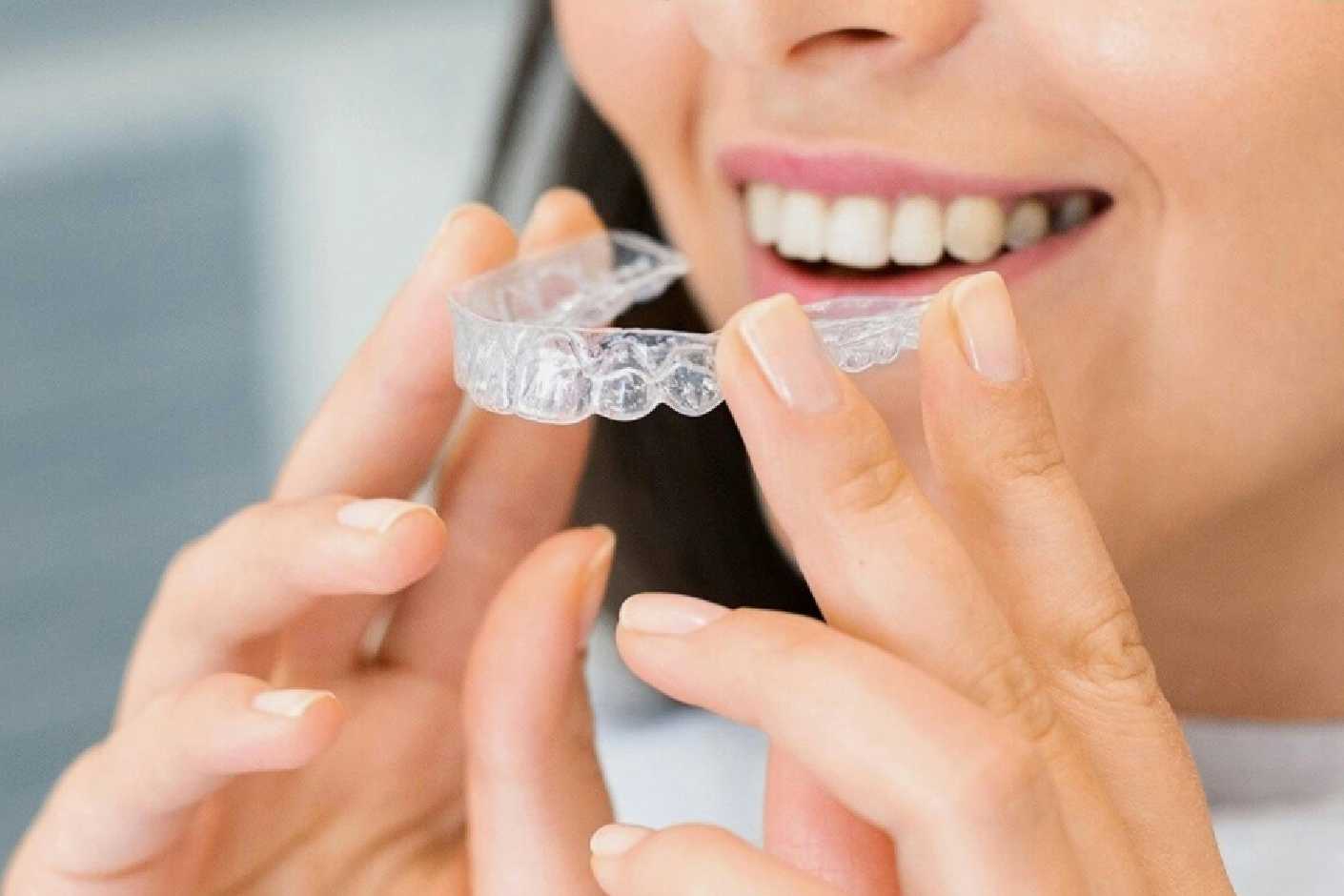
If you’re in clear aligners such as Invisalign, the AAO’s tip for athletes is to remove them and wear a mouthguard for contact play.

Our appliance page covers the rest of retainer care.

If a bracket comes loose during a game

This is the question a parent needs answered on a Saturday.

Call our office right away. Our emergency care page also asks you to call rather than come straight to the office if you break or loosen any appliance, so the team can set a time to see you. Then:

  • If a bracket or band has come off, keep it and bring it with you to your repair appointment.
  • If a wire is irritating your cheek, try moving it away from the sore spot with a cotton swab or an eraser. If it won’t move, cover the end with a small piece of cotton or a little wax, and call the office if that doesn’t solve it.
  • Don’t play through it. The AAO says never to play through damaged orthodontic hardware, because it can cause serious injury.

Our emergency care page also covers soreness after your braces go on and after adjustments. If you’re not yet a patient, our office on El Camino Real in Carlsbad serves families throughout Oceanside, Vista, Encinitas and San Marcos.

If a tooth is knocked out or broken

A loose bracket means a call to our office. An injury to the teeth, mouth or jaw is different, and it comes first. The AAO’s guide to orthodontic emergencies and the ADA’s dental emergencies page say:

  • Heavy bleeding, trouble breathing or a possible broken jaw: the AAO says to call 911 or seek emergency care right away.
  • A permanent tooth that is knocked out, pushed deep into the gums or moved far out of position: the AAO says to seek emergency care immediately, at an emergency room or an urgent dental clinic.
  • A knocked-out permanent tooth: the ADA says to keep it moist at all times. If you can, place it back in the socket without touching the root. If that’s not possible, hold it between the cheek and gums, put it in milk, or use a tooth preservation product with the ADA Seal of Acceptance. Then get to a dentist right away.
  • A cracked tooth: the ADA says to rinse the mouth with warm water right away and put cold compresses on the face to keep swelling down, and to see a dentist or go to an emergency room as soon as possible.

Once you’re safe, the AAO says to contact your orthodontist so the braces can be repaired or adjusted. Call our office then, too.

How much does a mouthguard actually help?

The ADA says mouthguard use has been shown to reduce the risk of sport-related dental injuries. Its summary of the research, updated in August 2026, cites several studies, and they measure the effect in different ways:

  • A 2007 meta-analysis of team contact sports put the risk of mouth and face injury at 1.6 to 1.9 times higher in players who didn’t use any mouthguard.
  • A 2002 study of college basketball players found a dental injury rate one-fifth as high among players wearing custom-fitted mouthguards as among players who didn’t use one.
  • A 2019 systematic review reported that mouthguard users were 82 to 93 percent less likely to suffer dentofacial injuries.
  • Another 2019 systematic review found that people who didn’t use mouthguards had more than twice the risk of mouth and face injury.

The ADA notes these findings are consistent with numerous studies showing fewer mouth injuries with mouthguards. The ADA describes these as studies of athletes and sports participants, and none of them is described as a study of players in braces, so treat them as the general picture rather than a figure for your child.

On concussions, the ADA’s summary is more cautious. It describes the evidence as mixed and less consistent than for dental injuries: one systematic review found a modestly higher concussion risk among mouthguard non-users, other studies contradict each other, and a 2009 review found no significant effect on concussion among professional ice hockey players. The ADA says more research is needed. So buy the guard to protect the teeth, lips and braces, and take any concussion questions to your child’s doctor.

Frequently asked questions

Can I wear a mouthguard with braces?

Yes. The American Association of Orthodontists says wearing a mouthguard with braces is not only possible but strongly recommended, and the ADA says a properly fitted mouthguard may be especially important for people with braces because a blow to the face could damage the brackets. Talk with your orthodontist about which type suits you.

What mouthguard do I use if I have braces?

The AAO calls custom mouthguards the best choice for protecting your orthodontic treatment, and recommends having your orthodontist take a mold of your mouth, especially during treatment. The ADA says dentists might recommend either a custom mouthguard or a properly fitted boil-and-bite, such as one with the ADA Seal of Acceptance, and describes stock mouthguards as the least effective type. Ask your orthodontist which type suits your sport and your stage of treatment.

Is it okay to mold a mouthguard with braces?

Boil-and-bite mouthguards are generally designed to be fitted at home, and the ADA says to follow the manufacturer’s instructions. It also says a dental professional may help with the final molding, particularly if you have orthodontic appliances, so ask your orthodontist before you mold one over braces.

What happens if I wear a mouthguard with braces?

MouthHealthy says a mouthguard helps cushion a blow to the face and provides a barrier between the braces and your cheek or lips, and the ADA notes a blow could otherwise damage the brackets. Replace it if it shows wear, is damaged or no longer fits well, and ask your orthodontist to check the fit if you’re unsure.

Ready to play? Ask us at your next visit

The AAO’s advice is to talk with your orthodontist about which mouthguard is right for you, and an appointment is a good time to ask. If your child is about to start treatment and the season is already on the calendar, book a free consultation with Dr. Cameron Hulse, a specialist orthodontist in Carlsbad, and bring the sport question with you.

Prefer to call? (760) 448-1344

The information in this article is for educational purposes only and is not a substitute for professional medical or dental advice. For questions about your own treatment, injuries, or appliances, talk to your orthodontist.


Do Braces Hurt? What to Expect and What Helps

By Braces

Maybe your braces went on this morning and your teeth are starting to feel it. Maybe the appointment is Thursday and you have been reading about it at midnight. Either way, you do not need a definition of orthodontics. You want to know what is coming, and whether it is going to be okay.

Reassurance only counts if it is still true on day two. So this is the honest version, from a Carlsbad orthodontic practice that would rather you hear it now than be surprised by it later. If you are still weighing treatment, our braces page walks through how braces work at our Carlsbad office.

Quick answer

Yes, but for most people only mildly. The American Association of Orthodontists (AAO) says braces soreness is typically a dull ache rather than sharp pain, usually strongest in the first 24 to 48 hours, and typically fades after a few days. Our office’s own guidance is that you will likely feel some soreness or discomfort during the first week after your braces go on and after routine adjustments. Tonight: eat soft food, put orthodontic wax on anything that rubs, and try a warm washcloth against your jaw. If you take a pain reliever, follow the label and check with your doctor or pharmacist first, especially if you are pregnant or it is for a child. Call the office if a wire is poking, a bracket comes loose, or the pain is sharp or getting worse instead of better.

So what do braces actually feel like?

Pressure. That is the word the AAO uses too: for the first few days, you might feel pressure or tenderness around your teeth, and your lips, cheeks and tongue may feel sensitive while they get used to the brackets and wires. The AAO notes that this rubbing generally decreases as your mouth adapts.

The brackets on your teeth are connected by an archwire, and together they apply gentle, steady pressure that moves each tooth a little at a time. Here is what the AAO describes happening next: bone on the pressure side of the tooth softens to let it move, new bone builds on the other side to support it, and the tiny ligaments anchoring each tooth stretch and compress, which triggers a natural inflammatory response. That process is what can make your teeth sore.

The AAO compares it to the soreness you might feel after a workout, and says it is often a natural part of the process.

What it usually is not: the AAO says the soreness is typically described as a dull ache rather than a sharp or intense pain, and that it is rare for it to be severe or long-lasting. Everyone’s pain threshold is different, so your day two may be rougher or easier than a friend’s.

How long do braces hurt?

This is the part worth memorizing, because the ache has a shape, and knowing the shape is half the comfort.

When What to expect Who says so
The first few days Pressure or tenderness around your teeth. Lips, cheeks and tongue may feel sensitive. AAO
First 24 to 48 hours The soreness is “usually strongest” in this window. AAO
After a few days The soreness “typically fades after a few days.” AAO
The first week You will likely feel some soreness or discomfort. Hulse Orthodontics, emergency care page
After each adjustment Some soreness again. The AAO says it is “generally manageable and subsides within a few days.” AAO; Hulse Orthodontics
Removal day For most people, not painful. You may feel pressure, squeezing, or a brief pulling sensation. Details below. AAO

Those timings come from two places. The 24-to-48-hour peak and the “few days” are the AAO’s own wording, and the AAO does not commit to an exact day count. The first week is from our office’s emergency care page, which says you will likely feel some soreness or discomfort during the first week after your braces are in place and after routine adjustments. If yours is lasting longer than that, or getting worse instead of better, call the office.

Adjustments are the second half of the story. The AAO says each adjustment reapplies pressure, which can bring a temporary increase in soreness, similar to what you felt when your braces first went on. By then you have done it once and know what to expect.

If you are weighing aligners instead, our guide to Invisalign pain covers aligner soreness separately.

What actually helps tonight?

Our office’s own guidance for soreness after your braces go on comes down to two things: a pain reliever you would take for a headache or sore muscle, and a warm washcloth or heating pad, which may reduce the soreness in your jaws. With any pain reliever, follow the label and check with your doctor or pharmacist first, especially if you are pregnant or it is for a child.

The AAO’s list adds a few more:

  1. Eat soft food for the sore days. The AAO suggests foods that need little chewing, like mashed potatoes, smoothies, yogurt, soup and scrambled eggs, and recommends avoiding crunchy, chewy or sticky foods. Our braces food guide has a section on getting through the sore first few days.
  2. A cold compress on the cheek. The AAO suggests wrapping a cold pack or ice in a soft cloth and holding it on the outside of your cheek for 10 to 15 minutes to help numb soreness. Our office’s page mentions warmth on the jaw and the AAO lists cold; if you are not sure which suits you, ask the office.
  3. A warm saltwater rinse. The AAO’s version: dissolve a teaspoon of salt in a glass of warm water, swish for about 30 seconds, then spit it out. The AAO says it can help soothe sore gums and small sores.
  4. Orthodontic wax on anything that rubs. Roll a small piece between your fingers to soften it, then press it onto the bracket or wire that is rubbing.
  5. An over-the-counter numbing gel on a sore spot. The AAO lists these for temporary relief. Follow the package directions, and check with your doctor or pharmacist first, especially if you are pregnant or it is for a child.

If a wire end is poking you, our office’s guidance is to try moving it away from the sore spot with a cotton swab or an eraser. If it will not move, cover the end with a small piece of cotton or a little wax, and if that does not solve it, call the office for an appointment.

Does it matter which painkiller you take?

It is a fair question, and the honest answer is that the evidence is mixed. We are not going to pretend otherwise.

The two common over-the-counter choices are ibuprofen-type anti-inflammatories and acetaminophen. A 2025 review in the Journal of Clinical Medicine summarizes studies, in people and in animals, suggesting that anti-inflammatories like ibuprofen may slow tooth movement. The review explains why: these drugs block prostaglandins, signals involved in both the ache and the bone remodeling that moves your teeth. It also notes that many studies have recommended acetaminophen for that reason.

But it is not settled. One randomized trial in that same review, involving 40 patients, compared acetaminophen, ibuprofen, a third anti-inflammatory and a placebo, taken at recommended doses for three days with each wire change, and found no significant difference in tooth movement between the groups. A separate meta-analysis found that ibuprofen, naproxen and acetaminophen all reduced orthodontic pain compared with placebo.

So the studies disagree about how much the choice matters. We will not tell you which one to take, or how much, because that is a question for your orthodontist, your doctor or your pharmacist. Follow the label, ask your orthodontist which they would rather you use, and check with your doctor or pharmacist first, especially if you are pregnant or it is for a child.

When is it not just soreness?

Some soreness is expected. A few things are different, and the difference is worth learning now rather than at 9 pm on a Tuesday.

What the AAO describes as typical Worth a call to the office
A dull ache, usually strongest in the first 24 to 48 hours and typically fading after a few days Severe or long-lasting pain, which is the AAO’s own threshold for contacting your orthodontist right away
Teeth that feel sensitive when you chew Pain that is sharp, or getting worse instead of better
Tender cheeks or lips, or small sores where brackets rub A wire end poking that you cannot move or cover
A feeling of tightness in your teeth A bracket or band that has come loose or broken

Swelling in your face or gums, or a fever, is also worth a call to the office. If you have a fever and swelling in your face and can’t reach us or your dentist, Mayo Clinic advises going to an emergency room, and going there right away if you have trouble breathing or swallowing.

A loose or broken bracket matters for your treatment, not just your comfort. The AAO says broken brackets and wires do not apply the pressure needed to move your teeth, so if one is not fixed as soon as possible, you may have to wear braces longer. Call our Carlsbad orthodontic office immediately and tell them what happened, and bring the piece with you to your repair appointment. Please call rather than coming straight in, so the office can set a time to see you. It is our office policy to repair several breakages at no additional cost, with a fee only if breakage becomes excessive, so do not put off the call to save money.

Our emergency care page has the office’s instructions for a poking wire or a loose bracket or band.

Does getting braces off hurt?

The AAO answers this one on its page about what to expect after braces removal: for most people, getting braces removed is not painful. You may feel pressure, squeezing, or a brief pulling sensation as each bracket is loosened, and the AAO says those feelings usually last only a few seconds. Your teeth or gums may feel slightly sensitive afterward. If you have particularly sensitive teeth, the AAO suggests telling your orthodontist before the appointment so they can explain what to expect in your situation.

One small study adds some numbers. In a 2010 study by Normando and colleagues, 37 patients had their brackets removed with one instrument on one side of the mouth and a different instrument on the other, and scored each tooth for pain on a 0 to 4 scale. A score of 2 or higher was reported on 24.3% of teeth when brackets came off with a ligature-cutting plier, and on 12.8% of teeth with a lift-off debonding instrument.

Read that carefully, because the percentage is of teeth, not of patients, and it comes from one small group, so it is not a promise about your removal day. The instrument made a difference: reports of pain were about half as high with the lift-off instrument. If you are worried about removal, ask your orthodontist what to expect. After that comes your custom retainer.

Still nervous? That is normal, and it is a fine reason to come in

Nobody gets braces because they are excited about the first week. They get them for what comes after it, and now you know the size of that price.

If you are in Carlsbad, Oceanside, Vista, Encinitas, or San Marcos and want to talk it through before committing, Dr. Cameron Hulse, a specialist orthodontist practicing in Carlsbad since 2007, offers a free consultation, which includes digital photos and x-rays and, if treatment is recommended, a customized treatment plan. You can book a free consultation and ask every question in this article in person, including the painkiller one.

Frequently asked questions about braces pain

How long will braces hurt?

The American Association of Orthodontists says the soreness after getting braces or an adjustment is usually strongest in the first 24 to 48 hours and typically fades after a few days. Hulse Orthodontics’ own guidance is that you will likely feel some soreness or discomfort during the first week after your braces are in place and after routine adjustments. If it is getting worse instead of better, call the office.

How painful are braces on a scale of 1 to 10?

No single number is true for everyone. The AAO says pain thresholds vary, that the soreness is typically a dull ache rather than sharp pain, and that it is rare for braces pain to be severe or long-lasting. If your pain is sharp, severe, or climbing instead of easing, call your orthodontist.

Is day 3 of braces the worst?

The AAO says soreness is usually strongest in the first 24 to 48 hours after braces go on and typically fades after a few days, but everyone’s experience is different. If day three is sharper or worse than the day before, call the office instead of waiting it out.

How do you stop braces pain immediately?

The AAO lists several ways to relieve soreness at home: soft foods, an over-the-counter pain reliever, a cold compress on the cheek, a warm saltwater rinse, orthodontic wax on anything that rubs, and an over-the-counter numbing gel. Our office’s page adds a warm washcloth or heating pad. For any pain reliever or numbing gel, follow the label and check with your doctor or pharmacist first, especially if you are pregnant or it is for a child.

Do braces hurt when you get them off?

For most people, no, according to the AAO. You may feel pressure, squeezing, or a brief pulling sensation as each bracket is loosened, usually for only a few seconds, and your teeth or gums may feel slightly sensitive afterward. If you have particularly sensitive teeth, tell your orthodontist before the appointment.

Nervous about braces? Talk it through first

Bring every question in this article to a free consultation at our Carlsbad office. Call or text, or book online.

Prefer to call? (760) 448-1344

This article is for general educational purposes and is not a substitute for personalized advice from your orthodontist or dentist.


How to Clean Invisalign Aligners: A Carlsbad Orthodontist’s Guide

By Invisalign

You popped your aligners out at lunch, went to put them back in, and paused. Are those trays looking a little… foggy? You are not alone. Your aligners sit on your teeth 20 to 22 hours a day, so skipped rinses can leave saliva and food particles behind, which Dr. Hulse links to a persistent smell.

The good news: the habits that help are simple. Dr. Cameron Hulse, a specialist orthodontist practicing in Carlsbad since 2007, offers Invisalign, and here is the routine.

Quick answer

Rinse your aligners with lukewarm water every time they come out. Brush them gently with a soft-bristled toothbrush and clear, antibacterial soap. Deep-clean soak on the schedule your orthodontist recommends. Keep them in their case, and never use hot water. We also suggest skipping toothpaste: Invisalign allows a small amount, but it is abrasive and can scratch clear plastic.

Your Daily Cleaning Routine

The rinse after every removal is, in Dr. Hulse’s words, a small habit that makes a huge difference.

  1. Rinse every time they come out. Lukewarm water, a few seconds under the tap. This clears away saliva and food particles before they build up.
  2. Brush the trays gently before they go back in. Invisalign’s instructions say to clean aligners before each insertion. Use a soft-bristled toothbrush and a drop of clear, antibacterial soap, and clean the inside and outside surfaces. Your regular toothpaste stays on the shelf for this job (more on why below).
  3. Rinse again before they go back in. Invisalign’s instructions say to rinse each aligner thoroughly with water after each cleaning.
  4. Brush and floss your own teeth first. Invisalign notes that food left in your mouth can stain the trays once they go back in. Clean teeth, then clean trays.
  5. Case, always. Any time your aligners are not in your mouth, they belong in their case. Invisalign notes the case helps protect them from loss and damage; a napkin on a lunch tray does not.

That is the whole daily job. For the daily Invisalign habits beyond cleaning, our Invisalign tips and tricks guide covers the rest.

How Do You Deep Clean Invisalign Aligners?

Daily brushing handles the surface. For a deeper clean, Invisalign says its Cleaning Crystals remove plaque to help keep aligners clear.

The method with the manufacturer’s own instructions behind it is Invisalign Cleaning Crystals, and Align’s directions are simple:

  1. Rinse your aligners under tap water.
  2. Place them in a container and cover with about 100 ml of warm (not hot) water.
  3. Add one packet of crystals and gently stir or shake for about 20 seconds to dissolve.
  4. Let them soak for 15 minutes.
  5. Agitate again briefly, then rinse the trays thoroughly.

Each packet is single-use, and the whole thing takes 15 minutes while you eat dinner.

How often should you soak? Rinse and brush daily, then soak on the cadence your own orthodontist recommends.

What if you don’t have Cleaning Crystals?

The crystals are optional: Invisalign’s own instructions center on brushing, and say to use its cleaning products as needed. Before using any other soak on your aligners, ask your orthodontist.

Either way, the soft brush and clear soap remain your daily drivers.

What Should You Never Use on Your Aligners?

Here is what to avoid, and why:

  • Hot or boiling water. Aligners are thermoplastic, molded precisely to your teeth. Invisalign’s instructions say to keep aligners away from hot water, and our office notes that hot drinks can warp the trays. Keep them away from the dishwasher, boiling “to sanitize,” and the dashboard of a car baking in the Carlsbad sun.
  • Toothpaste. Invisalign’s own guidance allows a small amount of toothpaste, but we recommend clear soap instead. Dr. Hulse has written that toothpaste is too abrasive for aligners and can leave them cloudy and scratched, and those tiny scratches can become magnets for bacteria.
  • Colored or scented soaps. Our office’s preference is a clear, antibacterial soap.
  • Eating or drinking anything but water with trays in. Our office notes that hot drinks, soda, coffee, tea, or wine can stain or warp the trays. Out for meals, every time.
  • Wrapping trays in a napkin. Napkins get cleared, and aligners go with them.
  • Bleach and harsh household chemicals. These are medical devices that live in your mouth, and Invisalign’s instructions say to keep them away from harsh chemicals.

How Do You Fix Cloudy or Smelly Aligners?

Already past prevention? Here is the repair plan.

Cloudy or yellowing trays: start with a Cleaning Crystals soak, and keep brushing gently. If the haze will not clean off, it may be scratching or staining in the plastic itself, so ask your orthodontist. The consolation: you switch to a fresh set on the schedule your orthodontist sets anyway.

Smelly trays: Dr. Hulse has written that leftover saliva and food particles can cause a persistent smell. Recommit to rinsing at every removal, brush gently before each insertion, and add a Cleaning Crystals soak, which Invisalign says helps keep aligners odor-free. Wash the case too: Invisalign’s instructions say to hand wash it with soap and water, not in a dishwasher.

When to call us: if a tray is warped, cracked, badly stained, or suddenly does not fit right, see your orthodontist in Carlsbad rather than guessing. Your orthodontist can tell you what to do next.

What Should Be in Your On-the-Go Cleaning Kit?

The hardest place to keep this routine going is anywhere that is not your bathroom sink: the school lunch table, the office, a beach day. A pocket-sized kit solves it:

  • Your case. Non-negotiable. One in your bag, and a spare in the car if you are prone to forgetting.
  • A travel soft-bristle toothbrush for a quick post-lunch brush of teeth and trays.
  • Water. No sink? A bottled-water rinse of trays (and a swish for your mouth) before reinserting is far better than nothing.

Pro Tip: if you truly cannot brush after a meal, rinse your mouth and trays with water, reinsert, and brush properly when you get home. In-and-rinsed beats out-and-forgotten, because wear time drives your treatment. Parents of Invisalign Teen wearers: making the case and travel brush part of the backpack routine can help keep trays from getting lost at school in Carlsbad.

What About Cleaning Retainers After Treatment?

One boundary worth knowing: this guide covers aligners during Invisalign treatment. When you finish, you graduate to retainers, and retainer care has its own quirks and timelines. When you get there, our guide on how to clean a retainer picks up where this one leaves off.

Clear Trays, Confident Smile

A simple daily routine, a soak when you need one, and a short never-do list help keep aligners clear. If your trays are stubbornly cloudy or smell off, call or text our Carlsbad office at (760) 448-1344 and bring your trays to your next visit.

Frequently asked questions

What can I clean my Invisalign with?

Daily: a soft-bristled toothbrush and clear, antibacterial soap, plus a lukewarm rinse at every removal. For deeper cleaning: Invisalign Cleaning Crystals. Ask your orthodontist before trying any other soak. Skip hot water, and we recommend clear soap over toothpaste, which can scratch the plastic.

Can I clean Invisalign without the cleaning crystals?

Yes. The daily essentials are just a soft-bristled toothbrush, clear, antibacterial soap, and lukewarm water. Invisalign’s own instructions say to use its cleaning products as needed, so the crystals are convenient, not mandatory. Ask your orthodontist before using any other soak.

What is the 22-hour rule for Invisalign?

Aligners need to be worn 20 to 22 hours a day to be effective. They should only be removed for eating, brushing, flossing, and drinking anything besides water.

Can I leave my Invisalign out for a few hours?

Your plan assumes 20 to 22 hours of wear a day, with trays out only to eat, brush, floss, and drink anything besides water. If you know a long event is coming, ask your orthodontist how to plan around it, keep the trays in their case, and put them back in as soon as you can.

Why are my aligners cloudy even though I clean them?

Toothpaste is one possible cause: Dr. Hulse has written that it is too abrasive for aligners and can leave them cloudy and scratched. Buildup is another; Invisalign says its Cleaning Crystals remove plaque to help keep aligners clear. If the cloudiness will not clean off, ask your orthodontist to take a look.

Keep your aligners clear and your treatment on track

Dr. Cameron Hulse and our Carlsbad team can check your trays, answer cleaning questions, and keep your Invisalign treatment moving.

Prefer to call? (760) 448-1344

This article is for general educational purposes and is not a substitute for personalized advice from your orthodontist or dentist.


How to Clean Your Retainer: A Carlsbad Orthodontist’s Guide

By retainers

You wore braces or aligners for months, maybe years. A retainer is what keeps that result. The small piece of plastic or wire you wear every night deserves a real cleaning routine, not just a quick rinse.

A retainer that isn’t cleaned properly turns into a warm, damp home for bacteria and plaque. That can lead to odor, staining, and plaque that hardens into tartar, and it can shorten the retainer’s life. A retainer that no longer fits properly, whether from wear, damage, heat, or teeth shifting, should be checked by your orthodontist. So cleaning it well is really two things at once: a health habit and a way to protect the smile you paid for.

If you finished orthodontic treatment in Carlsbad, keeping your retainer clean is part of protecting that result, and the right method depends partly on which type of retainer you wear: a clear plastic tray, a Hawley appliance, or a bonded wire. The good news is that the routine is simple, and the deep-clean part is mostly soaking while you do something else. Below you’ll find exactly what to do every day, how to deep-clean by method, what your specific retainer type needs, and how to fix the most common problems.

Quick answer

Rinse your retainer in lukewarm water every time you take it out. After brushing your teeth, brush it gently with a soft toothbrush and a small bead of toothpaste. Clean it daily with Retainer Brite tablets or a 20 to 30 minute soak in equal parts water and white vinegar, then rinse well. Store it in its case, and never use hot or boiling water, bleach, or a dishwasher.

How do I clean my retainer every day?

Daily care is genuinely simple. This routine applies to any removable retainer: clear/Essix, Vivera, or a Hawley. (Bonded retainers that are glued behind your teeth are different; skip to their section below.)

  1. Rinse it the moment you take it out. Use lukewarm running water, not hot. A quick rinse clears away saliva and loose food before it dries into a film. Even ten seconds helps.
  2. Brush it gently after you brush your own teeth, using a soft-bristled toothbrush and a small bead of toothpaste, and go over every surface, inside and out, gently but thoroughly.
  3. Rinse again well, and check it in the light. It should feel smooth, with no film or grit.
  4. Brush your teeth before it goes back in, so a clean retainer goes over clean teeth.
  5. Store it dry in its case whenever it’s out of your mouth. More on the case further down.

Our office’s instruction is a small bead of toothpaste. The American Association of Orthodontists’ home retainer-care guidance is different: it says to brush with a dedicated toothbrush and dish soap and to avoid toothpaste, because abrasive particles in many toothpastes can leave tiny scratches. Follow the instructions you were given at the office, and ask if you are unsure. Both say to clean it every day and keep it away from heat.

How do I deep-clean my retainer?

Brushing handles the everyday film. Our office’s instruction is to clean your retainer daily with one of two methods: Retainer Brite cleaning tablets, or a soak in equal parts water and white vinegar for 20 to 30 minutes, followed by a good rinse. The table below sums it up.

One rule sits above all of them: if you are not sure a soak suits your specific retainer, ask your orthodontist.

Method What it does (and doesn’t) How often Safe for
Lukewarm water rinse Clears saliva and loose debris before they dry on the retainer. Every time you remove it All removable types
Soft brush + a small bead of toothpaste Brush it gently but thoroughly after you brush your teeth. Daily All removable types
Retainer Brite cleaning tablets One of our office’s two daily options. Follow the package directions. Daily Removable retainers; confirm the box lists yours. Align advises against denture cleaners for Vivera (see below)
Equal parts water and white vinegar Our office’s other daily option. Soak, then rinse well before the retainer goes back in. Never use boiling water. Daily, 20 to 30 min Removable retainers. If you wear a Hawley, ask your orthodontist first

Whichever you choose, always rinse well before the retainer goes back in.

One thing a soak is not: a license to scrub hard. Our office’s instruction is to brush gently but thoroughly.

How do I clean my specific type of retainer?

This is where a generic method list falls short. The three common retainers are built differently, so the safe routine shifts a little for each.

Clear plastic retainers (Essix and Vivera)

These are the transparent trays molded to fit over your teeth. Essix is a clear retainer material and Vivera is a clear retainer made by Align Technology, the company behind Invisalign. Heat can warp them and abrasives can scratch them, so they reward gentleness.

  • Rinse on removal, brush daily with a soft brush and a small bead of toothpaste, and store dry.
  • For the daily deep clean on an Essix tray, use Retainer Brite tablets or the equal-parts vinegar soak from the table above. (Vivera is different: Align’s own guidance rules out denture cleaners and mouthwash soaks; see the note below.)
  • Keep them far from heat. Hot drinks, a car dashboard in the Carlsbad sun, boiling water, or the dishwasher can warp a clear retainer, and a warped retainer may no longer fit.

A Vivera-specific note. Align’s Vivera page says to brush it gently with non-abrasive toothpaste, and its use-and-care leaflet warns against denture cleaners and soaking in mouthwash, which can damage the surface and make it dull. If you have Vivera, follow Align’s instructions and anything your orthodontist tells you.

Hawley retainers (acrylic plate + wire)

A Hawley retainer combines acrylic or hard plastic with a metal wire, and sits on the roof of your mouth or under your tongue, with the wire supporting the teeth.

  • Rinse and brush it daily, covering every area, including the seam where the wire meets the acrylic.
  • Ask about soaks. If you wear a Hawley retainer, ask your orthodontist which soaks are safe for its wire. A soft brush with a small bead of toothpaste does the daily work.
  • Same heat rules apply: lukewarm water only, and never the dishwasher.

Bonded (permanent) retainers

A bonded or “permanent” retainer is a thin wire bonded to the inner side of your teeth. You can’t take it out, and the wire can easily trap plaque, which over time may contribute to tooth decay, gum inflammation, and odor. Our office’s advice is to spend more time and effort brushing this part of your mouth.

  • Brush the wire and the backs of those teeth as usual.
  • Get under and between the wire every day using a floss threader or special floss made for braces to pull floss beneath the wire, an interdental (proxy) brush, or a water flosser. The AAO recommends daily flossing around a fixed wire, and these are the tools that make it possible.
  • If the wire feels loose, pokes you, or comes unglued at one end, stop poking at it and call your orthodontist. A loose bonded wire may let teeth shift, and our office’s instruction is to call promptly to have it re-bonded. Hulse Orthodontics covers what to do when a permanent retainer breaks in more detail.

What should I never use on my retainer?

Here’s what to avoid, and the reason each one matters.

  • Hot or boiling water. High temperatures can warp or distort plastic retainers and change their fit, and our office’s instruction is never to use boiling water. If the water feels too hot on your skin, it’s too hot for your retainer.
  • Whitening or gritty toothpaste, and hard scrubbing. The AAO notes that abrasive particles in some toothpastes can leave tiny scratches on a retainer. A small bead of toothpaste, brushed gently, is what our office suggests.
  • Bleach. Bleach can degrade retainer materials or leave harmful residues, and it can irritate your mouth. Never soak a retainer in bleach.
  • Full-strength or alcohol-based mouthwash soaks. The AAO cautions that alcohol and other harsh ingredients can weaken retainer materials or cause discoloration. For freshness, our office suggests soaking in mouthwash diluted with water for about 10 minutes; an alcohol-free rinse is the gentler choice.
  • The dishwasher. Our office lists the dishwasher among the hot places to keep a retainer away from, and strong detergents can degrade retainer materials.
  • Leaving it out uncovered, or wrapping it in a napkin. Our office’s advice is to store it in its case every time you take it out, because a retainer wrapped in a napkin will likely get thrown away. Case, every time.

How do I fix a retainer that’s cloudy, smelly, or covered in buildup?

The AAO suggests trying a more thorough cleaning first, and seeing your orthodontist if odor or discoloration persists after several attempts.

White or cloudy buildup and “brown stuff”

A chalky white film or darker, crusty patches can be plaque that has hardened into tartar, which is far more difficult to remove. Try the equal-parts vinegar-and-water soak or Retainer Brite tablets (per the table) followed by gentle brushing.

What you should not do is scrape, pick, or dig at hardened buildup with anything sharp. That can scratch the retainer, and tiny scratches can lead to discoloration or bacterial buildup. If a soak and gentle brushing won’t lift it, ask your orthodontist to take a look.

Odor or a bad taste

A persistent smell is often a sign that bacteria have built up. Try more consistent daily brushing, drying the retainer before storage, cleaning the case, and the daily tablet or vinegar soak. If the odor stubbornly returns even after a thorough cleaning, the retainer may have developed microscopic cracks that trap bacteria you can’t reach, a sign it’s time to have it looked at.

When should you call your orthodontist?

Cleaning solves a lot, but some things need a professional. Your orthodontist in Carlsbad should take a look if:

  • the retainer is cracked, warped, or no longer fits the way it used to (stop wearing a cracked one and use a backup if you have it);
  • a bonded wire is loose or detached;
  • you have buildup that won’t come off with home cleaning;
  • odor or discoloration persists after multiple cleaning attempts;
  • a rough edge or wire is irritating your gums or cheek.

Don’t forget the case

An old or dirty case can harbor bacteria and undo your cleaning efforts. Keep it clean, and ask the office if you are unsure how to wash it. The AAO says to replace a case that shows cracks or wear, or that still smells after cleaning.

When to replace your retainer, and how we can help

Retainers don’t last forever. Cracks, warping, a fit that’s gone loose or tight, or staining and odor that won’t clean out are all signs yours may be near the end of its life. If you’re weighing a replacement, our guide to how much retainers cost breaks down what to expect by type.

If you’re in the Carlsbad area, Dr. Cameron Hulse, a specialist orthodontist practicing here since 2007, provides fixed or removable retainers, and our team can check a worn retainer and talk through a replacement. Call or text (760) 448-1344 to set up a retainer check. Bringing in a retainer that’s cloudy or loose beats discovering later that your teeth have shifted.

Frequently asked questions

What’s the best way to clean a retainer?

Rinse it every time you take it out, and after brushing your teeth, brush it gently with a soft toothbrush and a small bead of toothpaste. Clean it daily with Retainer Brite tablets or a 20 to 30 minute soak in equal parts water and white vinegar, then rinse well. Never use hot or boiling water, bleach, or a dishwasher.

What is the white or brown buildup on my retainer, and how do I remove it?

It can be plaque that has hardened into tartar. Soak it in equal parts water and white vinegar for 20 to 30 minutes, or use Retainer Brite tablets, then brush gently and rinse well. Don’t scrape it off. That can scratch the retainer; if it won’t budge, ask your orthodontist to take a look.

Why does my retainer smell, and can a dirty retainer cause yellow teeth?

Often built-up bacteria, from skipped cleanings, a dirty case, or damp storage. Brush it daily, dry it before storing, and use the daily tablet or vinegar soak. It matters for your teeth too: bacteria on a retainer can contribute to bad breath, tooth decay, and gum inflammation. If you notice discoloration on your teeth, ask your orthodontist or dentist.

Is it okay to store my retainer in water?

Store it in its case whenever it is out of your mouth, as our office advises. If you won’t be wearing it for a long stretch, ask your orthodontist how best to store it.

How do I clean a permanent (bonded) retainer?

Brush the wire and the teeth behind it daily, then clean under and between the wire with a floss threader or special floss made for braces, an interdental brush, or a water flosser. If the wire ever feels loose or comes unglued, skip the DIY fixes and call your orthodontist.

Keep your smile and your retainer in great shape

Dr. Cameron Hulse and our Carlsbad team can check a worn retainer, talk through replacements, and make a new one when it’s time.

Prefer to call? (760) 448-1344

This article is for general educational purposes and is not a substitute for personalized advice from your orthodontist or dentist.


A smiling teen with braces from Hulse Orthodontics in Carlsbad

Does Dental Insurance Cover Braces?

By Invisalign

Does dental insurance cover braces? Often yes, but usually only part of the bill. Many dental plans help with orthodontics, yet the coverage is typically partial, capped by a lifetime dollar limit, and often limited to dependent children. That is why it pays to understand how the benefit works before treatment starts.

This guide covers what plans typically pay, who qualifies, the waiting periods that catch families off guard, and how an HSA, FSA, or payment plan handles the rest. The honest bottom line: insurance helps, but rarely covers everything. Many benefits are dependents-only, so adults especially should check before assuming.

One caveat up front: coverage varies a lot from plan to plan, so everything here is general information, not insurance advice. Always verify your specific policy with your insurer or our Carlsbad office before you count on any number.

Quick Answer

Often, but only part of it. When a dental plan includes orthodontic benefits, it usually pays a percentage of the cost up to a separate lifetime orthodontic maximum, and many plans limit it to dependent children. Insurance rarely covers the whole bill, so many families combine it with an HSA or FSA, if they have one, and a payment plan. Coverage varies by plan, so always verify yours.

Does Dental Insurance Cover Braces? The Honest Answer

Here is the honest version. Many dental plans include orthodontic benefits, but orthodontics is a separate benefit category, and not every plan carries it. Having dental insurance and having braces coverage are two different questions, so read your plan documents or ask us to check. Look for a line called an orthodontic rider or orthodontic benefit in your plan summary.

When a plan does cover braces, it may pay a percentage of the treatment cost, up to a separate lifetime orthodontic maximum per person. Many plans also limit that benefit to dependent children, not adults. The percentage and the maximum vary a lot by plan, so neither is a guarantee, and your plan may differ.

The takeaway we want you to keep: insurance almost never covers the whole bill. Plan on paying a meaningful share yourself, and know that an HSA or FSA and an in-house payment plan can bridge the rest. We cover both below. Because plan details vary so much, confirm the specifics with your insurer or our team.

How Orthodontic Coverage Works: Coinsurance and the Lifetime Maximum

Two numbers decide what you actually save.

The first is coinsurance. Plans that include orthodontics usually pay a percentage of the treatment fee, often after any deductible, and that percentage varies a lot by plan. So if a plan pays 50%, you cover the other half, plus anything above the cap.

The second number matters even more: the lifetime orthodontic maximum. This is the total dollar amount the plan will ever pay toward orthodontics for one person, and it varies a lot by plan. It is lifelong, not annual, so it does not refill each year the way a regular dental maximum does.

It applies per person. If you have changed plans, ask your new insurer how any earlier orthodontic payments affect your benefit. Whichever is smaller, the plan’s percentage share or the remaining cap, is what you actually receive.

Here is a simple illustrative example with round numbers. Say treatment is $5,500, and your plan pays 50% with a $2,000 lifetime maximum. Fifty percent of $5,500 would be $2,750, but the cap stops the payout at $2,000. So the plan pays about $2,000, leaving roughly $3,500 to you.

Know your lifetime maximum before you begin, because it is often the number that shapes your real cost.

Kids vs. Adults, Waiting Periods, and In-Network Rules

This is where the fine print trips people up, so check three things.

First, age. Many orthodontic benefits apply only to dependent children, and the age limit is set by each plan, so check yours. Ask whether the benefit depends on the child staying an enrolled dependent for the whole course of treatment. If you are an adult, assume your plan will not cover braces unless you have specifically confirmed that it does.

Second, waiting periods. Some plans have a waiting period before orthodontic benefits begin, and treatment started during it may not be covered, so ask your insurer before you start.

Third, network rules. Staying in-network usually lowers your cost, and some plans, such as HMO or DHMO designs, only pay when you use an in-network provider. Certain plans also require preauthorization before treatment starts. Check these three points before you assume you are covered, and ask us or your insurer directly when in doubt.

A happy Carlsbad orthodontic patient smiling outdoors

Does Insurance Cover Invisalign and Clear Braces?

Usually yes, but with a common catch worth understanding.

Insurance generally covers based on the dental condition, not the type of appliance. So Invisalign and ceramic clear braces typically draw from the same orthodontic benefit as traditional braces.

The catch is that plans differ. Some plans handle Invisalign or clear braces differently from standard metal braces, so ask your insurer how yours treats them. A few plans still label clear aligners or ceramic as cosmetic and exclude them entirely.

Coverage generally hinges on medically necessary correction, such as fixing a bite problem, overbite, or crowding, rather than purely cosmetic straightening. Your orthodontist documents that need when filing the claim. Since plans handle aligners so differently, verify how yours treats Invisalign and ceramic before you decide.

No Coverage or Cap Reached? HSA, FSA, and Financing

If your plan does not cover braces, or you have hit the lifetime cap, you still have solid options.

Start with tax-advantaged accounts. IRS Publication 502 lists braces as a qualifying dental expense, so braces can generally be paid with pre-tax dollars from a Health Savings Account (HSA) or Flexible Spending Account (FSA). Publication 502 does not name aligners, so ask your plan administrator or a tax professional whether Invisalign qualifies under your plan. This lowers your effective cost, and unlike the tax-deduction route, it does not require itemizing.

For 2026, the HSA limit is about $4,400 for individual coverage and about $8,750 for family, and the health FSA limit is about $3,400. These amounts change every year, so check the current limits before planning contributions. HSAs also roll over year to year, which helps with multi-year treatment, while FSAs are often use-it-or-lose-it.

Next, financing. We offer in-office financing and payment options designed to spread the cost over the course of treatment, and we walk you through the details at your visit. See our treatment cost and financing page for details. Many families use insurance alongside an HSA or FSA, if they have one, and a payment plan.

Frequently asked questions

Does dental insurance cover braces for kids?
Often, yes. When a dental plan includes orthodontic benefits, it usually pays a percentage of the cost up to a separate lifetime orthodontic maximum per person, often only for dependent children, with the age limit set by each plan. The percentage and maximum vary a lot by plan. Not every plan carries it, so verify your specific policy with your insurer or our office.
Does insurance cover braces for adults?
Less commonly. Many plans with orthodontic benefits are built around dependent children, and fewer extend the benefit to adults. If you are an adult considering braces or Invisalign, assume your plan will not help unless you have confirmed adult coverage directly with your insurer, since terms vary widely.
Does insurance cover Invisalign?
Usually from the same orthodontic benefit as metal braces, because coverage follows the dental condition, not the appliance. The common catch: some plans handle Invisalign differently from metal braces, and a few exclude aligners as cosmetic, so confirm how yours treats them.
What is a lifetime orthodontic maximum?
It is the total dollar amount a dental plan will ever pay toward orthodontics for one person, and the amount varies a lot by plan. Unlike an annual maximum, it is lifelong and does not refill each year. If you switch plans, ask your new insurer how any earlier orthodontic payments affect your benefit.
Can I use my HSA or FSA for braces?
Yes, generally. Braces are a qualifying dental expense under IRS Publication 502, so they are usually HSA and FSA eligible, with no itemizing required. Ask your plan administrator or a tax professional about Invisalign. Just avoid deducting amounts already reimbursed through those accounts. Contribution limits change yearly, so check the current figures and confirm your plan details before relying on them.

Weighing up treatment locally? Here is what to look for in an orthodontist in Carlsbad.

Questions about your braces or Invisalign?

Whatever’s on your mind, our Carlsbad team is happy to help, no judgment, just straight answers and a plan for a healthy smile.

Prefer to call? (760) 448-1344

This article is for general educational purposes only and is not insurance, tax, or financial advice. Dental insurance coverage varies widely by plan, so confirm the specifics with your insurer, and confirm any tax questions with a qualified tax professional.

Can You Vape With Braces? (2026 Breakdown)

By Braces

Quick Answer

You can physically vape with braces, but it may work against your treatment. Research links vaping with changes in gum health, and the ADA says vaping may be linked to tooth discoloration and cavities, though more research is needed.

It’s a fair question, and you deserve a straight answer.

Here’s the short version: vaping with braces can affect your gums and your enamel, and healthy gums matter while your teeth are moving. Not everyone sees the same problems, but there are common patterns worth understanding before you decide what to do with that information.

Read More

braces bottom teeth

Bottom Teeth Only Braces: Can You Really Just Fix the Bottom?

By Braces

You look in the mirror and only the bottom teeth look crowded. The top looks fine. So the natural question follows: can you skip half the treatment, save time and money, and just fix the bottom? Parents ask it about their kids, and adults ask it about themselves.

Here is the honest answer. Yes, bottom teeth only braces (what orthodontists call single-arch treatment) are a real option, but they fit only a minority of cases: when the other arch is already well aligned and the bite is healthy. Most of the time the right call is to treat both arches, and we will explain why.

Quick Answer

Yes, bottom-teeth-only (single-arch) braces exist, but they fit only a minority of cases: when the top teeth are already well aligned and the bite is healthy. Most of the time, treating both arches is the right call, because moving one arch alone can throw off how your teeth meet.

This guide covers what goes wrong when you move only one arch, when bottom-only genuinely makes sense, the difference for kids, the looks-and-cost angle, and how retainers fit in.

Can you get braces on just your bottom teeth?

Yes, treating just the lower arch is real and sometimes the right tool. It is the exception, not the default. Most patients who ask about it are advised to do both arches, for one clinical reason: your upper and lower teeth work as a single system.

They rely on each other for alignment, function, and long-term health. Change the position of the lower teeth and you change how the whole bite comes together, the way reshaping one half of a puzzle stops the pieces from fitting.

Some practice blogs cite a specific figure for how often single-arch is used, but no authoritative source (the AAO, a peer-reviewed study, or a university) backs it up. So we say it plainly: single-arch fits a minority of cases, and only an exam can tell you whether yours is one.

Moving one arch alone can create a bite problem that costs more to fix later than doing it right the first time. The only way to know what fits you is a look at your actual teeth, which is what a free consultation is for. We will walk you through your real treatment options once we can see your bite.

What goes wrong when you move only one arch

Your top and bottom teeth are meant to meet in a specific, even way when you close down. Straighten only the bottom, and you change where those teeth land. They may no longer meet the top teeth the way they used to.

That can show up in a few ways. You might get an uneven bite, where the front teeth hit harder than the back. You might get an open bite, where the front teeth no longer touch at all when you close down. Or the arches may simply stop fitting together cleanly.

This is where it stops being cosmetic and starts mattering clinically. An uneven bite can lead to occlusal trauma, where the teeth take on more force than the supporting gum and bone can handle. Reported signs include loose teeth, jaw joint (TMJ) pain, pain when you chew, and gum problems.

Where gum and bone are already weakened, forces the teeth used to handle can start to cause damage. The newly straightened teeth are also more likely to drift back without a balanced bite to hold them. TMJ strain is a consequence of a bad bite, not something we treat, and it is one more reason to get the bite right the first time.

Close-up of braces on the bottom teeth

When bottom teeth only braces actually make sense

Single-arch treatment earns its place in a narrow set of situations: the untreated arch is already well aligned, the crowding on the treated arch is mild, and, most important, the bite is already healthy. Check those boxes and moving one arch will not throw off how your teeth meet.

A few legitimate cases come up again and again:

  • A straight, healthy top with minor lower crowding. With an aligned upper arch and a sound bite, correcting mild crowding on the bottom alone can be reasonable.
  • A relapse touch-up. Someone who finished full braces years ago and needs a short correction on shifted lower front teeth is a classic candidate.
  • Kids in Phase 1. Growth-guided appliances on one arch are a different situation entirely, covered in the next section.

Who is usually not a candidate? Anyone with an existing bite discrepancy, TMJ symptoms, or moderate-to-severe crowding. The crowding may look mild while the underlying bite tells a different story, and single-arch alone leaves those cases with a compromise.

An orthodontist confirms candidacy with x-rays, 3D scans, and a bite analysis before agreeing to single-arch treatment. It is a clinical judgment, not something you pick off a menu. This is where our specialist orthodontist exam earns its keep, and where we figure out whether metal braces or clear aligners suit your case.

My child's bottom teeth look crowded. Should we just fix those?

If you are a Carlsbad parent looking at your child's crowded lower teeth while the top looks fine, the instinct to just fix the bottom makes complete sense. It is the same reasoning adults use. With a growing child, though, the whole picture is different.

An orthodontist evaluates jaw growth and whether there is room for the permanent teeth still coming in, not just the teeth you can see today. What looks like a simple crowding problem is often really a question of space and timing.

That is what Phase 1, or interceptive, treatment is for. It typically happens between ages 7 and 10, and the American Association of Orthodontists recommends an evaluation around age 7. Phase 1 usually runs about 9 to 12 months, followed by a resting period while your child keeps growing.

The key distinction: an appliance placed on only the lower arch during Phase 1 is normal, growth-guided care, not the cosmetic bottom-only choice this article warns adults against. So the honest move for a parent is an evaluation, not a guess. We offer Phase 1 early treatment and Invisalign Teen for older kids. You can book a free consultation, or start with a free virtual smile assessment without a trip to the office.

If it is really about looks or cost: Invisalign and the honest math

Often the bottom-only request is really about one of two things: not wanting braces to show, or wanting to spend less. Both deserve a straight answer.

If the motive is looks, the better route is usually clear aligners or clear and ceramic braces, which treat both arches discreetly. Invisalign and Invisalign Teen are nearly invisible, so you do not have to compromise your bite to avoid a visible smile. Single-arch Invisalign exists too, but whether it suits you depends on your bite, which only an exam can show.

If the motive is cost, the honest math is that single-arch is not half price. For aligners, one arch is not necessarily half the cost of two, because diagnosis, treatment planning, appointments, and retention still make up much of the work no matter how many arches move. Single-arch braces tend to cost less than full treatment as well, but the discount is partial rather than half, for the same reason.

There is a catch worth naming. If bottom-only creates a bite problem that has to be corrected later, the total can end up higher than treating both arches from the start, turning a perceived saving into a false economy.

For how we actually structure cost, including in-house financing and payment plans, see our cost of treatment page. The clearest way to compare your options is a free consultation, where the numbers are based on your actual teeth.

Retainers and relapse: why teeth shift after braces

For a lot of adults, the reason the bottom looks crowded now is relapse. Teeth can shift over time after braces, and most relapse happens in the first 6 months after braces come off, which is why retainer wear matters so much.

So a bottom touch-up without a retention plan just sets up the same drift all over again. Retention is the real fix, not the touch-up. For the average patient, that means wearing a removable retainer full-time for the first 2 months and then while sleeping, and Hulse Orthodontics recommends wearing retainers for life. Dr. Hulse will give you specific instructions for your case.

A bonded lower retainer is a common low-maintenance option because it does not depend on you remembering. We make and manage retainers, and we will build a retention plan into whatever treatment is right for you.

Questions about your braces or Invisalign?

Whatever’s on your mind, our Carlsbad team is happy to help, no judgment, just straight answers and a plan for a healthy smile.

Prefer to call? (760) 448-1344

Frequently Asked Questions

Can you really get braces on just your bottom teeth?

Yes, but only when the top teeth are already well aligned and the bite is healthy, not as a default or an easy shortcut. Most people who ask for bottom-only are advised to treat both arches, because moving one arch alone can throw off how the teeth meet.

Can you get braces on just your top teeth?

The same principle applies in reverse. Single-arch treatment, top or bottom, works only when the opposite arch is well aligned and your bite is healthy. If your bite has any real discrepancy, treating one arch alone tends to create a new problem rather than solve the old one.

Does bottom teeth only braces cost less?

Some, but less than you would expect. Single-arch aligners and braces can cost less than full treatment, but not necessarily half, because diagnosis, treatment planning, appointments, and retention still make up much of the work. Fixing a bite issue later can push the total above treating both arches. See our cost of treatment page.

Can Invisalign be used for bottom-only treatment?

Sometimes. Whether single-arch aligners suit you depends on your bite, which only an exam can show. Our Invisalign consultation can confirm your case.

My child's bottom teeth are crowded. Can we just fix the bottom?

In a growing child, this is a growth and timing question, not a cosmetic one. An orthodontist checks jaw growth and space for incoming permanent teeth, and the AAO recommends an evaluation around age 7. Phase 1 care sometimes uses an appliance on one arch, unlike an adult choosing bottom-only. Ask us about Phase 1 or Invisalign Teen.

Ready for a straight answer about your own smile? Book a free consultation with specialist orthodontist Dr. Cameron Hulse in Carlsbad, or start with a free virtual smile assessment. Contact us, and we will look at your actual bite first.

This article is general information, not medical or dental advice. Whether treating one arch is right for you can only be decided by an in-person exam with Dr. Cameron Hulse or another qualified orthodontist.

child brushing teeth with braces

How To Brush & Floss With Braces: Tips & Techniques (2026)

By Braces

When you begin orthodontic treatment, you’re not just straightening your teeth — you’re transforming your smile. Getting braces can feel exciting but also a little intimidating, especially when it comes to everyday brushing and flossing.

That’s completely normal. Braces introduce small brackets, wires, and elastic ties that make cleaning a bit more detailed. But once you understand the right rhythm and technique, brushing with braces becomes second nature — a simple daily habit that keeps your smile bright and your treatment on track.

This complete guide will show you how to brush teeth with braces effectively, the tools that help, and the common mistakes to avoid so your smile stays healthy every step of the way.

If you’re just starting with traditional braces, this guide will help you learn the best ways to keep your teeth healthy throughout treatment.

Read More

How Long Does Invisalign Take? A Straight Answer for Carlsbad Patients

By Invisalign

Invisalign says adult treatment usually takes around 12 to 18 months on average, according to invisalign.com. That is the honest answer to how long does Invisalign take, and it is where every realistic conversation should start. Invisalign also says results can be seen in as little as six months, and more complex cases can take longer.

Those are general ranges, not a promise for your mouth. Your real number rides on two things: how much your teeth need to move, and how consistently you wear the aligners. We break down both below so you know what actually shapes your timeline.

Quick Answer

Invisalign puts adult treatment at around 12 to 18 months on average (per invisalign.com), with results sometimes visible in as little as six months and more complex cases taking longer. Your real number depends on how much your teeth need to move and on how consistently you wear the aligners: 20 to 22 hours a day. Your exact timeline and aligner count come from the 3D scan and plan at your consult, not a blog average.

How Long Invisalign Takes, by Case

Earliest resultsAs little as 6 monthsPer Invisalign, case permitting
Adult average12 to 18 monthsPer invisalign.com
ComplexLongerMore complex cases take longer, per Invisalign

The lever you control: wearing your aligners 20 to 22 hours a day keeps you on the shorter end. Slipping below that is one of the biggest preventable reasons timelines stretch.

Invisalign’s published ranges. Your exact plan comes from an exam.

"It depends" gets clearer once you look at what Invisalign itself publishes.

Invisalign.com puts the adult average at 12 to 18 months and says straightforward cases "could even be faster." Invisalign also says results can be seen in as little as six months, and more complex cases can take longer than the typical range. One detail sets up the rest of this post: that 12-to-18-month average assumes you change aligners about every two weeks, per Invisalign's own "based on two-week wear" footnote, but your actual schedule is set by your orthodontist, commonly every one to two weeks.

The Biggest Factor You Control: Wear Time

Almost everything about your case is fixed by biology, except the one lever you hold. Invisalign is designed to be worn 20 to 22 hours a day for the best results, according to invisalign.com. You take the aligners out only to eat, to drink anything but plain water, and to brush and floss.

The logic is simple. Each aligner applies a gentle, planned force that nudges your teeth one small step forward. Every hour it sits out of your mouth is an hour that force is switched off, and teeth start drifting back toward where they began. That is why under-wearing is one of the biggest preventable reasons treatment runs long or needs extra aligners at the end.

This is also the real difference from braces, which are fixed to your teeth, so their progress does not depend on remembering to wear them. The fix is small: put your aligners back in right after you eat or clean your teeth. Do that consistently and you stay on the projected schedule, which is the single best way to land at the shorter end of your range.

Invisalign clear aligners

What Your Invisalign Timeline Actually Looks Like

Twelve to eighteen months feels abstract until you see what fills it, and the good part is you will likely spot change early.

  1. It starts with a digital 3D scan of your teeth and bite that builds your plan, mapping the exact movements your teeth will make.
  2. You switch to each new aligner at home on the schedule your orthodontist sets, following that plan.
  3. You come in for progress check-ins at an interval your orthodontist will give you, to confirm your teeth are tracking to plan rather than tighten any wires.
  4. Many people notice visible changes within the first 2 to 3 months of consistent wear, well before the finish.
  5. After active treatment, a retainer holds your new result in place.

Between visits, Invisalign's app and virtual check-ins can trim the number of in-person appointments where a practice offers remote monitoring.

Refinements Are Normal, Not a Setback

Finish your trays, hear you need "refinements," and it can feel like something failed. Nothing has. A refinement is a shorter, additional set of aligners ordered near the end of your original series to fine-tune the last bit of movement. It means a new scan and a shorter run of trays, not a restart.

Here is the number that should settle your nerves. A 2023 study of 500 patients from two orthodontic offices, published in the American Journal of Orthodontics and Dentofacial Orthopedics (PubMed), found only about 6% of patients finished without a single refinement. In the same study, treatment averaged about 23 months, around 5 months longer than first estimated. Most people get at least one refinement, so needing them is the norm, not a failure.

In that study, patients needed an average of 2 to 3 refinement scans, so expect a round as part of the process. It simply means the result is being fine-tuned all the way to the finish.

Your Real Timeline Comes From a Plan, Not a Blog

You still want your number, and only a plan can give it to you. A specialist orthodontist reviews your 3D scan and ClinCheck plan, which simulates your exact tooth movements, then gives you a real estimate of months and aligners. That is how Invisalign is built around your teeth, not a generic timeline.

What about braces? Timelines for Invisalign and metal braces are comparable, and both depend on your case and your wear consistency. Invisalign puts braces at about 12 to 36 months and adult Invisalign at about 12 to 18 months on average. Invisalign calls itself "often" faster, but even its own materials say that is not a claim of better results.

Age alone does not set your timeline: for teens and adults alike, it depends on how complex the case is and how consistently the aligners are worn. Both are strong candidates, and Invisalign Teen is built for that age group. Because your timeline and cost of treatment are linked, a clear plan helps you understand both up front.

Want your real timeline? Book a free consultation or virtual smile assessment with Dr. Cameron Hulse at our Carlsbad office and we will map it out for you: contact us.

Questions about your braces or Invisalign?

Whatever’s on your mind, our Carlsbad team is happy to help, no judgment, just straight answers and a plan for a healthy smile.

Prefer to call? (760) 448-1344

Frequently Asked Questions

How long does Invisalign actually take?

Invisalign says adult treatment usually takes around 12 to 18 months on average, that results can show in as little as six months, and that more complex cases can take longer. These are general ranges, not a promise. Your exact number comes from the 3D scan and treatment plan built at your consult.

How many hours a day do I need to wear my aligners?

Typically 20 to 22 hours a day, according to Invisalign's own guidance. You remove them only to eat, drink anything but plain water, and brush and floss. Wear time is the biggest factor you control, and under-wearing is one of the biggest preventable reasons treatment runs long.

When will I start seeing results?

Many patients notice visible changes within the first 2 to 3 months of consistent wear, well before treatment finishes. Seeing early movement is common, and it is a reassuring sign your aligners are tracking to plan. It does not mean you are nearly done, but you are on your way.

Is Invisalign faster than braces?

Timelines are comparable and depend on your case and wear consistency. Invisalign puts braces at about 12 to 36 months and adult Invisalign at about 12 to 18 months on average. Invisalign says it is "often" faster "in many cases," but its own materials caveat that this does not imply clinical superiority.

Do teens finish faster than adults?

Not necessarily. Invisalign notes that treatment for adults may take longer than for younger patients, for example when existing dental issues add complexity. For any age, the timeline depends on how complex the case is and how consistently the aligners are worn. Both age groups are strong candidates, and Invisalign Teen is designed for this stage.

This article is general information about Invisalign treatment, not medical or dental advice. Treatment times are estimates that vary by case. For your own timeline, see Dr. Cameron Hulse or another qualified orthodontist.

What’s the Best Age to Get Braces? (A Parent’s Guide)

By Braces

Is your child too young for braces? Or have you already missed the window? Almost every parent worries about one or the other. The honest answer: there's no single perfect age. The best age to get braces depends on your child's own dental development, not a number on the calendar. Two kids the same age can be at very different stages of losing baby teeth and gaining adult ones.

Below we walk through how the timing usually works, from a first check at age 7 to the teen years and beyond.

Quick Answer

There is no single perfect age for braces. The key milestone: the American Association of Orthodontists recommends a first orthodontic check by age 7, and that visit is an evaluation, not braces. Comprehensive braces often start in the preteen or teen years once enough permanent teeth are in, early (Phase 1) treatment is only for children with a specific problem, and adults are never too late.

There's No Single Perfect Age, and That's Good News

Here's the thing to let go of: comparing your child to a friend's kid tells you almost nothing. A neighbor's daughter in braces at 10 doesn't mean your 10-year-old is behind. Each mouth runs on its own clock.

The real goal is to catch the right moment for your child: early enough to guide what needs guiding, but not so early that we're treating a mouth that isn't ready. That's a call an orthodontist makes by looking, not by counting birthdays.

The One Rule That Matters: A First Check by Age 7

If you remember one thing from this guide, make it this: the American Association of Orthodontists recommends every child have a first orthodontic evaluation by about age 7, or sooner if you or your dentist notices something.

Read that word again. Evaluation, not braces. A visit at 7 doesn't mean treatment at 7. Some kids who are seen just go on a periodic check schedule as their permanent teeth come in, and some need no treatment at all.

Why age 7? By then a child has a mix of baby and adult teeth, and that stage gives an orthodontist enough to spot a developing bite or spacing problem early. The check either confirms things are on track or spots something worth watching.

Smiling school-age children

So When Do Most Kids Actually Get Braces?

You still want a real number, and that's fair. Comprehensive treatment often begins in the preteen or teen years, once enough permanent teeth have come in and depending on the problem being treated. Treat that as guidance, not a hard rule; your child's development always has the final say.

Why does that window work? By the early teens, most permanent teeth are in, so an orthodontist can read the full bite and treat it in one course.

Here's how the ages usually play out:

Age What usually happens
~7 First check / evaluation (monitor, usually no braces)
After the first check Periodic monitoring, watching permanent teeth come in
Preteen or teen years A common time to start comprehensive braces or aligners, once enough permanent teeth are in
14+ and adults Still works well, treatment at any time

When a Younger Child Needs Early (Phase 1) Treatment

Take a breath here, because this is the section that scares parents most. Many orthodontic problems are best treated after all the permanent teeth have come in, so early (Phase 1) treatment is for children with a specific problem, not a default first round of braces. It's a targeted fix for something easier to guide while the jaw is still growing, usually between ages 7 and 10.

The problems that justify it are specific. Per the AAO, they include underbites and crossbites, significant crowding or excessive spacing, extra or missing teeth, teeth that meet abnormally, and lingering thumb, finger, or pacifier habits. A crossbite is the clearest example: widening a narrow upper jaw while it develops is far simpler than fixing a lopsided bite later.

The tools are simpler than they sound:

  • Palatal expander: gently widens a narrow upper jaw.
  • Partial braces: brackets on the front teeth only.
  • Space maintainer: holds room for an adult tooth after an early baby-tooth loss.

One honest caveat: a child who has Phase 1 sometimes still needs a second course later, once all the permanent teeth are in. It's never a guarantee of skipping braces, and the age-7 check tells whether your child is one of them.

Teens and Adults: The Window Stays Open

The early-to-mid teens are the classic window most people picture. Once most or all permanent teeth are in, we can treat the whole bite in one course, using metal braces, clear or ceramic braces, or Invisalign Teen. If your teen is in this range, you're right on time.

Now the part adults quietly wonder about: it's never too late for you either. The AAO says there's no upper age limit, and that one in four orthodontic patients is an adult. Healthy teeth move at any age, because bone remodels under steady, gentle pressure. Treatment can take a bit longer, since existing dental issues can add complexity and denser, more mature bone can influence how teeth move, but the AAO says it can be just as successful.

For a discreet option, some adults choose clear aligners like Invisalign. Whether you're 14 or 44, the window is open.

How We Find the Right Time for Your Child in Carlsbad

For Carlsbad and North County families, the simplest way to answer "is it time yet?" is to let a specialist orthodontist actually look. That's what a complimentary consultation or virtual smile assessment is for: a quick, no-pressure read on where your child stands, with no obligation to start.

Dr. Cameron Hulse is a specialist orthodontist who has cared for Carlsbad families since 2007. At a consultation, Dr. Hulse can talk you through your child's timing and your treatment options.

Ready to find out where your child stands? Contact us to book a free consultation or virtual smile assessment.

Looking for a Carlsbad orthodontist for kids? Here is how a first visit works and what it costs.

Questions about your braces or Invisalign?

Whatever’s on your mind, our Carlsbad team is happy to help, no judgment, just straight answers and a plan for a healthy smile.

Prefer to call? (760) 448-1344

Frequently Asked Questions

Is age 7 too young to see an orthodontist, and will my child get braces then?

No. The AAO recommends a first orthodontic check by age 7, but it's an evaluation, not braces. The AAO describes three possible outcomes: no treatment expected, periodic monitoring as the permanent teeth come in, or early treatment for a specific developing problem, like a crossbite or a harmful habit.

What's the typical age most kids get braces?

There's no single fixed age. As a general pattern, comprehensive treatment often begins in the preteen or teen years, once enough permanent teeth have come in. It varies by child, so treat it as general guidance rather than a firm rule.

Do most young kids need early (Phase 1) treatment?

Early treatment is for children with a specific developing problem, not a default first round of braces. The AAO says many orthodontic problems are best treated after all the permanent teeth have come in, and the age-7 evaluation is how an orthodontist tells which children benefit from acting early.

If my child has Phase 1 treatment, will they still need braces later?

Sometimes. The AAO notes that in some cases a second, comprehensive course of treatment is recommended later, once all permanent teeth have come in. It's a real possibility, not a guarantee. Phase 1 is a targeted early fix, not a promise of avoiding braces entirely.

Am I too old to get braces as an adult?

No. The AAO states there's no upper age limit, and that one in four orthodontic patients is an adult. Healthy teeth move at any age with sustained, gentle pressure. Clear aligners like Invisalign are a common, discreet choice. A free consultation or virtual smile assessment at our contact page can show you your options.

This article is general information about orthodontic care, not medical or dental advice. For guidance on your child’s timing, see Dr. Cameron Hulse or another qualified orthodontist.