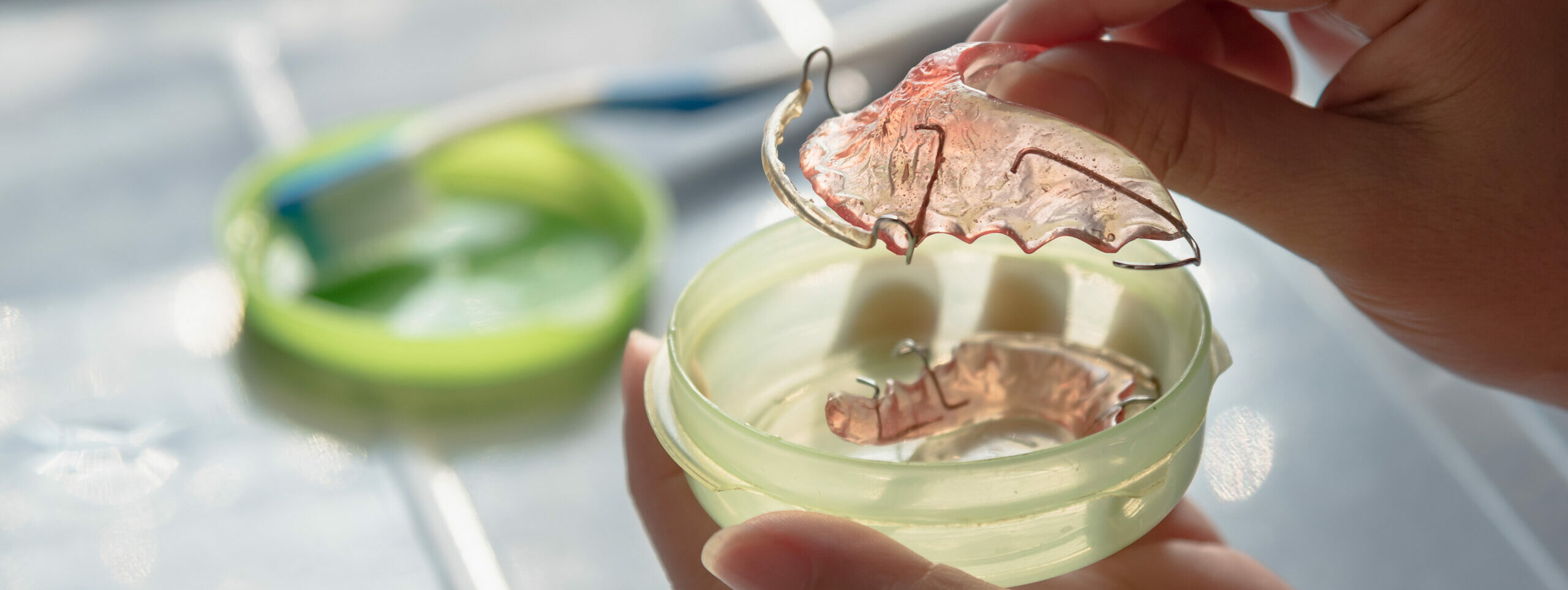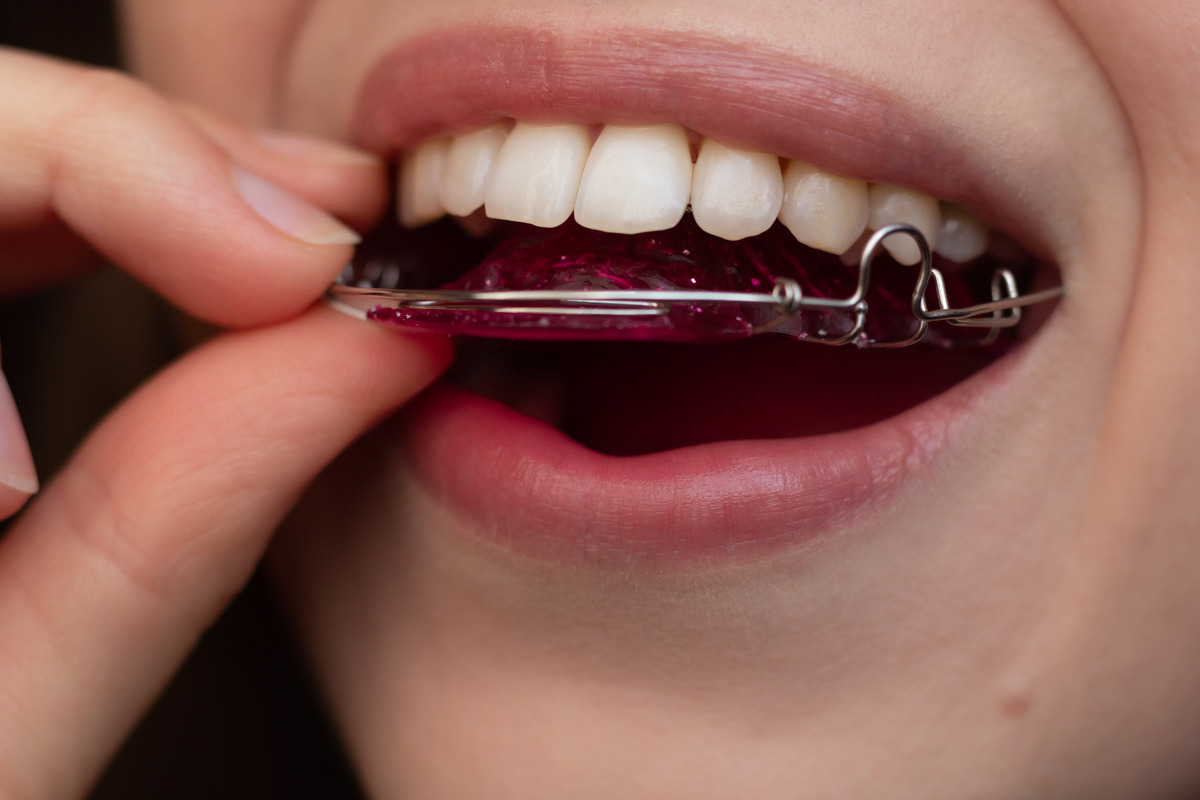
You wore braces or aligners for months, maybe years. A retainer is what keeps that result. The small piece of plastic or wire you wear every night deserves a real cleaning routine, not just a quick rinse.
A retainer that isn’t cleaned properly turns into a warm, damp home for bacteria and plaque. That can lead to odor, staining, and plaque that hardens into tartar, and it can shorten the retainer’s life. A retainer that no longer fits properly, whether from wear, damage, heat, or teeth shifting, should be checked by your orthodontist. So cleaning it well is really two things at once: a health habit and a way to protect the smile you paid for.
If you finished orthodontic treatment in Carlsbad, keeping your retainer clean is part of protecting that result, and the right method depends partly on which type of retainer you wear: a clear plastic tray, a Hawley appliance, or a bonded wire. The good news is that the routine is simple, and the deep-clean part is mostly soaking while you do something else. Below you’ll find exactly what to do every day, how to deep-clean by method, what your specific retainer type needs, and how to fix the most common problems.
Rinse your retainer in lukewarm water every time you take it out. After brushing your teeth, brush it gently with a soft toothbrush and a small bead of toothpaste. Clean it daily with Retainer Brite tablets or a 20 to 30 minute soak in equal parts water and white vinegar, then rinse well. Store it in its case, and never use hot or boiling water, bleach, or a dishwasher.
How do I clean my retainer every day?
Daily care is genuinely simple. This routine applies to any removable retainer: clear/Essix, Vivera, or a Hawley. (Bonded retainers that are glued behind your teeth are different; skip to their section below.)
- Rinse it the moment you take it out. Use lukewarm running water, not hot. A quick rinse clears away saliva and loose food before it dries into a film. Even ten seconds helps.
- Brush it gently after you brush your own teeth, using a soft-bristled toothbrush and a small bead of toothpaste, and go over every surface, inside and out, gently but thoroughly.
- Rinse again well, and check it in the light. It should feel smooth, with no film or grit.
- Brush your teeth before it goes back in, so a clean retainer goes over clean teeth.
- Store it dry in its case whenever it’s out of your mouth. More on the case further down.
Our office’s instruction is a small bead of toothpaste. The American Association of Orthodontists’ home retainer-care guidance is different: it says to brush with a dedicated toothbrush and dish soap and to avoid toothpaste, because abrasive particles in many toothpastes can leave tiny scratches. Follow the instructions you were given at the office, and ask if you are unsure. Both say to clean it every day and keep it away from heat.
How do I deep-clean my retainer?
Brushing handles the everyday film. Our office’s instruction is to clean your retainer daily with one of two methods: Retainer Brite cleaning tablets, or a soak in equal parts water and white vinegar for 20 to 30 minutes, followed by a good rinse. The table below sums it up.
One rule sits above all of them: if you are not sure a soak suits your specific retainer, ask your orthodontist.
| Method | What it does (and doesn’t) | How often | Safe for |
|---|---|---|---|
| Lukewarm water rinse | Clears saliva and loose debris before they dry on the retainer. | Every time you remove it | All removable types |
| Soft brush + a small bead of toothpaste | Brush it gently but thoroughly after you brush your teeth. | Daily | All removable types |
| Retainer Brite cleaning tablets | One of our office’s two daily options. Follow the package directions. | Daily | Removable retainers; confirm the box lists yours. Align advises against denture cleaners for Vivera (see below) |
| Equal parts water and white vinegar | Our office’s other daily option. Soak, then rinse well before the retainer goes back in. Never use boiling water. | Daily, 20 to 30 min | Removable retainers. If you wear a Hawley, ask your orthodontist first |
Whichever you choose, always rinse well before the retainer goes back in.
One thing a soak is not: a license to scrub hard. Our office’s instruction is to brush gently but thoroughly.
How do I clean my specific type of retainer?
This is where a generic method list falls short. The three common retainers are built differently, so the safe routine shifts a little for each.
Clear plastic retainers (Essix and Vivera)
These are the transparent trays molded to fit over your teeth. Essix is a clear retainer material and Vivera is a clear retainer made by Align Technology, the company behind Invisalign. Heat can warp them and abrasives can scratch them, so they reward gentleness.
- Rinse on removal, brush daily with a soft brush and a small bead of toothpaste, and store dry.
- For the daily deep clean on an Essix tray, use Retainer Brite tablets or the equal-parts vinegar soak from the table above. (Vivera is different: Align’s own guidance rules out denture cleaners and mouthwash soaks; see the note below.)
- Keep them far from heat. Hot drinks, a car dashboard in the Carlsbad sun, boiling water, or the dishwasher can warp a clear retainer, and a warped retainer may no longer fit.
A Vivera-specific note. Align’s Vivera page says to brush it gently with non-abrasive toothpaste, and its use-and-care leaflet warns against denture cleaners and soaking in mouthwash, which can damage the surface and make it dull. If you have Vivera, follow Align’s instructions and anything your orthodontist tells you.
Hawley retainers (acrylic plate + wire)
A Hawley retainer combines acrylic or hard plastic with a metal wire, and sits on the roof of your mouth or under your tongue, with the wire supporting the teeth.
- Rinse and brush it daily, covering every area, including the seam where the wire meets the acrylic.
- Ask about soaks. If you wear a Hawley retainer, ask your orthodontist which soaks are safe for its wire. A soft brush with a small bead of toothpaste does the daily work.
- Same heat rules apply: lukewarm water only, and never the dishwasher.
Bonded (permanent) retainers
A bonded or “permanent” retainer is a thin wire bonded to the inner side of your teeth. You can’t take it out, and the wire can easily trap plaque, which over time may contribute to tooth decay, gum inflammation, and odor. Our office’s advice is to spend more time and effort brushing this part of your mouth.
- Brush the wire and the backs of those teeth as usual.
- Get under and between the wire every day using a floss threader or special floss made for braces to pull floss beneath the wire, an interdental (proxy) brush, or a water flosser. The AAO recommends daily flossing around a fixed wire, and these are the tools that make it possible.
- If the wire feels loose, pokes you, or comes unglued at one end, stop poking at it and call your orthodontist. A loose bonded wire may let teeth shift, and our office’s instruction is to call promptly to have it re-bonded. Hulse Orthodontics covers what to do when a permanent retainer breaks in more detail.
What should I never use on my retainer?
Here’s what to avoid, and the reason each one matters.
- Hot or boiling water. High temperatures can warp or distort plastic retainers and change their fit, and our office’s instruction is never to use boiling water. If the water feels too hot on your skin, it’s too hot for your retainer.
- Whitening or gritty toothpaste, and hard scrubbing. The AAO notes that abrasive particles in some toothpastes can leave tiny scratches on a retainer. A small bead of toothpaste, brushed gently, is what our office suggests.
- Bleach. Bleach can degrade retainer materials or leave harmful residues, and it can irritate your mouth. Never soak a retainer in bleach.
- Full-strength or alcohol-based mouthwash soaks. The AAO cautions that alcohol and other harsh ingredients can weaken retainer materials or cause discoloration. For freshness, our office suggests soaking in mouthwash diluted with water for about 10 minutes; an alcohol-free rinse is the gentler choice.
- The dishwasher. Our office lists the dishwasher among the hot places to keep a retainer away from, and strong detergents can degrade retainer materials.
- Leaving it out uncovered, or wrapping it in a napkin. Our office’s advice is to store it in its case every time you take it out, because a retainer wrapped in a napkin will likely get thrown away. Case, every time.
How do I fix a retainer that’s cloudy, smelly, or covered in buildup?
The AAO suggests trying a more thorough cleaning first, and seeing your orthodontist if odor or discoloration persists after several attempts.
White or cloudy buildup and “brown stuff”
A chalky white film or darker, crusty patches can be plaque that has hardened into tartar, which is far more difficult to remove. Try the equal-parts vinegar-and-water soak or Retainer Brite tablets (per the table) followed by gentle brushing.
What you should not do is scrape, pick, or dig at hardened buildup with anything sharp. That can scratch the retainer, and tiny scratches can lead to discoloration or bacterial buildup. If a soak and gentle brushing won’t lift it, ask your orthodontist to take a look.
Odor or a bad taste
A persistent smell is often a sign that bacteria have built up. Try more consistent daily brushing, drying the retainer before storage, cleaning the case, and the daily tablet or vinegar soak. If the odor stubbornly returns even after a thorough cleaning, the retainer may have developed microscopic cracks that trap bacteria you can’t reach, a sign it’s time to have it looked at.
When should you call your orthodontist?
Cleaning solves a lot, but some things need a professional. Your orthodontist in Carlsbad should take a look if:
- the retainer is cracked, warped, or no longer fits the way it used to (stop wearing a cracked one and use a backup if you have it);
- a bonded wire is loose or detached;
- you have buildup that won’t come off with home cleaning;
- odor or discoloration persists after multiple cleaning attempts;
- a rough edge or wire is irritating your gums or cheek.
Don’t forget the case
An old or dirty case can harbor bacteria and undo your cleaning efforts. Keep it clean, and ask the office if you are unsure how to wash it. The AAO says to replace a case that shows cracks or wear, or that still smells after cleaning.
When to replace your retainer, and how we can help
Retainers don’t last forever. Cracks, warping, a fit that’s gone loose or tight, or staining and odor that won’t clean out are all signs yours may be near the end of its life. If you’re weighing a replacement, our guide to how much retainers cost breaks down what to expect by type.
If you’re in the Carlsbad area, Dr. Cameron Hulse, a specialist orthodontist practicing here since 2007, provides fixed or removable retainers, and our team can check a worn retainer and talk through a replacement. Call or text (760) 448-1344 to set up a retainer check. Bringing in a retainer that’s cloudy or loose beats discovering later that your teeth have shifted.
Frequently asked questions
What’s the best way to clean a retainer?
Rinse it every time you take it out, and after brushing your teeth, brush it gently with a soft toothbrush and a small bead of toothpaste. Clean it daily with Retainer Brite tablets or a 20 to 30 minute soak in equal parts water and white vinegar, then rinse well. Never use hot or boiling water, bleach, or a dishwasher.
What is the white or brown buildup on my retainer, and how do I remove it?
It can be plaque that has hardened into tartar. Soak it in equal parts water and white vinegar for 20 to 30 minutes, or use Retainer Brite tablets, then brush gently and rinse well. Don’t scrape it off. That can scratch the retainer; if it won’t budge, ask your orthodontist to take a look.
Why does my retainer smell, and can a dirty retainer cause yellow teeth?
Often built-up bacteria, from skipped cleanings, a dirty case, or damp storage. Brush it daily, dry it before storing, and use the daily tablet or vinegar soak. It matters for your teeth too: bacteria on a retainer can contribute to bad breath, tooth decay, and gum inflammation. If you notice discoloration on your teeth, ask your orthodontist or dentist.
Is it okay to store my retainer in water?
Store it in its case whenever it is out of your mouth, as our office advises. If you won’t be wearing it for a long stretch, ask your orthodontist how best to store it.
How do I clean a permanent (bonded) retainer?
Brush the wire and the teeth behind it daily, then clean under and between the wire with a floss threader or special floss made for braces, an interdental brush, or a water flosser. If the wire ever feels loose or comes unglued, skip the DIY fixes and call your orthodontist.
Keep your smile and your retainer in great shape
Dr. Cameron Hulse and our Carlsbad team can check a worn retainer, talk through replacements, and make a new one when it’s time.
Prefer to call? (760) 448-1344
This article is for general educational purposes and is not a substitute for personalized advice from your orthodontist or dentist.

Dr. Cameron Hulse grew up in Southern Orange County, California. While in his own orthodontic treatment in high school, Dr. Hulse realized how much his new smile changed him and decided he wanted to improve other’s teeth and smiles. Dr. Hulse pursued his dream and completed a BS in Zoology at Brigham Young University. Then he was selected to attend the University of Southern California’s prestigious School of Dentistry where he received his D.D.S.. After Dental School, he switched coasts and completed his orthodontic residency at Jacksonville University where he received his CAGS.