All Posts By

Dr. Cameron Hulse

Scared of Getting Braces? How to Ease Anxiety and Start Your Smile

By Braces

Let’s be honest: no one’s thrilled to hear they need orthodontic treatment. Somewhere between imagining a mouth full of metal and hearing horror stories from that one cousin who had headgear in the ’90s, your nerves kick in.

Sound familiar?

If you’re feeling anxious, you’re not alone. Patients tell us all the time that they came in unsure, even scared, and left wondering why they didn’t start sooner. The truth? Most of the fear around getting orthodontic care is based on outdated myths, not reality.

So let’s break it down, without the fluff.

Read More

tax for braces

Are Braces Tax Deductible? Understanding Medical Expense Deductions for Orthodontics

By Braces

The short answer: sometimes, and probably less often than you might hope. Braces and Invisalign can count as a medical expense on your taxes, but whether you actually get a deduction depends on a couple of tax rules that trip up a lot of families. For many households, paying with an HSA or FSA is the smarter, easier win, because that route skips the two rules that block the deduction for most people. So are braces tax deductible? Here is the honest breakdown in plain English, whether you are paying for a teen’s braces or your own adult Invisalign.

One note before we start: we are orthodontists, not tax advisors. Everything here is general educational information, not tax advice. Tax rules change from year to year, and every situation is different, so confirm the specifics with a qualified tax professional and the IRS before you file.

Quick Answer

Sometimes. Braces and Invisalign can be tax-deductible, but only if the treatment is medically necessary, you itemize your deductions, and your total out-of-pocket medical costs top 7.5% of your income (AGI). Because most people take the standard deduction, many families will not qualify, so paying with an HSA or FSA is often the easier way to save. This is general information, not tax advice.

Are Braces Tax Deductible? The Honest Answer

Yes, braces and Invisalign can be tax-deductible, but only if three things are all true at the same time:

  1. The treatment is medically necessary, not purely cosmetic.
  2. You itemize your deductions instead of taking the standard deduction.
  3. Your total out-of-pocket medical expenses for the year are more than 7.5% of your adjusted gross income (AGI).

All three have to line up in the same tax year, not just one or two. Here is the honest catch most articles skip. Roughly 9 in 10 taxpayers now take the standard deduction and never itemize at all, and plenty of people who do itemize still fall short of that 7.5% floor. So the deduction is possible, but many families will not actually get one.

That is not a knock on your treatment. It is simply how the math works for most households. The good news: even when the itemized deduction is out of reach, an HSA or FSA usually is not, and it helps even if you take the standard deduction. We cover that route below. Again, this is general information, not tax advice.

When Braces Count as a Medical Expense

Most orthodontic treatment does qualify as a medical expense in the eyes of the IRS, and that surprises a lot of people. IRS Publication 502 counts dental and orthodontic care that diagnoses, treats, or prevents a health problem as qualified medical care, and it specifically allows costs for the prevention and alleviation of dental disease. Purely cosmetic work, like teeth whitening, does not qualify.

Most orthodontic treatment is functional, not cosmetic. Braces and Invisalign correct bite problems, crowding, and jaw alignment, which affect how you chew, speak, and keep your teeth healthy. That functional purpose is exactly why the cost usually counts as medical care rather than a beauty expense. That same definition also decides what an HSA or FSA will cover, which matters later.

What generally counts: braces, clear aligners, retainers, orthodontic appliances, X-rays and records, and consultation fees. One key limit: only the amount you actually pay out of pocket qualifies. Anything your insurance covers does not, since you did not pay it. So add up your unreimbursed total, meaning what you paid after any insurance payout, and remember this is general information, not tax advice.

The Two Catches: Itemizing and the 7.5% Rule

This is the section that decides whether a deduction actually helps you, so let us be straight about the numbers.

Catch one is itemizing. You claim medical expenses on Schedule A (Form 1040), and itemizing only helps if your total itemized deductions beat the standard deduction. For the 2025 tax year, the standard deduction is about $15,750 for single filers, about $31,500 for married couples filing jointly, and about $23,625 for heads of household. Those figures change every year, so always check the IRS for the current number.

Because those amounts are so high, the vast majority of people take the standard deduction and never itemize. That is a real shift from before 2018, when the standard deduction was far smaller and roughly a third of filers itemized.

Catch two is the 7.5% floor. Even if you do itemize, you can only deduct the portion of your total medical expenses above 7.5% of your AGI, as the IRS explains.

Here is a simple illustrative example with round numbers. Say a household has an AGI of $80,000, which puts their 7.5% floor at $6,000. If they paid $6,500 in total medical and dental costs for the year, including braces, only $500 of that would be deductible, and only if they itemize. If braces were their only big medical cost that year, they very likely would not clear the floor at all.

That is why an HSA or FSA is often the better move for a lot of families. As always, this is general information, not tax advice, and a tax professional can run your actual numbers.

HSA and FSA: Often the Easier Way to Save

If the itemized deduction feels out of reach, here is the route most families can actually use. A Health Savings Account (HSA) or Flexible Spending Account (FSA) lets you pay for orthodontic treatment with pre-tax dollars, which lowers your taxable income for the year.

The big advantage is what these accounts do not require: no itemizing, and no 7.5% floor to clear. Far more families see a real tax benefit this way than through the itemized deduction. Braces, clear aligners, and retainers are generally eligible expenses, as long as insurance has not already covered the cost. Keep the itemized receipt we give you, since your plan may ask for it to substantiate the expense.

A few practical notes. An FSA usually comes through your employer and is often use-it-or-lose-it within the plan year, and for 2025 you can set aside up to $3,300 in salary-reduction contributions. An HSA pairs with a high-deductible health plan and rolls over year to year, which helps since orthodontic treatment often spans more than one plan year. Either way, keep your receipts and plan your contributions before treatment starts so the timing lines up.

For most families, this is the more realistic win. Check your specific plan rules, and remember this is general information, not tax advice.

What to Keep, and How We Can Help

Whether you end up itemizing or paying through an HSA or FSA, the paperwork is the same simple habit: keep every receipt and payment record, plus proof of anything insurance or your HSA or FSA already covered. Only your own out-of-pocket cost counts, so those records matter. Hold onto everything for at least three years in case the IRS ever asks.

Here is the easiest part. Just ask us for an itemized annual payment summary that shows the service, date, and amount you paid. We are always glad to provide it, and it is exactly what you or your tax preparer needs to sort out the tax side. No digging through old emails required.

Separately from taxes, we want treatment to be manageable no matter how the deduction math shakes out. That is why we offer in-house financing and flexible payment plans. You can see how we approach treatment cost and financing on our cost page. One quick ask to our front desk saves you the headache at tax time.

Frequently asked questions

Are braces tax deductible?
Sometimes. Braces are a qualified medical expense, so they can be deducted, but only if the treatment is medically necessary, you itemize, and your total unreimbursed medical expenses top 7.5% of your AGI. Because most people take the standard deduction, many families will not qualify. This is general information, not tax advice.
Is Invisalign tax deductible?
Invisalign follows the same rules as braces. When it is medically necessary to correct a bite or alignment issue, the IRS treats it like any other orthodontic care, so it can be deducted if you itemize and clear the 7.5%-of-AGI floor. Purely cosmetic straightening would not qualify.
Can I use my HSA or FSA for braces?
Yes, generally. Orthodontic treatment is usually HSA and FSA eligible when it is medically necessary, and you pay with pre-tax dollars. The big plus: no itemizing and no 7.5% floor, so this is often the easier route. You cannot also deduct amounts you already paid pre-tax.
How much of my braces can I actually deduct?
Only the unreimbursed portion of your total medical expenses above 7.5% of your AGI, and only if you itemize. So if your AGI is $80,000, the first $6,000 of medical costs is not deductible, and only qualifying costs above that line count. Run your real numbers with a tax professional, since this is general information only.
Do I need a letter of medical necessity?
Not always, but good records matter. For most orthodontic treatment, an itemized statement showing the service, date, and amount you paid is what you and your tax preparer need. If your HSA or FSA plan or your tax professional asks for more, we are happy to help. Ask us for your payment summary.

Questions about your braces or Invisalign?

Whatever’s on your mind, our Carlsbad team is happy to help, no judgment, just straight answers and a plan for a healthy smile.

Prefer to call? (760) 448-1344

This article is for general educational purposes only and is not tax, legal, or financial advice. Tax rules change and every situation is different, so confirm the specifics with a qualified tax professional and the IRS.

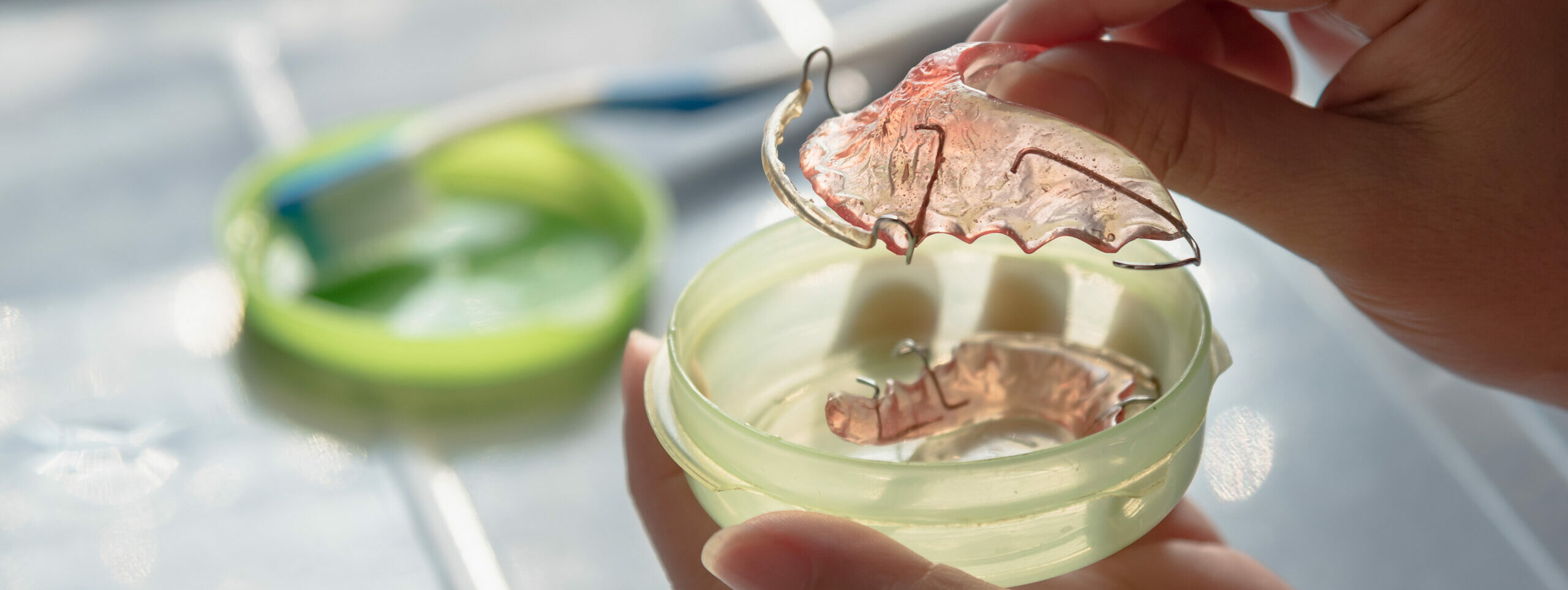
Retainers After Braces: Your Essential Guide to a Lasting, Perfect Smile

By retainers

Congratulations, your braces are off! That’s a huge milestone, but now comes the important part: keeping that beautifully aligned smile in place.

Teeth have a natural tendency to shift, even after years of orthodontic treatment. Without a retainer, all that effort could slowly unravel, causing teeth to move back to their original positions. Think of retainers as insurance for your smile, a simple but essential step in maintaining your orthodontic results.

Not sure if you’re choosing the right retainer? Curious about costs? We’ve got you covered. Learn how much retainers cost and what to expect when making this long-term investment in your smile.

Read More

Foods to Avoid With Braces: A Simple Carlsbad Guide

By Braces

The foods to avoid with braces fall into a few clear groups: hard and crunchy, sticky and chewy, anything you bite into with your front teeth, and sugary or starchy snacks. Steer around those and your treatment stays on schedule. Fewer broken brackets means fewer surprise visits and a smoother, on-time finish.

We are the Carlsbad practice of specialist orthodontist Dr. Cameron Hulse, and this is the same guidance we give our patients chairside.

Quick Answer

The foods to avoid with braces fall into four groups: hard and crunchy, sticky and chewy, anything you bite into with your front teeth, and sugary or starchy snacks. Skip or adapt them (slice apples, cut corn off the cob) to avoid broken brackets and delays. Plenty of soft foods are still on the menu, and clear aligners have no food rules at all.

Why the Wrong Foods Cost You Time

Braces work through steady, gentle pressure, and that only holds up if the hardware stays intact. Each broken bracket or loose wire can set your treatment back, according to the American Association of Orthodontists (AAO). Braces also create nooks and crannies that trap food, so gentle chewing matters more than it used to.

The mechanics are simple. Hard foods can crack a bracket or pop it off. Sticky and chewy foods can pull a bracket loose or bend a wire. Either way, you are looking at an unplanned repair.

A single breakage tends to cost you three things:

  • An extra, unplanned appointment
  • Lost progress while the tooth drifts back
  • A longer overall timeline before your metal braces come off

Foods to Avoid With Braces, by Category

Here is the full list, grouped so you can find your trouble food fast.

Hard and crunchy foods crack or dislodge brackets. Skip or save these for after treatment:

  • Nuts
  • Popcorn
  • Ice
  • Hard candy
  • Hard pretzels and snack chips
  • Crispy pizza crust
  • Hard rolls and bagels

Sticky and chewy foods pull brackets loose and bend wires. Avoid:

  • Caramel, taffy, and toffee
  • Chewing gum
  • Gummy candy
  • Dried fruit
  • Thick, chewy pizza crust

Foods you bite into with your front teeth are usually fine with a small adjustment. Do not ban them, just adapt them:

  • Whole apples: slice them thin
  • Corn on the cob: cut the kernels off first
  • Crusty or French bread: choose a soft loaf instead
  • Ribs and wings: take the meat off the bone
  • Tough or stringy meats: cut into small, tender pieces

The rule that makes this work: cut firm foods into small pieces, chew with your back teeth, and take smaller bites. Less pull on the front brackets, fewer breakages.

Sugary and starchy foods are a different risk. Candy, soda, and sweetened snacks do not usually damage the appliance, but they feed plaque that builds up around your brackets. The ADA warns that this buildup can permanently stain or damage the enamel underneath once the brackets come off. That is a stronger reason to cut back than plain cavity risk.

One quick habit closes the loop: brush and floss around your brackets after you eat, using floss threaders or a water flosser to reach under the wire.

Here is the quick version, swap for swap:

Instead of these Reach for these
Popcorn, nuts, ice, hard candy Yogurt, smoothies, soft cheese
Caramel, taffy, gum, dried fruit Bananas, berries, applesauce
Whole apples, corn on the cob, crusty bread Sliced apples, corn off the cob, soft bread
Chewy bagels, tough or stringy meat Soft pasta, scrambled eggs, fish

A Quick Word on Staining and Clear Braces

Metal brackets do not stain, and ceramic or clear brackets rarely do either, because they are made from a polished, non-porous material. The bracket is not the problem.

The real culprit is the small clear elastic ties that hold the wire to each bracket. They are porous, so they pick up pigment from:

  • Curry
  • Coffee and tea
  • Tomato sauce
  • Hot chocolate
  • Soy sauce

The reassuring part: those ties are replaced at every adjustment, so any staining is temporary and refreshed with new clear ties at your next visit. If you are weighing clear against metal, we can walk you through your treatment options.

What You CAN Eat With Braces

Plenty is still on the menu. Anything soft, cooked tender, or easy to chew is fair game, and the AAO's braces-friendly list is generous:

  • Yogurt
  • Scrambled eggs
  • Oatmeal
  • Soups
  • Softer-cooked pasta
  • Mashed potatoes and rice
  • Steamed or boiled soft vegetables
  • Soft cheeses
  • Fish and seafood
  • Bananas and berries
  • Smoothies
  • Ice cream

Firmer favorites are not off the table either. Apples and carrots are fine as long as you cut them into small pieces and chew with your back molars rather than biting in up front.

A few do double duty: cold, soft foods like smoothies, yogurt, and applesauce feel especially good when your teeth are tender after an adjustment.

Getting Through the Sore First Few Days

Soreness is normal and short-lived. After new braces go on or a wire gets adjusted, tenderness is usually worst in the first few days and then eases from there.

Lean on soft, cool foods while it lasts:

  • Smoothies
  • Yogurt and applesauce
  • Mashed potatoes
  • Scrambled eggs
  • Broth-based soup

A few comfort tips make those days easier:

  • Cut food into small pieces
  • Chew with your back teeth
  • Take smaller bites
  • Rinse with warm salt water
  • Stick to soft foods until the soreness fades

Eating out around Carlsbad is still easy if you steer soft. Choose soft tacos over crunchy shells, pasta over crusty bread, and a smoothie or a bowl over anything you have to bite hard into.

If a bracket pops off or a wire starts poking after something hard or chewy, press a pea-sized ball of orthodontic wax over the spot for comfort. Do not use superglue or store-bought dental cement, since both make a proper repair harder later. A loose bracket is usually urgent but not a true emergency unless there is significant pain, bleeding, or trouble with your bite, and our emergency care page walks you through the difference. Either way, contact us for a repair visit and we will get you in.

Prefer No Food Rules? How Invisalign Compares

If food restrictions are a dealbreaker, clear aligners are worth a look. Because Invisalign trays come out before you eat or drink anything but water, there are no food restrictions during treatment. Popcorn, apples, and the rest all stay on the menu.

There is a real trade-off. The aligners have to go back in promptly and be worn about 20 to 22 hours a day to keep your treatment on schedule, and only plain water is safe while they are in.

Braces and Invisalign both straighten teeth well, so food is just one factor. We offer both, plus Invisalign Teen, so you are not locked into one path.

Questions about your braces or Invisalign?

Whatever’s on your mind, our Carlsbad team is happy to help, no judgment, just straight answers and a plan for a healthy smile.

Prefer to call? (760) 448-1344

Frequently Asked Questions

What foods should I avoid with braces?

Avoid hard or crunchy foods like popcorn, nuts, ice, and hard candy, plus sticky or chewy foods like caramel, taffy, and gum. Tough, stringy meats and whole apples or carrots also cause trouble unless you cut them small. Cut back on high-sugar and starchy snacks and sodas too, since they raise your decay and staining risk.

What can I eat with braces?

Almost anything soft. Good options include yogurt, scrambled eggs, oatmeal, soups, softer-cooked pasta, mashed potatoes, and soft cheeses. Bananas, berries, steamed vegetables, fish, and smoothies all work well. Firmer foods like apples and carrots are fine if you cut them into small pieces and chew with your back teeth.

What should I eat the first week of braces?

Lean on cool, soft foods while your teeth are tender, such as smoothies, yogurt, applesauce, mashed potatoes, scrambled eggs, and broth-based soup. Soreness is usually worst in the first few days and then eases from there. The same plan works after each tightening visit.

Do clear or ceramic braces stain from food?

The ceramic bracket itself resists staining. The clear elastic ties around each bracket are porous, so they can pick up color from foods like curry, coffee, tea, and tomato sauce. Those ties are swapped out at every adjustment, so any staining is temporary and gets refreshed with new clear ties at your next visit.

Does Invisalign have food restrictions like braces?

No. Because the aligners come out before you eat, there are no food restrictions during Invisalign treatment. The requirement instead is discipline: put the trays back in promptly, drink only plain water while they are in, and wear them about 20 to 22 hours a day to stay on schedule. Want to compare your options? Contact us for a free consultation at our Carlsbad office.

This article is general information about orthodontic care, not medical or dental advice. For guidance specific to your braces, see Dr. Cameron Hulse or another qualified orthodontist.

Dry Mouth With Braces – 7 Proven Solutions

By Braces

Dry mouth is a common issue for people with braces. It can be uncomfortable and may increase the risk of dental problems. Braces can affect saliva flow, making it harder for saliva to coat all surfaces of the teeth and gums.

The good news? There are simple and effective ways to manage dry mouth while wearing braces. From staying hydrated to using specialized oral care products, you can keep your mouth comfortable and healthy throughout your orthodontic journey.

Read More

Can You Get Braces While Pregnant? A Guide for Expectant Mothers

By Braces, Invisalign

Pregnancy is an exciting time filled with change, but what about those braces you’ve been considering? Is it safe to start orthodontic treatment now? The short answer: in many cases, yes, but it depends on you and your pregnancy, so it is a decision to make with your orthodontist and your obstetric provider.

At Hulse Orthodontics, we’re here to make your smile journey smooth, safe, and stress-free during this special time.

Read More

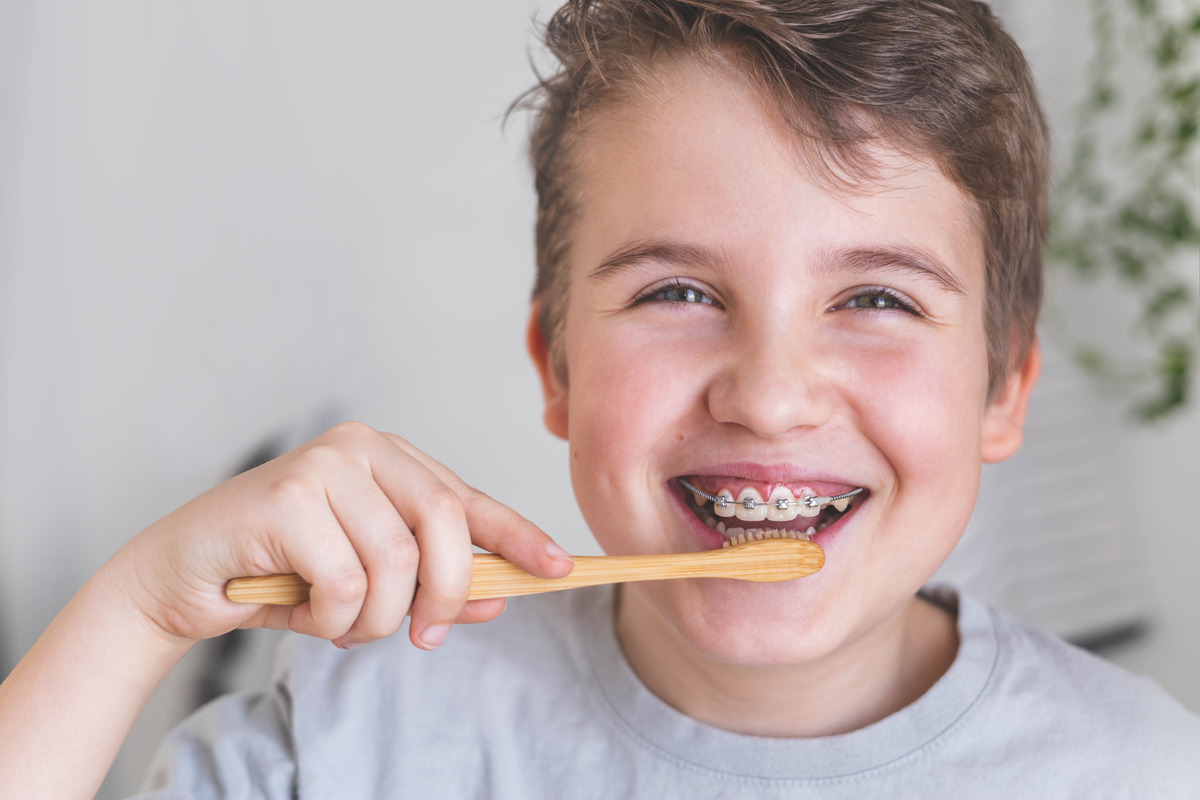
child brushing teeth with braces

White Spots on Teeth From Braces: Prevent Them, and What to Do If You Have Them

By Braces

Maybe you are still in treatment and want to keep your enamel clean and clear. Or maybe your braces just came off and you spotted chalky patches you never noticed before. Either way, white spots on teeth from braces are one of the most common worries we hear at our Carlsbad practice.

These marks are largely preventable, and prevention is far easier than removal. Caught early, a white spot can fade. Once it sets in, it can be permanent. So the daily routine you keep during braces matters more than any fix later.

Quick Answer

White spots from braces are decalcification: plaque acid pulls minerals out of the enamel around the brackets, leaving chalky patches. They’re largely preventable, and prevention beats any later fix, because early spots can fade but established ones can be permanent. Brush well around every bracket, use fluoride daily, and limit sugary snacks. If you already have them, remineralize early and get any whitening professionally timed.

What White Spots Actually Are

White spots are enamel demineralization, also called decalcification. Plaque bacteria produce acid, and when that acid sits on a tooth long enough, it pulls calcium and phosphate out of the enamel. With braces, plaque collects fastest around the brackets and wires, right where it is hardest to reach (AAO).

Healthy enamel is glossy and reflects light evenly. Demineralized enamel turns porous just below the surface, so it scatters light and looks chalky or matte (research review).

A white spot is an early warning sign of decay, a "white spot lesion," not yet a cavity. It is a signal to act, not a reason to panic.

Braces themselves do not directly cause white spots. They add more surfaces for plaque to hide, and it is the plaque plus time that does the damage. White spots are very common in people who wear fixed braces, so if you have one, you are far from alone.

Why Prevention Is the Real Treatment

Generic advice treats daily care as basic upkeep. It is actually the treatment, and the cheapest one you will ever get.

Fluoride does most of the heavy lifting. In one research review, a professional fluoride varnish applied during orthodontic treatment reduced enamel demineralization by about 44%. None of this has to feel scary. A few consistent habits do the work.

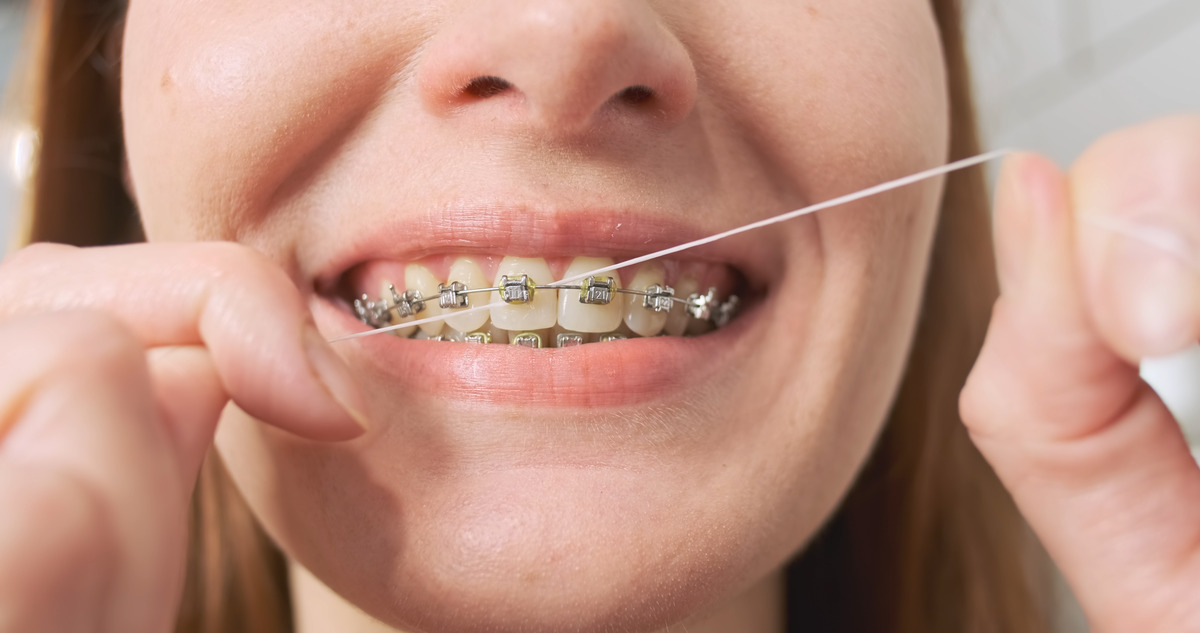
Flossing carefully around braces to prevent white spots

How to Prevent White Spots During Braces

Keep plaque off your enamel, especially around every bracket. Run through this checklist every day.

  • Brush twice a day, ideally after meals. Spend two full minutes with a soft or electric brush, angled toward the gumline.
  • Clean above, below, and around every bracket. Give extra attention to your upper front teeth, the most common white-spot hot spot.
  • Floss daily. Use floss threaders or a water flosser to get under the wire and between teeth.
  • Use a daily fluoride mouthrinse. Bedtime is best, so the fluoride sits on your teeth overnight.
  • Limit the frequency of sugary and acidic snacks and drinks. Constant sipping through the day is worse for your enamel than one sitting. See our guide to foods to avoid with braces.
  • Keep your regular dental cleanings. Routine visits let us catch the earliest signs before they set in.

For higher-risk patients, a dentist or orthodontist may suggest a high-fluoride prescription toothpaste, which outperformed standard toothpaste at reducing lesions in one study (research).

Consistency beats intensity. The nightly brush you never skip protects your smile more than one flawless cleaning after a week of rushing.

Already Have White Spots? What Actually Helps

Spotting a chalky patch after your braces come off is unsettling. The good news: early white spots often improve as the enamel re-strengthens, so the sooner you act, the better your odds.

First, have your dentist or orthodontist confirm the spots are early demineralization, not active decay. Then start with the gentlest option: helping the enamel take minerals back in with high-fluoride toothpaste, a professional fluoride varnish, and a CPP-ACP paste like MI Paste. The effect is modest but real.

If a spot is stubborn and stays visible, the next steps are a general or cosmetic dentist's job, not ours. Those options include resin infiltration (the ICON treatment, where a tooth-colored resin fills the porous spot so it blends in), enamel microabrasion, and bonding or veneers for more severe cases. We are glad to point you toward the right care.

Whitening deserves a caution. It is unpredictable for white spots and can change how they look either way. Before reaching for a DIY kit, get the spots assessed and the timing planned by a professional. Sequencing matters more than speed.

Lower Your Risk From the Start in Carlsbad

Still choosing your treatment? Clear aligners carry a much lower white-spot risk than fixed braces, because there are no brackets trapping plaque and the trays come out so you brush and floss normally. One study found white spots in about 1.2% of aligner patients versus about 25.7% of traditional-braces patients (research).

Aligners are not a free pass, though. They still need good hygiene, clean trays, and water only while you wear them.

Some smiles genuinely need fixed braces, and that is fine. Prevention just matters a little more. You can compare Invisalign and metal braces, or see all your treatment options.

At our Carlsbad practice, we coach your daily routine and check for the earliest signs at every visit, so we can step in fast if anything starts. Ready to begin? Contact us for a free consultation or virtual smile assessment.

Questions about your braces or Invisalign?

Whatever’s on your mind, our Carlsbad team is happy to help, no judgment, just straight answers and a plan for a healthy smile.

Prefer to call? (760) 448-1344

Frequently Asked Questions

Are white spots from braces permanent?

Not always, but they can be. Early white spots can fade when you strengthen the enamel and control plaque, according to the AAO. How much they improve depends on how deep the mineral loss is and how quickly you address it. Spots left to progress can become permanent, which is why early action matters so much.

Is a white spot the same as a cavity?

No. A white spot is an early, non-cavitated warning sign, mineral loss just under a surface that is often still intact. It is not decay yet, but it can move that way if ignored. Catching it early and tightening up your fluoride and hygiene keeps it from turning into a cavity.

How do I get rid of white spots after braces?

Start with remineralization: fluoride toothpaste, professional varnish, and CPP-ACP paste to strengthen early spots. If a spot stays visible, a general or cosmetic dentist can offer resin infiltration, microabrasion, or bonding. Get the spot assessed before whitening, since whitening is unpredictable for these marks and timing should be planned by a professional.

Do clear aligners cause white spots?

They can, but the risk is much lower than with fixed braces. Because aligners come out for normal brushing and flossing and have no brackets trapping plaque, one study found white spots in only about 1.2% of aligner patients. You still need good hygiene, clean trays, and water only while wearing them to keep that advantage.

Can white spots be prevented with braces?

Yes, largely. A consistent daily routine (brushing well around every bracket, flossing, a nightly fluoride rinse, and limiting sugary and acidic snacks) prevents most white spots. Regular cleanings help us catch early signs fast. If you want a prevention plan built for your smile, contact us in Carlsbad.

This article is general information about orthodontic care, not medical or dental advice. For a plan specific to your teeth, see Dr. Cameron Hulse or another qualified provider.

Invisalign Cutting Tongue & Irritation: Causes & Remedies

By Invisalign

Are you dealing with tongue irritation or small cuts from your Invisalign aligners? While Invisalign is loved for being convenient and nearly invisible, some people feel discomfort when a tray edge is rough or sharp. It is common, and it is very manageable. Below we explain why it happens, how to get relief fast, and how to keep it from coming back.

Quick Answer

Invisalign can irritate or cut your tongue when a tray edge is slightly rough or a new set has not fully seated. The fastest relief is a small ball of orthodontic wax over the sharp spot, along with a warm salt-water rinse to soothe the area. If an edge keeps bothering you, call your orthodontist and let them smooth or replace the tray rather than filing it yourself, since filing can change the fit. Most irritation settles within a few days.

Why Does Invisalign Cause Tongue Irritation?

Invisalign aligners are custom-made from smooth plastic, but every so often an edge has a rough spot that rubs the tongue. The most common causes are:

Cause Description
Sharp tray edges A rough or unpolished edge that contacts the tongue and causes an abrasion.
Trays that have not fully seated An aligner that is not seated all the way can shift and create friction, especially underneath the tongue.
Tongue movement Constant contact between the tongue and the aligner during speech or swallowing can add to soreness.

How to Identify Tongue Cuts from Invisalign

Spotting irritation early helps you head off more discomfort. Look out for:

  • A persistent rough or raw feeling on your tongue.
  • Small cuts, red spots, or abrasions.
  • Lingering soreness, especially after speaking or eating.
  • Swelling or increased sensitivity.

Pay attention to how your tongue feels after you insert or remove your aligners, so you can act early.

Quick Remedies for Tongue Cuts

If your tongue is already sore, these steps bring relief:

Remedy How it helps How to use it
Orthodontic wax Covers a sharp edge so it stops rubbing. Roll a small ball of wax and press it onto the rough edge of the aligner.
Warm salt-water rinse Soothes the area and helps minor cuts heal. Dissolve half a teaspoon of salt in a cup of warm water and rinse gently after meals.
Cold water or an ice chip Reduces swelling and eases irritation. Sip cold water, or briefly hold an ice chip on the sore spot without chewing it.
Over-the-counter pain reliever Eases discomfort and inflammation. Take as directed on the label.

How to Smooth the Edges of Your Aligners

When an edge feels sharp, the safe first move is orthodontic wax, which cushions the spot right away. If the edge keeps bothering you, call our office and let us smooth or replace the tray properly. We do not recommend filing your aligners yourself: it is easy to remove too much, which changes how the tray fits and can affect your treatment. A quick visit is faster and safer than a nail file.

Dietary Adjustments to Minimize Discomfort

What you eat can affect how your tongue feels while it heals:

  • Choose soft foods like smoothies, soups, yogurt, and mashed potatoes, which are gentle on your tongue.
  • Avoid irritants such as crunchy or acidic foods like chips, nuts, and citrus.
  • Stay hydrated, since sipping water through the day keeps your mouth moist and reduces friction.

Preventing Future Tongue Irritation

A little prevention goes a long way toward a more comfortable Invisalign experience:

  • Check new trays for rough edges before you wear them, and reach for wax if you feel one.
  • Seat your aligners fully so they do not shift and rub.
  • Keep your check-ups, so we can confirm your trays fit well and catch any rough edges early.

What If It’s Your Retainer, Not Your Aligner?

The same soreness can come from a clear retainer after treatment, not just an Invisalign tray. A plastic retainer that is new, slightly warped, or has a rough edge can rub the tongue in exactly the same way, and the fixes are the same: wax over the sharp spot, a warm salt-water rinse, and a call to your orthodontist if it keeps up. If your retainer no longer fits smoothly, do not force it. Learn more about the types of retainers we offer and what a replacement retainer typically costs.

When to Contact Your Orthodontist

If irritation lasts despite home remedies, or you notice signs of infection such as spreading redness, swelling, or pus, contact your orthodontist right away. We can find the cause and give you lasting relief.

Common Myths About Invisalign and Tongue Cuts

Myth Fact
“Sharp edges are unavoidable.” A rough edge can be cushioned with wax and smoothed or replaced by your orthodontist.
“Everyone gets cuts.” Many people finish treatment with little or no irritation when their trays fit well.
How do I stop my Invisalign from cutting my tongue?
Press a small ball of orthodontic wax over the sharp edge so it stops rubbing, and rinse with warm salt water to soothe the area. If the same edge keeps bothering you, call your orthodontist and let them smooth or replace the tray. Avoid filing the aligner yourself, since that can change how it fits.
Why is my Invisalign cutting my tongue?
Usually because a tray edge is slightly rough or the aligner has not fully seated, so it rubs the tongue during speech and swallowing. A new set is the most common time to notice it. Wax and a salt-water rinse handle most cases, and we can smooth a stubborn edge for you.
Is it normal for my tongue to hurt with Invisalign?
Mild soreness, especially in the first day or two of a new tray, is common and usually fades as your mouth adapts. Small cuts from a sharp edge are also common and manageable. Pain that is severe, spreading, or not improving after a few days is worth a call to your orthodontist.
Could it be my retainer cutting my tongue instead?
Yes. A clear plastic retainer can rub the tongue just like an Invisalign tray, particularly if it is new, warped, or has a rough edge. The remedies are the same: wax, a warm salt-water rinse, and a call to your orthodontist if it keeps up or the retainer no longer fits smoothly.

Uncomfortable edge that won’t quit?

Whatever’s on your mind, our Carlsbad team is happy to help, no judgment, just straight answers and a plan for a healthy smile.

Prefer to call? (760) 448-1344

This article is for general educational purposes only and is not a substitute for professional dental or orthodontic advice. Always consult your orthodontist if you have concerns about your treatment.

What the Invisalign Warranty Really Covers

By Invisalign

Did you know that most of what people call the “Invisalign warranty” is already built into your treatment? Invisalign does not sell you a separate warranty you sign up for. Instead, your aligners and retainers come with a manufacturer guarantee against defects, and your treatment plan may include years of replacement and refinement trays arranged through your orthodontist.

Understanding how this actually works, what is covered, how to stay eligible, and what to do if something goes wrong, can save you money and stress. Let’s break it down in plain English.

Quick Answer

Invisalign does not have a single standard warranty you buy. Your aligners (and Vivera retainers, if you have them) are guaranteed to be free from manufacturing defects, and Comprehensive treatment plans typically include refinement and replacement aligners for up to five years, all arranged through your orthodontist rather than with Invisalign directly. Lost or broken trays are handled office by office, sometimes for a small lab fee. Wear your aligners as prescribed and keep your check-ups, and you stay covered.

What’s Covered

The protections that come with Invisalign treatment fall into a few clear categories:

Manufacturing defects. Invisalign aligners, and Vivera retainers if your plan includes them, are warranted to be free from defects in materials and workmanship. If a tray arrives with a visible flaw or structural problem, your orthodontist can re-order a replacement at no extra cost to you.

Refinements and additional aligners. Comprehensive treatment plans typically include refinement trays for up to five years, so your orthodontist can fine-tune your result if your teeth need a little extra guidance to reach the finish line. Lighter packages such as Invisalign Lite or Express include a shorter window and fewer trays, because they are designed for smaller corrections.

Broken or damaged trays. If an aligner cracks or breaks during normal wear, your orthodontist can usually order a replacement. How lost or broken trays are billed varies from office to office, which we cover below.

What Should You Do If You Experience Issues?

If something goes wrong with your aligners, acting quickly keeps your treatment on track:

Broken or cracked aligners. Stop wearing the damaged tray and call your orthodontist. In most cases you can drop back to your previous set to hold your progress while a replacement is ordered.

Lost aligners. A lost tray is not usually treated as a defect, so a replacement may carry a lab fee that varies from office to office. Alternatively, if you were already near the end of that tray’s schedule, your orthodontist may simply move you up to the next set. Either way, call the office rather than leaving a gap, since going without an aligner lets your teeth drift.

How Long Does the Warranty Last?

For Comprehensive treatment, the refinement and replacement window typically runs up to five years. It is important to understand what that five years really is: it is not a patient warranty card you register, but a lab agreement between Invisalign and your orthodontist that covers additional aligners over that period. The window depends on your treatment type:

  • Comprehensive plans: the full up-to-five-year window.
  • Lite or Express programs: a shorter window, since these are meant for minor corrections.

Ask your orthodontist which plan you are on so you know exactly what your treatment includes.

How to Stay Covered: Compliance Is Key

The manufacturer’s defect guarantee stands on its own, but whether you need extra trays, and how a replacement is billed, often comes down to following your treatment plan. The essentials are simple:

  • Wear your aligners as prescribed, usually 20 to 22 hours a day.
  • Keep your check-ups, so your orthodontist can confirm your treatment is tracking as planned.
  • Care for your trays, avoiding excessive heat and harsh cleaning agents that can warp or cloud the plastic.

Think of it as a partnership: you wear and protect the trays, and your orthodontist keeps your plan, and its coverage, on track.

Beyond Warranty Coverage: What to Know

A few situations fall outside what is covered, so they are worth knowing up front:

  • DIY adjustments. Do not try to trim, file, or repair an aligner yourself. Altering a tray can change how it fits and is not covered. If an edge is bothering you, call the office and have it smoothed or replaced properly.
  • Improper care. Skipping appointments or cleaning trays with harsh products can leave you responsible for the cost of replacements.

How to Handle Replacement Requests

If you need a defective tray replaced, the process is straightforward:

  • Contact your orthodontist. They will assess the issue and place the order with Invisalign.
  • Document the problem. A quick photo of a cracked or flawed tray can speed things along.
  • Act early. Reporting a problem promptly prevents delays in your treatment.

As long as you have followed your plan, genuine manufacturing issues are typically resolved without hassle.

Tips to Get the Most From Your Coverage

Want your treatment to run as smoothly as possible? A few habits help:

  • Ask what your plan includes. Confirm with your orthodontist whether you are on a Comprehensive plan and how lost or broken trays are billed, so there are no surprises.
  • Stay consistent. Wearing your aligners as directed is the single biggest thing that keeps your treatment, and its coverage, on track.
  • Have a backup plan. If you lose a tray, keep your previous set on hand to wear while a replacement is arranged.

Why This Matters

Knowing how your Invisalign coverage really works means fewer surprises and less out-of-pocket cost. Whether it is replacing a defective tray, fine-tuning your result with refinements, or simply understanding what your plan includes, it all comes back to your relationship with your orthodontist, who is the one who arranges every bit of it.

Final Thoughts: Protect Your Investment

Your Invisalign treatment is an investment in your smile, and understanding what it includes helps you protect it. Know your plan, wear your aligners as prescribed, and call your orthodontist early whenever something feels off.

Does Invisalign have a warranty?
Not in the way most people picture it. Invisalign does not sell patients a separate warranty. Your aligners and Vivera retainers are guaranteed against manufacturing defects, and Comprehensive treatment plans include refinement and replacement trays for up to five years, all handled through your orthodontist rather than with Invisalign directly.
What is the Invisalign five-year coverage window?
For Comprehensive treatment, the refinement and replacement window typically runs up to five years. That five-year term is a lab agreement between Invisalign and your orthodontist, not a card you register. Lighter plans like Lite or Express have a shorter window.
What happens if I lose an aligner?
Call your orthodontist right away. A lost tray is not treated as a defect, so a replacement may carry a lab fee that varies from office to office. If you were near the end of that tray’s schedule, your orthodontist may simply move you to the next set. In the meantime, wear your previous aligner so your teeth do not drift.
Can I get a refund if Invisalign doesn’t work?
Refunds are not part of a standard Invisalign warranty, and any financial arrangement is between you and your orthodontist’s office, not Invisalign. If you have concerns about your results, the best step is to talk with your orthodontist, since Comprehensive plans include refinement trays specifically to reach your final result.
Does the warranty cover teeth shifting after treatment?
No. Teeth drifting because a retainer was not worn is not covered. Wearing your retainer as directed is what protects your result once treatment ends. If you notice shifting, see your orthodontist promptly.

Questions about your Invisalign treatment?

Whatever’s on your mind, our Carlsbad team is happy to help, no judgment, just straight answers and a plan for a healthy smile.

Prefer to call? (760) 448-1344

This article is for general educational purposes only and is not a substitute for professional dental or orthodontic advice. Always consult your orthodontist if you have concerns about your treatment.

Can You Get Braces With a Crown? What You Need to Know

By Braces

Yes, in most cases you can get braces with a crown, and orthodontists do it routinely. If you have invested in a crown, bridge, or implant, it makes sense to worry that braces might ruin that work, or that a “fake” tooth simply cannot be moved. That fear is common, and it is almost always unfounded.

For most adults in Carlsbad, having existing dental work does not take braces or clear aligners off the table. It just means your care needs a little extra planning.

This guide walks you through why it works, how crowns, bridges, and implants each behave differently, whether braces or Invisalign is the better fit, the smart way to time treatment, and exactly how we protect your dental work along the way.

Dr. Cameron Hulse is a specialist orthodontist who has cared for Carlsbad smiles since 2007, and coordinating with your dentist is part of how we work.

Quick Answer

Yes. In most cases you can get braces or Invisalign with a crown, and orthodontists do it routinely. Braces move the tooth’s root, which sits untouched beneath the crown, so the tooth shifts normally while the crown rides along on top. Dental implants are the main exception, because they fuse to the bone and cannot be moved.

The Short Answer: Yes, and Here Is Why It Works

A crowned tooth moves with braces because braces move the root, not the cap on top.

When people picture braces, they imagine the bracket pushing directly on the visible tooth. What actually happens is gentler, slower, and much deeper than that. Force from the bracket or aligner travels down through the tooth into the root, and the real work happens at the periodontal ligament, the thin cushion of tissue between your root and the surrounding bone.

That ligament senses the pressure and signals the bone to remodel, dissolving slightly on one side and rebuilding on the other, so the whole tooth drifts into its new position. You can read more about this root-and-ligament mechanism of tooth movement in the research literature.

Here is why that matters for a crowned tooth. A dental crown is a cap placed over your natural tooth. The living root underneath it is untouched, and that root, along with its periodontal ligament, is what moves. The crown simply rides along on top.

The same logic applies to a tooth that has had a root canal or a filling. The root is still there, so the tooth still moves normally. When you get braces with a crown, that cap is a passenger, not a roadblock.

Crown, Bridge, or Implant: What Moves and What Does Not

The one distinction that actually changes your treatment plan is what kind of restoration you have. Crowns, bridges, and implants each behave differently under orthodontic force.

A single crown sits on your own natural root. Because that root and its periodontal ligament are fully intact, the tooth moves just like any natural tooth. This is the most common situation, and it rarely complicates treatment at all.

A bridge is different. A bridge joins two or more teeth into one rigid unit to fill a gap. Because it is fused as a single structure, the orthodontist cannot tip or rotate one tooth in a bridge independently of the others. We plan movement around the bridge, and occasionally, if that area truly needs to shift, your dentist may section or remake the bridge as part of the coordinated plan.

A dental implant is the one restoration that cannot be moved. An implant is fused directly to your jawbone with no periodontal ligament between them, so there is no ligament to signal the bone to remodel. As the research on osseointegrated implants confirms, an implant behaves like a fixed anchor. We design treatment to move the natural teeth around it, and implants are usually placed after straightening, once there is a properly aligned space for them. Because an implant stays put, we can sometimes even use it as a stable anchor to guide the natural teeth into place.

One honest note. We are your orthodontist, so we move the teeth. We do not place bridges or implants. Your general dentist handles that restorative work, and we coordinate with them closely.

Braces vs. Invisalign When You Have a Crown

Both braces and Invisalign work with crowns. Invisalign just sidesteps the one small complication a crown creates.

Traditional metal and ceramic braces bond brackets directly to your teeth. A crown’s porcelain or zirconia surface is smoother and slicker than natural enamel, so we use a special conditioning step and adhesive to get a reliable bond. Even then, a bracket on a crown can pop off a little more often than one on natural enamel, which may mean an occasional quick re-bonding visit. It is a minor inconvenience, not a problem. For a thinner restoration like a veneer, we can bond the bracket to the back of the tooth or to a neighboring natural tooth instead.

Invisalign is often the easier route with crowns. Clear aligners hug the entire tooth rather than bonding a bracket to the crown surface, so many crowned teeth need nothing attached at all. When small tooth-colored attachments are needed, we can usually place them on your natural teeth instead of the crown.

Which option is right for you depends far more on the movement your smile needs than on the crown itself.

  • Braces are best for complex cases needing precise, heavy-duty tooth movement.
  • Consider Invisalign if you want a removable option, easier cleaning around crown margins, and fewer bonded surfaces.

We will walk through both at your consultation and recommend the fit that makes the most sense for your teeth.

Timing: Should You Straighten First or Get the Crown First?

When you have a choice, straightening first and finalizing the crown afterward usually gives the best result.

There is an important exception. If a tooth urgently needs a crown because it is cracked, badly decayed, or has just had a root canal, protect the tooth first. Your dentist can place the crown right away, and a well-made crown can still be moved into place later during your orthodontic treatment. Tooth health always comes before scheduling convenience.

When the crown is elective and not urgent, straightening first is often the smarter sequence. Once your teeth have settled into their final positions, your dentist can craft a crown or veneer that fits your new alignment and matches your smile perfectly. A crown made beforehand is shaped to fit the old position, and once the tooth moves, it may no longer seat, bite, or blend correctly, which can mean paying to remake it. Straighten first, and the crown is made once, and made to fit.

The key to getting this right is coordination between your orthodontist and your restorative dentist. Bring up any planned crown work at your consultation so we can map out the ideal order together.

How We Protect Your Dental Work During Treatment

Protecting your existing dental work starts before a single bracket goes on and continues through the day we remove them.

First, we make sure every crown and restoration is sound. Your dentist repairs or replaces a loose, worn, or failing crown before we bond anything to it, since bonding to a compromised crown can dislodge it. This quick check up front prevents most problems.

During treatment, we may move a crowned tooth a little more gently and keep a close eye on the bond and the crown margins. The moment that calls for the most care is removing brackets at the end, and our team is experienced at doing that carefully on restored teeth.

If a crown or a bracket ever loosens along the way, it is a common, fixable hiccup, not an emergency. Give our Carlsbad office a call, and we will coordinate with your dentist to sort it out.

Good hygiene matters too. Braces trap more plaque, and the spot where a crown meets your natural tooth is already prone to decay, so extra brushing and flossing there pays off. The division of labor is simple. We move the teeth, your dentist maintains and repairs the crown, and together we protect your investment. When treatment ends, retainers hold everything, crowns included, right where it belongs.

Frequently asked questions

Will my crown get damaged by braces?
Damage is unlikely when your crown is sound. We use crown-specific adhesives to bond and remove brackets carefully, and the root beneath the crown does the moving. The main risk comes from a crown that is already loose, old, or worn, which is exactly why we have your dentist check it before treatment starts.
Will my crowns need to be replaced after braces?
Sometimes, but often not. Many crowns come through treatment perfectly fine and stay right where they are. Front crowns are occasionally updated afterward so the shade and shape match your newly aligned smile. That call belongs to your general dentist, who handles all crown work, not to the orthodontist.
Can I get Invisalign if I have a crown?
Yes, and it is frequently the easier choice. Clear aligners hug the whole tooth instead of bonding a bracket to the crown, so many crowned teeth need nothing attached at all. When tooth-colored attachments are required, we can often place them on your natural teeth rather than the crown surface itself.
Does having a crown make treatment take longer?
Usually not in any meaningful way. A crowned tooth may occasionally be moved a bit more slowly and monitored more closely, but overall timing is driven by how complex your case is, not by the crown. Most patients with crowns finish on a schedule very similar to patients without them.
Do I still need to see my regular dentist during braces?
Yes, please keep your regular dental checkups and cleanings throughout treatment. Braces trap more plaque, especially around crown margins, so professional cleanings matter more, not less. Think of it as a team effort. Your dentist maintains your crowns and overall dental health while we handle straightening your smile.

Questions about your braces or Invisalign?

Whatever’s on your mind, our Carlsbad team is happy to help, no judgment, just straight answers and a plan for a healthy smile.

Prefer to call? (760) 448-1344

This article is for general educational purposes only and is not a substitute for professional dental or orthodontic advice. Crown, bridge, and implant work is provided by your general dentist. Always consult your orthodontist and dentist about your treatment.