

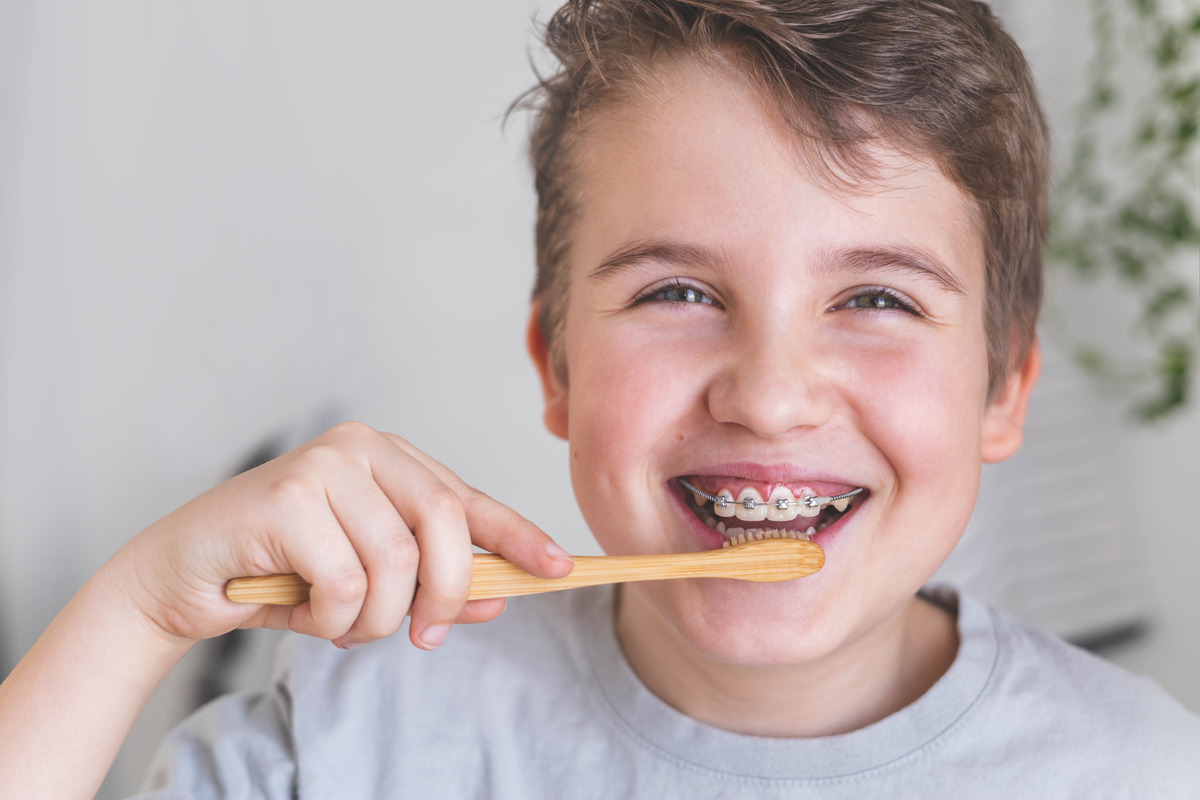
When you begin orthodontic treatment, you’re not just straightening your teeth — you’re transforming your smile. Getting braces can feel exciting but also a little intimidating, especially when it comes to everyday brushing and flossing.
That’s completely normal. Braces introduce small brackets, wires, and elastic ties that make cleaning a bit more detailed. But once you understand the right rhythm and technique, brushing with braces becomes second nature — a simple daily habit that keeps your smile bright and your treatment on track.
This complete guide will show you how to brush teeth with braces effectively, the tools that help, and the common mistakes to avoid so your smile stays healthy every step of the way.
If you’re just starting with traditional braces, this guide will help you learn the best ways to keep your teeth healthy throughout treatment.
Table of Contents
Why Proper Brushing With Braces Matters More Than Ever
Braces create new surfaces that attract food particles and plaque. When not cleaned carefully, these trapped bits can lead to gum irritation, decay, and white-spot stains around brackets
That’s why brushing with braces isn’t just about appearance — it’s about long-term oral health. Skipping these routines can lead to gum problems and white spots that can become permanent.
The Foundation: Choosing the Right Tools
The toothbrush you pick matters just as much as how you use it. A soft-bristled orthodontic brush or small-headed electric toothbrush works well. These brushes are designed to reach under wires and around brackets without causing irritation.
Alongside your toothbrush, consider these essentials:
- Fluoride toothpaste to strengthen enamel and prevent white spots.
- Interdental brush to reach around wires and brackets.
- Floss threader or water flosser for easy cleaning between teeth.
- Fluoride mouth rinse, if your orthodontist recommends one (follow the label: do not swallow it, and children under 6 should use one only if a dentist or doctor says so).
Keep a small “braces care kit” handy. Small daily habits like that make a big difference over time.
Step-by-Step: How to Brush Teeth With Braces
Follow these steps:
- Rinse first to loosen food debris.
- Apply fluoride toothpaste to a soft-bristled brush.
- Angle the brush at 45° toward the gumline.
- Clean above and below brackets with small circular motions.
- Brush all surfaces including the chewing and inner sides.
- Use an interdental brush under wires.
- Rinse thoroughly and check your work.
Each session should take about two minutes. With braces, our office asks you to brush three times a day and floss once a day.
Flossing: The Overlooked Hero
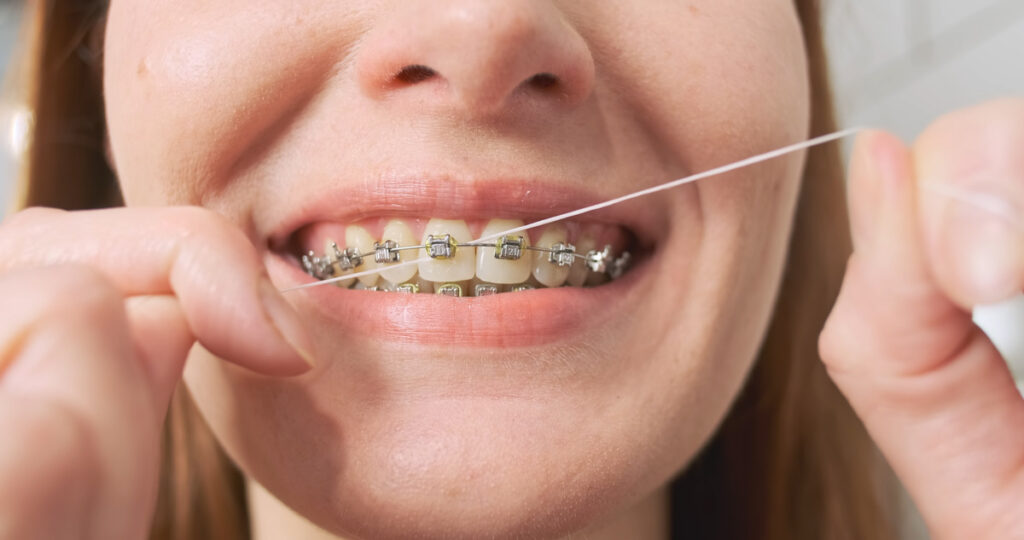
Flossing clears what brushing can’t. Use a floss threader to guide floss beneath the wire and between teeth, or a water flosser for speed and comfort. The key is consistency — daily cleaning between teeth prevents decay and gum irritation.
Common Brushing Mistakes (and Easy Fixes)
Even dedicated brushers can make mistakes. These are the most common:
- Brushing too hard (leads to gum irritation).
- Forgetting to angle toward the gumline.
- Skipping back teeth or the inner surfaces.
- Rushing — less than 2 minutes per session.
- Ignoring interdental brushes.
With the right rhythm, your brushing routine becomes effortless and effective.
Managing Tenderness and Minor Issues
It’s normal to feel mild soreness after an adjustment — your teeth are shifting! Continue brushing gently, even if things feel a bit sensitive. If a wire irritates your cheek or lip, place a small piece of orthodontic wax over the area. Staying hydrated helps too, since dry mouth can make irritation worse.
Quick Hygiene & Diet Tips
- Brush three times a day, ideally after meals.
- Rinse when brushing isn’t possible.
- Avoid sticky or hard foods.
- Stay hydrated — dry mouth increases plaque risk.
- Replace your brush every 3 months.
Frequently Asked Questions About Brushing With Braces
1. Can I brush my teeth normally with braces?
Yes, you can brush your teeth normally, but you’ll need to adjust your technique. Use a soft or orthodontic brush angled at 45° toward the gumline. Cleaning above and below each bracket prevents plaque buildup and staining while keeping your braces safe.
2. What is the best way to clean teeth with braces?
The best way is to brush after every meal with fluoride toothpaste, clean under wires with an interdental brush, and finish with a fluoride rinse if your orthodontist recommends one. This helps keep all areas — including those brackets and wires — clean.
3. Is brushing three times a day too much with braces?
No — brushing three times a day is ideal for braces care. Just use soft bristles and gentle motions. If you can’t brush after lunch, rinsing with water or using an interdental brush will do until your next full session.
4. What is the 2-2-2 rule for teeth?
The 2-2-2 rule is an informal way to remember brushing twice a day for two minutes and seeing your dentist regularly. With braces, our office asks for three brushings a day and daily flossing.
5. Is it okay to miss a day of brushing with braces?
Try not to. Plaque builds up fast around brackets and wires, and skipping even one day can cause buildup that’s tough to remove later. If you miss a brushing, clean as soon as possible and take an extra minute to reach every area carefully.
Keeping Carlsbad Smiles Healthy
Proper brushing helps prevent stains and keeps your smile healthy. Whether you’re new to braces or just improving your routine, these steps will keep your treatment on track and your smile confident.
Ready to Feel Confident About Your Braces Care?
Keep your smile bright and healthy while wearing braces! If you have any questions or need more personalized tips, schedule an appointment with Hulse Orthodontics in Carlsbad, CA today. Our team is here to help you maintain excellent oral hygiene throughout your orthodontic journey. Call us now or visit our website to book your consultation!
The information in this article is for educational purposes only and is not a substitute for professional dental advice. Always consult a qualified provider like Hulse Orthodontics for personalized recommendations.

Dr. Cameron Hulse grew up in Southern Orange County, California. While in his own orthodontic treatment in high school, Dr. Hulse realized how much his new smile changed him and decided he wanted to improve other’s teeth and smiles. Dr. Hulse pursued his dream and completed a BS in Zoology at Brigham Young University. Then he was selected to attend the University of Southern California’s prestigious School of Dentistry where he received his D.D.S.. After Dental School, he switched coasts and completed his orthodontic residency at Jacksonville University where he received his CAGS.
Join the discussion 2 Comments