

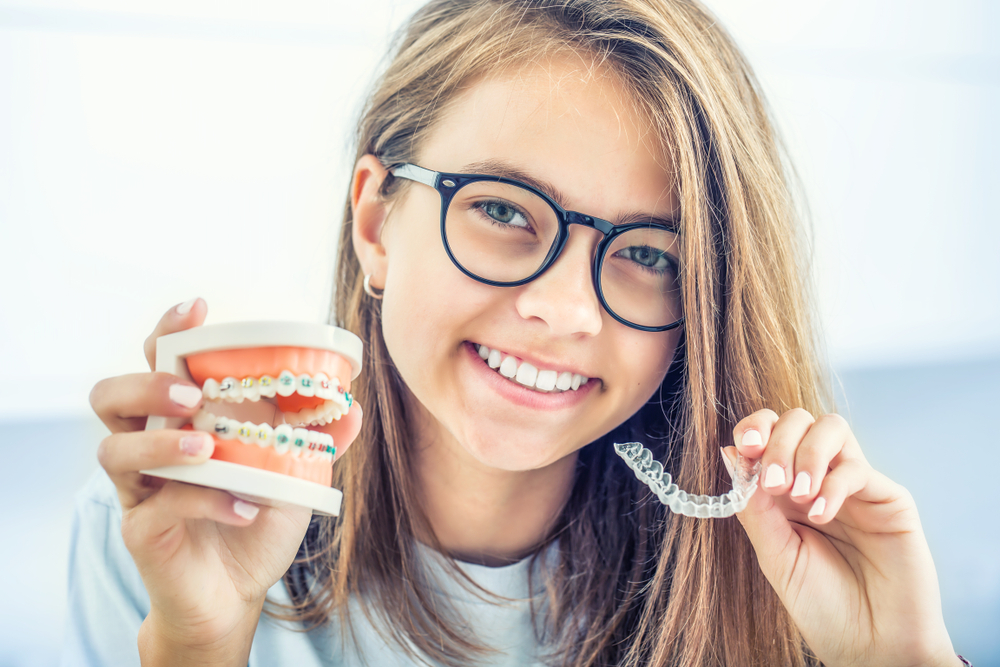
Invisalign says adult treatment usually takes around 12 to 18 months on average, according to invisalign.com. That is the honest answer to how long does Invisalign take, and it is where every realistic conversation should start. Invisalign also says results can be seen in as little as six months, and more complex cases can take longer.
Those are general ranges, not a promise for your mouth. Your real number rides on two things: how much your teeth need to move, and how consistently you wear the aligners. We break down both below so you know what actually shapes your timeline.
Quick Answer
Invisalign puts adult treatment at around 12 to 18 months on average (per invisalign.com), with results sometimes visible in as little as six months and more complex cases taking longer. Your real number depends on how much your teeth need to move and on how consistently you wear the aligners: 20 to 22 hours a day. Your exact timeline and aligner count come from the 3D scan and plan at your consult, not a blog average.
Table of Contents
How Long Invisalign Takes, by Case
The lever you control: wearing your aligners 20 to 22 hours a day keeps you on the shorter end. Slipping below that is one of the biggest preventable reasons timelines stretch.
Invisalign’s published ranges. Your exact plan comes from an exam.
"It depends" gets clearer once you look at what Invisalign itself publishes.
Invisalign.com puts the adult average at 12 to 18 months and says straightforward cases "could even be faster." Invisalign also says results can be seen in as little as six months, and more complex cases can take longer than the typical range. One detail sets up the rest of this post: that 12-to-18-month average assumes you change aligners about every two weeks, per Invisalign's own "based on two-week wear" footnote, but your actual schedule is set by your orthodontist, commonly every one to two weeks.
The Biggest Factor You Control: Wear Time
Almost everything about your case is fixed by biology, except the one lever you hold. Invisalign is designed to be worn 20 to 22 hours a day for the best results, according to invisalign.com. You take the aligners out only to eat, to drink anything but plain water, and to brush and floss.
The logic is simple. Each aligner applies a gentle, planned force that nudges your teeth one small step forward. Every hour it sits out of your mouth is an hour that force is switched off, and teeth start drifting back toward where they began. That is why under-wearing is one of the biggest preventable reasons treatment runs long or needs extra aligners at the end.
This is also the real difference from braces, which are fixed to your teeth, so their progress does not depend on remembering to wear them. The fix is small: put your aligners back in right after you eat or clean your teeth. Do that consistently and you stay on the projected schedule, which is the single best way to land at the shorter end of your range.
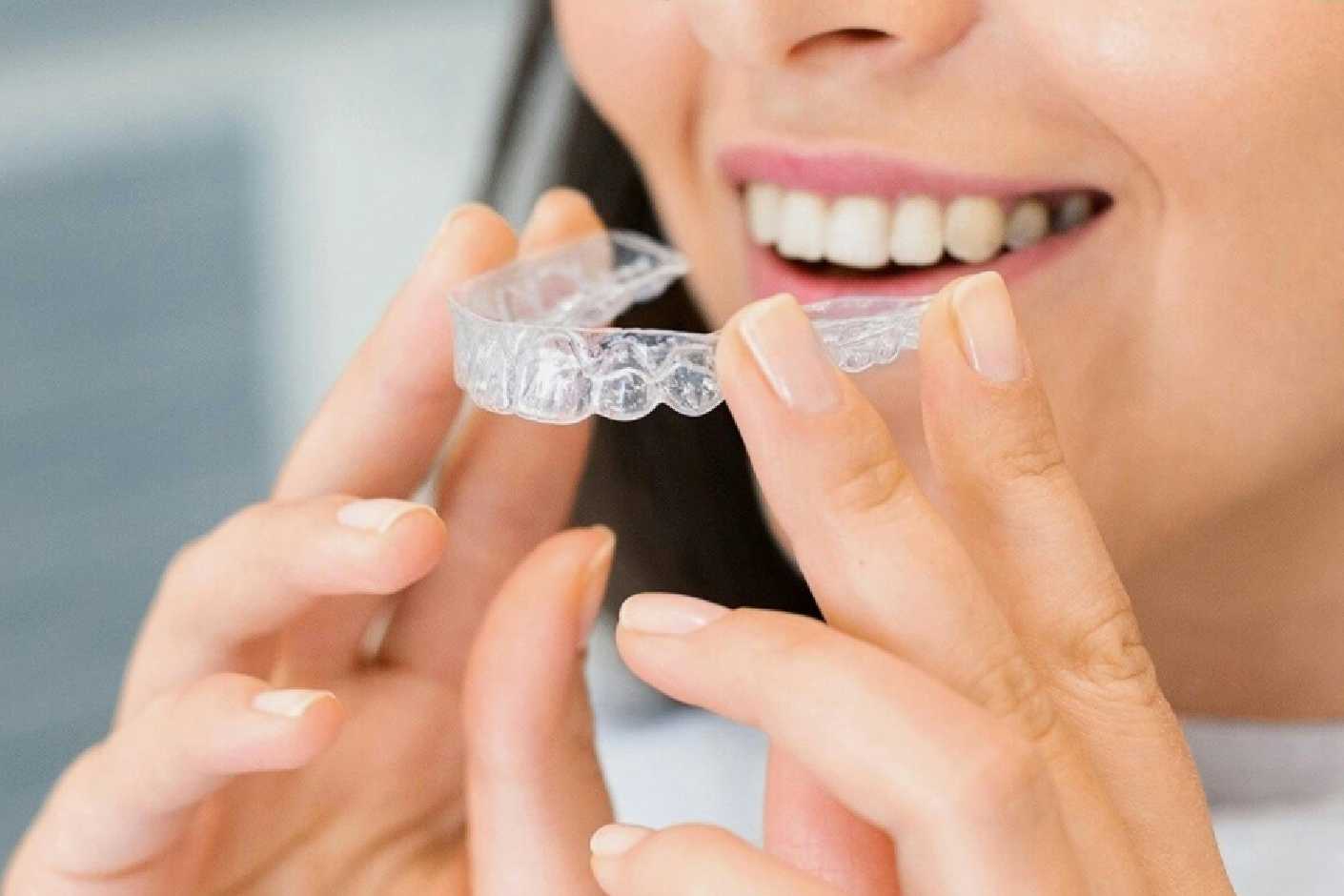
What Your Invisalign Timeline Actually Looks Like
Twelve to eighteen months feels abstract until you see what fills it, and the good part is you will likely spot change early.
- It starts with a digital 3D scan of your teeth and bite that builds your plan, mapping the exact movements your teeth will make.
- You switch to each new aligner at home on the schedule your orthodontist sets, following that plan.
- You come in for progress check-ins at an interval your orthodontist will give you, to confirm your teeth are tracking to plan rather than tighten any wires.
- Many people notice visible changes within the first 2 to 3 months of consistent wear, well before the finish.
- After active treatment, a retainer holds your new result in place.
Between visits, Invisalign's app and virtual check-ins can trim the number of in-person appointments where a practice offers remote monitoring.
Refinements Are Normal, Not a Setback
Finish your trays, hear you need "refinements," and it can feel like something failed. Nothing has. A refinement is a shorter, additional set of aligners ordered near the end of your original series to fine-tune the last bit of movement. It means a new scan and a shorter run of trays, not a restart.
Here is the number that should settle your nerves. A 2023 study of 500 patients from two orthodontic offices, published in the American Journal of Orthodontics and Dentofacial Orthopedics (PubMed), found only about 6% of patients finished without a single refinement. In the same study, treatment averaged about 23 months, around 5 months longer than first estimated. Most people get at least one refinement, so needing them is the norm, not a failure.
In that study, patients needed an average of 2 to 3 refinement scans, so expect a round as part of the process. It simply means the result is being fine-tuned all the way to the finish.
Your Real Timeline Comes From a Plan, Not a Blog
You still want your number, and only a plan can give it to you. A specialist orthodontist reviews your 3D scan and ClinCheck plan, which simulates your exact tooth movements, then gives you a real estimate of months and aligners. That is how Invisalign is built around your teeth, not a generic timeline.
What about braces? Timelines for Invisalign and metal braces are comparable, and both depend on your case and your wear consistency. Invisalign puts braces at about 12 to 36 months and adult Invisalign at about 12 to 18 months on average. Invisalign calls itself "often" faster, but even its own materials say that is not a claim of better results.
Age alone does not set your timeline: for teens and adults alike, it depends on how complex the case is and how consistently the aligners are worn. Both are strong candidates, and Invisalign Teen is built for that age group. Because your timeline and cost of treatment are linked, a clear plan helps you understand both up front.
Want your real timeline? Book a free consultation or virtual smile assessment with Dr. Cameron Hulse at our Carlsbad office and we will map it out for you: contact us.
Questions about your braces or Invisalign?
Whatever’s on your mind, our Carlsbad team is happy to help, no judgment, just straight answers and a plan for a healthy smile.
Prefer to call? (760) 448-1344
Frequently Asked Questions
How long does Invisalign actually take?
Invisalign says adult treatment usually takes around 12 to 18 months on average, that results can show in as little as six months, and that more complex cases can take longer. These are general ranges, not a promise. Your exact number comes from the 3D scan and treatment plan built at your consult.
How many hours a day do I need to wear my aligners?
Typically 20 to 22 hours a day, according to Invisalign's own guidance. You remove them only to eat, drink anything but plain water, and brush and floss. Wear time is the biggest factor you control, and under-wearing is one of the biggest preventable reasons treatment runs long.
When will I start seeing results?
Many patients notice visible changes within the first 2 to 3 months of consistent wear, well before treatment finishes. Seeing early movement is common, and it is a reassuring sign your aligners are tracking to plan. It does not mean you are nearly done, but you are on your way.
Is Invisalign faster than braces?
Timelines are comparable and depend on your case and wear consistency. Invisalign puts braces at about 12 to 36 months and adult Invisalign at about 12 to 18 months on average. Invisalign says it is "often" faster "in many cases," but its own materials caveat that this does not imply clinical superiority.
Do teens finish faster than adults?
Not necessarily. Invisalign notes that treatment for adults may take longer than for younger patients, for example when existing dental issues add complexity. For any age, the timeline depends on how complex the case is and how consistently the aligners are worn. Both age groups are strong candidates, and Invisalign Teen is designed for this stage.
This article is general information about Invisalign treatment, not medical or dental advice. Treatment times are estimates that vary by case. For your own timeline, see Dr. Cameron Hulse or another qualified orthodontist.

Dr. Cameron Hulse grew up in Southern Orange County, California. While in his own orthodontic treatment in high school, Dr. Hulse realized how much his new smile changed him and decided he wanted to improve other’s teeth and smiles. Dr. Hulse pursued his dream and completed a BS in Zoology at Brigham Young University. Then he was selected to attend the University of Southern California’s prestigious School of Dentistry where he received his D.D.S.. After Dental School, he switched coasts and completed his orthodontic residency at Jacksonville University where he received his CAGS.