

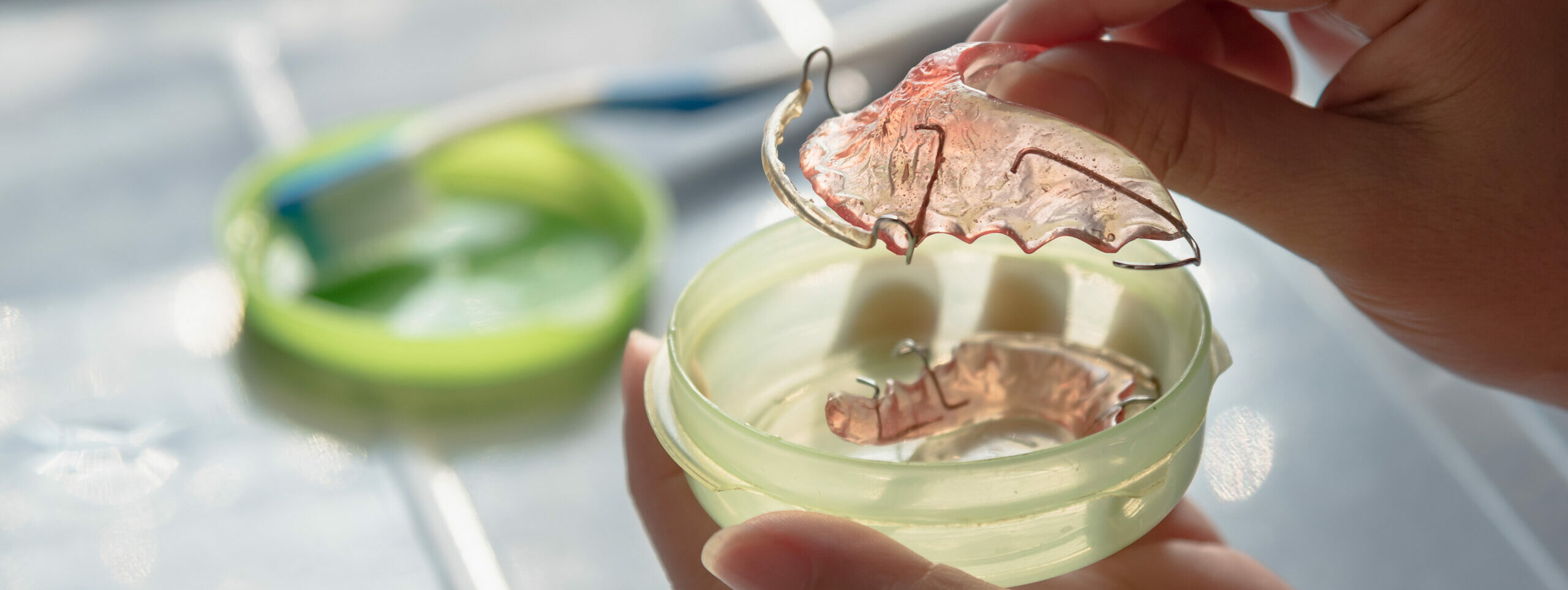
You ran your tongue behind your front teeth and felt it: a thin wire that came loose, snapped, or is now poking. Take a breath. If your permanent retainer broke, it is almost never a true dental emergency.
It does need a look soon, though. Think days, not weeks, so your teeth do not have time to drift. A permanent retainer (also called a bonded or fixed retainer) is that thin wire glued to the back of your front teeth, and that is what this guide covers, not a removable plastic one. Below: what to do in the next few minutes, and how our Carlsbad team fixes it.
Quick Answer
A broken permanent (bonded) retainer is almost never a true emergency, but see your orthodontist within days, not weeks, so your teeth do not have time to drift. Right now: leave the wire alone, cover any poking end with orthodontic wax, wear your backup retainer if you have one, and save any loose piece to bring in. Do not cut or glue it yourself.
Table of Contents
Is a Broken Permanent Retainer an Emergency?
No, and that distinction matters when you are deciding how fast to act. The American Association of Orthodontists (AAO) sorts a poking or loose wire, or a lost, cracked, or distorted retainer, into the "urgent orthodontic problem" bucket. That is a real category, but lower than a true emergency like heavy bleeding, trouble breathing or swallowing, a broken or dislocated jaw, or a knocked-out tooth.
Here is a simple way to gauge your situation:
- Call now, get seen as soon as possible: severe pain, a wire you cannot stop from stabbing your tongue or cheek even after covering it, or, importantly, if your original treatment closed gaps between your front teeth. Those spots are more prone to moving, so do not sit on it.
- Within a few days: the typical case, where the wire has come loose from a tooth or is partly detached but not painful. This is the "urgent, not emergency" zone. Book promptly.
- Watch, but still book: one tooth feels slightly loose or debonded and it does not hurt at all. This one is easy to under-react to, but it still needs a look (more on why that quiet case matters below).
The AAO does not publish a set repair deadline, so treat our timing advice as guidance, not a hard rule. These urgent cases are what our emergency care visits are built for.
What to Do Right Now
The goal for the next few minutes is simple: protect your mouth, protect the wire, and set up a fast repair. Work through this order:
- Leave the wire alone if it is still attached. Do not poke it, pull it, or reposition it with your tongue or fingers.
- Cover a poking end with orthodontic wax. Pinch off a small piece, soften it between your fingers, and press it over the sharp end. Sugar-free gum works in a pinch if you have no wax.
- Rinse with warm salt water. It calms gum irritation around an exposed or loose wire.
- Wear your removable backup retainer, if you have one. This is the tip most people miss. Worn as directed until the repair, it can help limit shifting while you wait.
- Save every detached piece and bring it in. Keep any loose wire in a clean, dry container. An intact original wire is more likely to be rebonded quickly and affordably instead of remade from scratch.
One rule sits above the rest: do not cut, bend, pull, or glue the wire yourself. Household glue is not safe in the mouth, and a bent wire can push your teeth the wrong way, undoing the very thing the retainer protects.
We repair and replace retainers regularly, so a quick call to our Carlsbad office gets you scheduled without the guesswork.
Will My Teeth Shift If I Wait?
Yes, teeth can start to drift once they are no longer held in place. How fast that happens varies from person to person.
A peer-reviewed 3D study (Journal of Orofacial Orthopedics, 2024) found teeth that moved were more often affected by loose bonds and wire fractures, though the link did not reach statistical significance. The researchers noted the onset of movement "is still unclear," even after two years. The risk is real, but no one can promise a specific timeline.
Some teeth shift more readily than others. Lower front teeth and previously closed gaps tend to relapse fastest, which ties back to the "call now" note above. A removable backup retainer, worn as directed, can help hold things steady in the meantime.
The safe move is a quick repair before drift starts.
Why Permanent Retainers Break in the First Place
Bonded retainers are durable, but not indestructible, and coming loose is common and expected. It is not a sign you did something wrong. Most of the time, wear and tear catches up with the bond over the years.
A few reasons it happens:
- The composite that glues the wire can thin or detach over years of chewing and cleaning.
- Biting hard or crunchy foods, or chewing ice, can pop the bond loose or bend the wire.
- The retainer sits where saliva pools, so that spot is harder to keep clean, and buildup can weaken the bond over time.
The good news: a rebond is usually straightforward, which is where we head next. If breakage keeps happening, our team can discuss whether a different retainer approach fits you better at a follow-up.
How a Broken Retainer Gets Fixed: Rebond vs. Remake
What happens at your appointment depends mostly on the wire itself. There are two paths, and you can often guess which one you are on.
Rebond (the wire is still intact, it just came loose from a tooth or two). This is usually a single-visit fix. We clean and re-etch the tooth surface, reposition your existing wire, apply fresh dental composite, and cure it with a light. No drilling, no numbing needed.
Remake or replace (the wire is bent, snapped, or a section is lost). This one is more involved. We remove the old bonding material, then fit and bond a new wire. It can take longer and sometimes needs an outside dental lab and more than one visit.
In some cases, switching to a removable retainer is a reasonable alternative to another bonded wire. That is a quick chairside conversation, and we can walk you through the trade-offs.
Cost depends on whether your wire can be reused (a rebond) or remade, and some original providers include repairs under a warranty period, so it is worth asking. Our guide on how much retainers cost breaks it down. If teeth have already shifted, we can review your treatment options or braces, though a prompt repair usually prevents that.
Getting It Fixed Fast in Carlsbad
A straightforward rebond is often a short visit. For North County families, we are the local place to bring a loose or poking wire without a long wait.
For urgent cases, our emergency care gets you seen quickly. If you are not a current patient, or your original treatment was done elsewhere, a free consult lets us take a look and plan the fix. Dr. Cameron Hulse and our team are specialist orthodontists who have served Carlsbad since 2007.
Ready to sort it out? Call the office or book a free consult at contact us, and remember to save the broken piece and bring it with you.
Questions about your braces or Invisalign?
Whatever’s on your mind, our Carlsbad team is happy to help, no judgment, just straight answers and a plan for a healthy smile.
Prefer to call? (760) 448-1344
Frequently Asked Questions
Is a broken permanent retainer a dental emergency?
No. The AAO classifies a poking or loose wire, or a lost, cracked, or distorted retainer, as an "urgent orthodontic problem," a less severe category than true emergencies like heavy bleeding, breathing difficulty, a broken jaw, or a knocked-out tooth. Contact your orthodontist promptly rather than treating it as an ER situation.
How fast will my teeth shift if I wait to fix it?
Teeth can drift once they are no longer held, and lower front teeth and previously-closed gaps tend to be most at risk. The exact timing is not established by research, since one peer-reviewed study calls the onset "still unclear." Do not gamble on it. Get seen promptly and let a repair settle the question.
How much does it cost to fix a broken permanent retainer?
It varies. The main factor is whether your original wire can be reused in a rebond or has to be remade, which costs more and takes longer. Some original providers include repairs under a retention or warranty period, so ask your office. For a full breakdown, see our guide on how much retainers cost.
Can I fix or trim the wire myself at home?
No. Do not cut, bend, pull, or glue the wire yourself. Leave it in place if it is still attached, cover a poking end with orthodontic wax, and see your orthodontist. Household glue is not safe in the mouth, and a bent wire can push your teeth in the wrong direction.
Only one tooth feels loose and it does not hurt. Can it wait?
It is not recommended. A single-tooth debond is often painless, so that tooth can quietly drift before you notice, and the loosened spot becomes harder to keep clean, which raises the risk of decay or gum irritation there. Get it checked rather than waiting for pain or a poking sensation.
This article is general information, not medical or dental advice. For care specific to your teeth, see Dr. Cameron Hulse or another qualified orthodontist.

Dr. Cameron Hulse grew up in Southern Orange County, California. While in his own orthodontic treatment in high school, Dr. Hulse realized how much his new smile changed him and decided he wanted to improve other’s teeth and smiles. Dr. Hulse pursued his dream and completed a BS in Zoology at Brigham Young University. Then he was selected to attend the University of Southern California’s prestigious School of Dentistry where he received his D.D.S.. After Dental School, he switched coasts and completed his orthodontic residency at Jacksonville University where he received his CAGS.
Join the discussion One Comment