Category

Braces

Braces and Mouthguards: How to Play Sports With Braces

By Braces

Say the braces go on Tuesday and the game is Saturday. Somewhere between the two, a parent asks a fair question: can my kid still play?

The American Association of Orthodontists (AAO) frames its advice for athletes in braces around protection: what you wear in your mouth while you play, and what to do if something breaks or a tooth gets hurt. Your orthodontist can talk through your own sport and treatment.

Quick answer

The AAO strongly recommends wearing a mouthguard with braces for practice and games. The AAO calls custom mouthguards the best choice for protecting your orthodontic treatment and says to talk with your orthodontist about which mouthguard is right for you. Take a removable retainer out for contact sports. If a bracket comes loose, call our office right away and bring the piece with you. If a permanent tooth is knocked out or badly moved, get emergency care right away.

Can you play sports with braces?

The AAO’s advice to athletes in braces is to protect your mouth while you play. On its own mouthguard page, the AAO says wearing a mouthguard with braces is not only possible but strongly recommended, and its tips for athletes say to wear it for both practice and games.

A mouthguard matters more once the brackets are on, for two reasons.

First, brackets have edges. The AAO says the sharp edges of orthodontic appliances can cause serious injury if you are struck in the face or head. The ADA’s consumer site, MouthHealthy, says a mouthguard provides a barrier between the braces and your cheek or lips, which helps you avoid injuries to your gums and cheeks.

Second, the appliance itself can be damaged. The ADA notes that a blow to the face could damage the brackets or other fixed orthodontic appliances, which is why it says a properly fitted mouthguard may be especially important for people who wear braces. The AAO adds that a blow to the mouth can bend wires or break brackets and delay treatment. If the lower teeth have brackets too, the ADA says your dentist or orthodontist may suggest a guard for the lower teeth as well. Ask rather than assume.

If you’re still deciding on treatment, bring the sport question to your consultation. Here’s what to expect from braces at Hulse Orthodontics in Carlsbad.

Does your sport actually need a mouthguard?

Some leagues require one. For the rest, the ADA keeps a list of activities where it recommends a mouthguard, and it’s longer than you might expect.

Situation Sports What that means for a player in braces
Required by rule Football, field hockey, ice hockey and lacrosse, where the ADA notes the NFHS (high school) and NCAA (college) mandate mouthguards. Wrestling: the NFHS requires one for any wrestler wearing braces. Required at those levels. If your child plays in a younger league, check its rulebook. The AAO encourages all players to wear a mouthguard, no matter the sport.
Contact and collision sports on the ADA’s recommended list Including basketball, soccer, water polo, rugby, boxing, martial arts and hockey. The ADA recommends one. Your league may also require it, so check its rules.
Limited-contact and other activities on the ADA’s recommended list Including surfing, skateboarding, skiing, cycling, inline skating, gymnastics, baseball, softball, volleyball and weightlifting. The ADA recommends one here too.

The wrestling line is worth a second look: the rule applies because of the braces. The American Academy of Pediatric Dentistry’s policy on preventing sports-related orofacial injuries also supports continuing these preventive practices in youth, high school and college sports, including wrestling for wrestlers wearing braces.

The third row is the easy one to skip. Non-contact doesn’t mean no risk. MouthHealthy says any athlete may experience a dental injury in non-contact activities too, such as gymnastics and skating, and the ADA’s list recommends a mouthguard for limited-contact activities as well as contact sports. If your kid’s sport or weekend activity is on the list, wear the guard.

What kind of mouthguard works over braces?

Mouthguards come in three categories, defined in the ADA’s own standard (ANSI/ADA Standard No. 99):

  • Custom-made. Made in a dental office or lab from an impression of your teeth. The ADA says they can give an optimal fit, but they are the most expensive option and need dental visits for fitting.
  • Boil-and-bite (mouth-formed). Softened in hot water, then shaped in your mouth. The ADA says they are generally designed to be fitted at home, following the maker’s instructions, and that a dental professional may help with the final molding, particularly if you have orthodontic appliances.
  • Stock. Pre-formed, no shaping. The ADA describes this type as the least effective and the least expensive.

Here’s what the professional groups say about choosing one. The AAO calls custom mouthguards the best choice for safeguarding your orthodontic investment, and it recommends having your orthodontist take a mold of your mouth for the most protective fit, especially if you are in orthodontic treatment. It describes boil-and-bite guards as better than nothing. The Academy for Sports Dentistry’s position statement also recommends properly fitted custom mouthguards, and it lists orthodontic appliances among the things a properly fitted mouthguard has to take into account. The ADA says that, depending on the circumstances, dentists might recommend a custom mouthguard or a properly fitted boil-and-bite, such as one with the ADA Seal of Acceptance.

The AAO suggests asking your orthodontist whether custom mouthguards are a service they offer, and talking with them about which mouthguard is right for you. So ask at your next visit which type suits your sport and your stage of treatment.

When you buy and fit one:

  • Follow the package instructions for heating and molding. The ADA says boil-and-bite guards should be fitted according to the manufacturer’s instructions to avoid a poor fit.
  • Ask your orthodontist before you mold a boil-and-bite over braces, since the ADA notes a dental professional may help with the final molding when you have orthodontic appliances.
  • Replace it if it’s worn, damaged or doesn’t fit well. MouthHealthy notes that teens and children may need to replace mouthguards more often because their mouths are still growing and changing, and the AAO suggests replacing one after a significant growth spurt or a dental procedure.

Tip: Bring your mouthguard along to your appointments. MouthHealthy suggests bringing it to regular dental checkups for an evaluation, and you can ask your orthodontist whether it still fits well over your braces.

What about a retainer or aligners?

Take it out. MouthHealthy is direct: if you have a retainer or other removable appliance, don’t wear it during any contact sports. Our own appliance care page tells retainer patients to take retainers out when they play sports that require a mouthguard.

If you’re in clear aligners such as Invisalign, the AAO’s tip for athletes is to remove them and wear a mouthguard for contact play.

Our appliance page covers the rest of retainer care.

If a bracket comes loose during a game

This is the question a parent needs answered on a Saturday.

Call our office right away. Our emergency care page also asks you to call rather than come straight to the office if you break or loosen any appliance, so the team can set a time to see you. Then:

  • If a bracket or band has come off, keep it and bring it with you to your repair appointment.
  • If a wire is irritating your cheek, try moving it away from the sore spot with a cotton swab or an eraser. If it won’t move, cover the end with a small piece of cotton or a little wax, and call the office if that doesn’t solve it.
  • Don’t play through it. The AAO says never to play through damaged orthodontic hardware, because it can cause serious injury.

Our emergency care page also covers soreness after your braces go on and after adjustments. If you’re not yet a patient, our office on El Camino Real in Carlsbad serves families throughout Oceanside, Vista, Encinitas and San Marcos.

If a tooth is knocked out or broken

A loose bracket means a call to our office. An injury to the teeth, mouth or jaw is different, and it comes first. The AAO’s guide to orthodontic emergencies and the ADA’s dental emergencies page say:

  • Heavy bleeding, trouble breathing or a possible broken jaw: the AAO says to call 911 or seek emergency care right away.
  • A permanent tooth that is knocked out, pushed deep into the gums or moved far out of position: the AAO says to seek emergency care immediately, at an emergency room or an urgent dental clinic.
  • A knocked-out permanent tooth: the ADA says to keep it moist at all times. If you can, place it back in the socket without touching the root. If that’s not possible, hold it between the cheek and gums, put it in milk, or use a tooth preservation product with the ADA Seal of Acceptance. Then get to a dentist right away.
  • A cracked tooth: the ADA says to rinse the mouth with warm water right away and put cold compresses on the face to keep swelling down, and to see a dentist or go to an emergency room as soon as possible.

Once you’re safe, the AAO says to contact your orthodontist so the braces can be repaired or adjusted. Call our office then, too.

How much does a mouthguard actually help?

The ADA says mouthguard use has been shown to reduce the risk of sport-related dental injuries. Its summary of the research, updated in August 2026, cites several studies, and they measure the effect in different ways:

  • A 2007 meta-analysis of team contact sports put the risk of mouth and face injury at 1.6 to 1.9 times higher in players who didn’t use any mouthguard.
  • A 2002 study of college basketball players found a dental injury rate one-fifth as high among players wearing custom-fitted mouthguards as among players who didn’t use one.
  • A 2019 systematic review reported that mouthguard users were 82 to 93 percent less likely to suffer dentofacial injuries.
  • Another 2019 systematic review found that people who didn’t use mouthguards had more than twice the risk of mouth and face injury.

The ADA notes these findings are consistent with numerous studies showing fewer mouth injuries with mouthguards. The ADA describes these as studies of athletes and sports participants, and none of them is described as a study of players in braces, so treat them as the general picture rather than a figure for your child.

On concussions, the ADA’s summary is more cautious. It describes the evidence as mixed and less consistent than for dental injuries: one systematic review found a modestly higher concussion risk among mouthguard non-users, other studies contradict each other, and a 2009 review found no significant effect on concussion among professional ice hockey players. The ADA says more research is needed. So buy the guard to protect the teeth, lips and braces, and take any concussion questions to your child’s doctor.

Frequently asked questions

Can I wear a mouthguard with braces?

Yes. The American Association of Orthodontists says wearing a mouthguard with braces is not only possible but strongly recommended, and the ADA says a properly fitted mouthguard may be especially important for people with braces because a blow to the face could damage the brackets. Talk with your orthodontist about which type suits you.

What mouthguard do I use if I have braces?

The AAO calls custom mouthguards the best choice for protecting your orthodontic treatment, and recommends having your orthodontist take a mold of your mouth, especially during treatment. The ADA says dentists might recommend either a custom mouthguard or a properly fitted boil-and-bite, such as one with the ADA Seal of Acceptance, and describes stock mouthguards as the least effective type. Ask your orthodontist which type suits your sport and your stage of treatment.

Is it okay to mold a mouthguard with braces?

Boil-and-bite mouthguards are generally designed to be fitted at home, and the ADA says to follow the manufacturer’s instructions. It also says a dental professional may help with the final molding, particularly if you have orthodontic appliances, so ask your orthodontist before you mold one over braces.

What happens if I wear a mouthguard with braces?

MouthHealthy says a mouthguard helps cushion a blow to the face and provides a barrier between the braces and your cheek or lips, and the ADA notes a blow could otherwise damage the brackets. Replace it if it shows wear, is damaged or no longer fits well, and ask your orthodontist to check the fit if you’re unsure.

Ready to play? Ask us at your next visit

The AAO’s advice is to talk with your orthodontist about which mouthguard is right for you, and an appointment is a good time to ask. If your child is about to start treatment and the season is already on the calendar, book a free consultation with Dr. Cameron Hulse, a specialist orthodontist in Carlsbad, and bring the sport question with you.

Prefer to call? (760) 448-1344

The information in this article is for educational purposes only and is not a substitute for professional medical or dental advice. For questions about your own treatment, injuries, or appliances, talk to your orthodontist.


Do Braces Hurt? What to Expect and What Helps

By Braces

Maybe your braces went on this morning and your teeth are starting to feel it. Maybe the appointment is Thursday and you have been reading about it at midnight. Either way, you do not need a definition of orthodontics. You want to know what is coming, and whether it is going to be okay.

Reassurance only counts if it is still true on day two. So this is the honest version, from a Carlsbad orthodontic practice that would rather you hear it now than be surprised by it later. If you are still weighing treatment, our braces page walks through how braces work at our Carlsbad office.

Quick answer

Yes, but for most people only mildly. The American Association of Orthodontists (AAO) says braces soreness is typically a dull ache rather than sharp pain, usually strongest in the first 24 to 48 hours, and typically fades after a few days. Our office’s own guidance is that you will likely feel some soreness or discomfort during the first week after your braces go on and after routine adjustments. Tonight: eat soft food, put orthodontic wax on anything that rubs, and try a warm washcloth against your jaw. If you take a pain reliever, follow the label and check with your doctor or pharmacist first, especially if you are pregnant or it is for a child. Call the office if a wire is poking, a bracket comes loose, or the pain is sharp or getting worse instead of better.

So what do braces actually feel like?

Pressure. That is the word the AAO uses too: for the first few days, you might feel pressure or tenderness around your teeth, and your lips, cheeks and tongue may feel sensitive while they get used to the brackets and wires. The AAO notes that this rubbing generally decreases as your mouth adapts.

The brackets on your teeth are connected by an archwire, and together they apply gentle, steady pressure that moves each tooth a little at a time. Here is what the AAO describes happening next: bone on the pressure side of the tooth softens to let it move, new bone builds on the other side to support it, and the tiny ligaments anchoring each tooth stretch and compress, which triggers a natural inflammatory response. That process is what can make your teeth sore.

The AAO compares it to the soreness you might feel after a workout, and says it is often a natural part of the process.

What it usually is not: the AAO says the soreness is typically described as a dull ache rather than a sharp or intense pain, and that it is rare for it to be severe or long-lasting. Everyone’s pain threshold is different, so your day two may be rougher or easier than a friend’s.

How long do braces hurt?

This is the part worth memorizing, because the ache has a shape, and knowing the shape is half the comfort.

When What to expect Who says so
The first few days Pressure or tenderness around your teeth. Lips, cheeks and tongue may feel sensitive. AAO
First 24 to 48 hours The soreness is “usually strongest” in this window. AAO
After a few days The soreness “typically fades after a few days.” AAO
The first week You will likely feel some soreness or discomfort. Hulse Orthodontics, emergency care page
After each adjustment Some soreness again. The AAO says it is “generally manageable and subsides within a few days.” AAO; Hulse Orthodontics
Removal day For most people, not painful. You may feel pressure, squeezing, or a brief pulling sensation. Details below. AAO

Those timings come from two places. The 24-to-48-hour peak and the “few days” are the AAO’s own wording, and the AAO does not commit to an exact day count. The first week is from our office’s emergency care page, which says you will likely feel some soreness or discomfort during the first week after your braces are in place and after routine adjustments. If yours is lasting longer than that, or getting worse instead of better, call the office.

Adjustments are the second half of the story. The AAO says each adjustment reapplies pressure, which can bring a temporary increase in soreness, similar to what you felt when your braces first went on. By then you have done it once and know what to expect.

If you are weighing aligners instead, our guide to Invisalign pain covers aligner soreness separately.

What actually helps tonight?

Our office’s own guidance for soreness after your braces go on comes down to two things: a pain reliever you would take for a headache or sore muscle, and a warm washcloth or heating pad, which may reduce the soreness in your jaws. With any pain reliever, follow the label and check with your doctor or pharmacist first, especially if you are pregnant or it is for a child.

The AAO’s list adds a few more:

  1. Eat soft food for the sore days. The AAO suggests foods that need little chewing, like mashed potatoes, smoothies, yogurt, soup and scrambled eggs, and recommends avoiding crunchy, chewy or sticky foods. Our braces food guide has a section on getting through the sore first few days.
  2. A cold compress on the cheek. The AAO suggests wrapping a cold pack or ice in a soft cloth and holding it on the outside of your cheek for 10 to 15 minutes to help numb soreness. Our office’s page mentions warmth on the jaw and the AAO lists cold; if you are not sure which suits you, ask the office.
  3. A warm saltwater rinse. The AAO’s version: dissolve a teaspoon of salt in a glass of warm water, swish for about 30 seconds, then spit it out. The AAO says it can help soothe sore gums and small sores.
  4. Orthodontic wax on anything that rubs. Roll a small piece between your fingers to soften it, then press it onto the bracket or wire that is rubbing.
  5. An over-the-counter numbing gel on a sore spot. The AAO lists these for temporary relief. Follow the package directions, and check with your doctor or pharmacist first, especially if you are pregnant or it is for a child.

If a wire end is poking you, our office’s guidance is to try moving it away from the sore spot with a cotton swab or an eraser. If it will not move, cover the end with a small piece of cotton or a little wax, and if that does not solve it, call the office for an appointment.

Does it matter which painkiller you take?

It is a fair question, and the honest answer is that the evidence is mixed. We are not going to pretend otherwise.

The two common over-the-counter choices are ibuprofen-type anti-inflammatories and acetaminophen. A 2025 review in the Journal of Clinical Medicine summarizes studies, in people and in animals, suggesting that anti-inflammatories like ibuprofen may slow tooth movement. The review explains why: these drugs block prostaglandins, signals involved in both the ache and the bone remodeling that moves your teeth. It also notes that many studies have recommended acetaminophen for that reason.

But it is not settled. One randomized trial in that same review, involving 40 patients, compared acetaminophen, ibuprofen, a third anti-inflammatory and a placebo, taken at recommended doses for three days with each wire change, and found no significant difference in tooth movement between the groups. A separate meta-analysis found that ibuprofen, naproxen and acetaminophen all reduced orthodontic pain compared with placebo.

So the studies disagree about how much the choice matters. We will not tell you which one to take, or how much, because that is a question for your orthodontist, your doctor or your pharmacist. Follow the label, ask your orthodontist which they would rather you use, and check with your doctor or pharmacist first, especially if you are pregnant or it is for a child.

When is it not just soreness?

Some soreness is expected. A few things are different, and the difference is worth learning now rather than at 9 pm on a Tuesday.

What the AAO describes as typical Worth a call to the office
A dull ache, usually strongest in the first 24 to 48 hours and typically fading after a few days Severe or long-lasting pain, which is the AAO’s own threshold for contacting your orthodontist right away
Teeth that feel sensitive when you chew Pain that is sharp, or getting worse instead of better
Tender cheeks or lips, or small sores where brackets rub A wire end poking that you cannot move or cover
A feeling of tightness in your teeth A bracket or band that has come loose or broken

Swelling in your face or gums, or a fever, is also worth a call to the office. If you have a fever and swelling in your face and can’t reach us or your dentist, Mayo Clinic advises going to an emergency room, and going there right away if you have trouble breathing or swallowing.

A loose or broken bracket matters for your treatment, not just your comfort. The AAO says broken brackets and wires do not apply the pressure needed to move your teeth, so if one is not fixed as soon as possible, you may have to wear braces longer. Call our Carlsbad orthodontic office immediately and tell them what happened, and bring the piece with you to your repair appointment. Please call rather than coming straight in, so the office can set a time to see you. It is our office policy to repair several breakages at no additional cost, with a fee only if breakage becomes excessive, so do not put off the call to save money.

Our emergency care page has the office’s instructions for a poking wire or a loose bracket or band.

Does getting braces off hurt?

The AAO answers this one on its page about what to expect after braces removal: for most people, getting braces removed is not painful. You may feel pressure, squeezing, or a brief pulling sensation as each bracket is loosened, and the AAO says those feelings usually last only a few seconds. Your teeth or gums may feel slightly sensitive afterward. If you have particularly sensitive teeth, the AAO suggests telling your orthodontist before the appointment so they can explain what to expect in your situation.

One small study adds some numbers. In a 2010 study by Normando and colleagues, 37 patients had their brackets removed with one instrument on one side of the mouth and a different instrument on the other, and scored each tooth for pain on a 0 to 4 scale. A score of 2 or higher was reported on 24.3% of teeth when brackets came off with a ligature-cutting plier, and on 12.8% of teeth with a lift-off debonding instrument.

Read that carefully, because the percentage is of teeth, not of patients, and it comes from one small group, so it is not a promise about your removal day. The instrument made a difference: reports of pain were about half as high with the lift-off instrument. If you are worried about removal, ask your orthodontist what to expect. After that comes your custom retainer.

Still nervous? That is normal, and it is a fine reason to come in

Nobody gets braces because they are excited about the first week. They get them for what comes after it, and now you know the size of that price.

If you are in Carlsbad, Oceanside, Vista, Encinitas, or San Marcos and want to talk it through before committing, Dr. Cameron Hulse, a specialist orthodontist practicing in Carlsbad since 2007, offers a free consultation, which includes digital photos and x-rays and, if treatment is recommended, a customized treatment plan. You can book a free consultation and ask every question in this article in person, including the painkiller one.

Frequently asked questions about braces pain

How long will braces hurt?

The American Association of Orthodontists says the soreness after getting braces or an adjustment is usually strongest in the first 24 to 48 hours and typically fades after a few days. Hulse Orthodontics’ own guidance is that you will likely feel some soreness or discomfort during the first week after your braces are in place and after routine adjustments. If it is getting worse instead of better, call the office.

How painful are braces on a scale of 1 to 10?

No single number is true for everyone. The AAO says pain thresholds vary, that the soreness is typically a dull ache rather than sharp pain, and that it is rare for braces pain to be severe or long-lasting. If your pain is sharp, severe, or climbing instead of easing, call your orthodontist.

Is day 3 of braces the worst?

The AAO says soreness is usually strongest in the first 24 to 48 hours after braces go on and typically fades after a few days, but everyone’s experience is different. If day three is sharper or worse than the day before, call the office instead of waiting it out.

How do you stop braces pain immediately?

The AAO lists several ways to relieve soreness at home: soft foods, an over-the-counter pain reliever, a cold compress on the cheek, a warm saltwater rinse, orthodontic wax on anything that rubs, and an over-the-counter numbing gel. Our office’s page adds a warm washcloth or heating pad. For any pain reliever or numbing gel, follow the label and check with your doctor or pharmacist first, especially if you are pregnant or it is for a child.

Do braces hurt when you get them off?

For most people, no, according to the AAO. You may feel pressure, squeezing, or a brief pulling sensation as each bracket is loosened, usually for only a few seconds, and your teeth or gums may feel slightly sensitive afterward. If you have particularly sensitive teeth, tell your orthodontist before the appointment.

Nervous about braces? Talk it through first

Bring every question in this article to a free consultation at our Carlsbad office. Call or text, or book online.

Prefer to call? (760) 448-1344

This article is for general educational purposes and is not a substitute for personalized advice from your orthodontist or dentist.


Can You Vape With Braces? (2026 Breakdown)

By Braces

Quick Answer

You can physically vape with braces, but it may work against your treatment. Research links vaping with changes in gum health, and the ADA says vaping may be linked to tooth discoloration and cavities, though more research is needed.

It’s a fair question, and you deserve a straight answer.

Here’s the short version: vaping with braces can affect your gums and your enamel, and healthy gums matter while your teeth are moving. Not everyone sees the same problems, but there are common patterns worth understanding before you decide what to do with that information.

Read More

braces bottom teeth

Bottom Teeth Only Braces: Can You Really Just Fix the Bottom?

By Braces

You look in the mirror and only the bottom teeth look crowded. The top looks fine. So the natural question follows: can you skip half the treatment, save time and money, and just fix the bottom? Parents ask it about their kids, and adults ask it about themselves.

Here is the honest answer. Yes, bottom teeth only braces (what orthodontists call single-arch treatment) are a real option, but they fit only a minority of cases: when the other arch is already well aligned and the bite is healthy. Most of the time the right call is to treat both arches, and we will explain why.

Quick Answer

Yes, bottom-teeth-only (single-arch) braces exist, but they fit only a minority of cases: when the top teeth are already well aligned and the bite is healthy. Most of the time, treating both arches is the right call, because moving one arch alone can throw off how your teeth meet.

This guide covers what goes wrong when you move only one arch, when bottom-only genuinely makes sense, the difference for kids, the looks-and-cost angle, and how retainers fit in.

Can you get braces on just your bottom teeth?

Yes, treating just the lower arch is real and sometimes the right tool. It is the exception, not the default. Most patients who ask about it are advised to do both arches, for one clinical reason: your upper and lower teeth work as a single system.

They rely on each other for alignment, function, and long-term health. Change the position of the lower teeth and you change how the whole bite comes together, the way reshaping one half of a puzzle stops the pieces from fitting.

Some practice blogs cite a specific figure for how often single-arch is used, but no authoritative source (the AAO, a peer-reviewed study, or a university) backs it up. So we say it plainly: single-arch fits a minority of cases, and only an exam can tell you whether yours is one.

Moving one arch alone can create a bite problem that costs more to fix later than doing it right the first time. The only way to know what fits you is a look at your actual teeth, which is what a free consultation is for. We will walk you through your real treatment options once we can see your bite.

What goes wrong when you move only one arch

Your top and bottom teeth are meant to meet in a specific, even way when you close down. Straighten only the bottom, and you change where those teeth land. They may no longer meet the top teeth the way they used to.

That can show up in a few ways. You might get an uneven bite, where the front teeth hit harder than the back. You might get an open bite, where the front teeth no longer touch at all when you close down. Or the arches may simply stop fitting together cleanly.

This is where it stops being cosmetic and starts mattering clinically. An uneven bite can lead to occlusal trauma, where the teeth take on more force than the supporting gum and bone can handle. Reported signs include loose teeth, jaw joint (TMJ) pain, pain when you chew, and gum problems.

Where gum and bone are already weakened, forces the teeth used to handle can start to cause damage. The newly straightened teeth are also more likely to drift back without a balanced bite to hold them. TMJ strain is a consequence of a bad bite, not something we treat, and it is one more reason to get the bite right the first time.

Close-up of braces on the bottom teeth

When bottom teeth only braces actually make sense

Single-arch treatment earns its place in a narrow set of situations: the untreated arch is already well aligned, the crowding on the treated arch is mild, and, most important, the bite is already healthy. Check those boxes and moving one arch will not throw off how your teeth meet.

A few legitimate cases come up again and again:

  • A straight, healthy top with minor lower crowding. With an aligned upper arch and a sound bite, correcting mild crowding on the bottom alone can be reasonable.
  • A relapse touch-up. Someone who finished full braces years ago and needs a short correction on shifted lower front teeth is a classic candidate.
  • Kids in Phase 1. Growth-guided appliances on one arch are a different situation entirely, covered in the next section.

Who is usually not a candidate? Anyone with an existing bite discrepancy, TMJ symptoms, or moderate-to-severe crowding. The crowding may look mild while the underlying bite tells a different story, and single-arch alone leaves those cases with a compromise.

An orthodontist confirms candidacy with x-rays, 3D scans, and a bite analysis before agreeing to single-arch treatment. It is a clinical judgment, not something you pick off a menu. This is where our specialist orthodontist exam earns its keep, and where we figure out whether metal braces or clear aligners suit your case.

My child's bottom teeth look crowded. Should we just fix those?

If you are a Carlsbad parent looking at your child's crowded lower teeth while the top looks fine, the instinct to just fix the bottom makes complete sense. It is the same reasoning adults use. With a growing child, though, the whole picture is different.

An orthodontist evaluates jaw growth and whether there is room for the permanent teeth still coming in, not just the teeth you can see today. What looks like a simple crowding problem is often really a question of space and timing.

That is what Phase 1, or interceptive, treatment is for. It typically happens between ages 7 and 10, and the American Association of Orthodontists recommends an evaluation around age 7. Phase 1 usually runs about 9 to 12 months, followed by a resting period while your child keeps growing.

The key distinction: an appliance placed on only the lower arch during Phase 1 is normal, growth-guided care, not the cosmetic bottom-only choice this article warns adults against. So the honest move for a parent is an evaluation, not a guess. We offer Phase 1 early treatment and Invisalign Teen for older kids. You can book a free consultation, or start with a free virtual smile assessment without a trip to the office.

If it is really about looks or cost: Invisalign and the honest math

Often the bottom-only request is really about one of two things: not wanting braces to show, or wanting to spend less. Both deserve a straight answer.

If the motive is looks, the better route is usually clear aligners or clear and ceramic braces, which treat both arches discreetly. Invisalign and Invisalign Teen are nearly invisible, so you do not have to compromise your bite to avoid a visible smile. Single-arch Invisalign exists too, but whether it suits you depends on your bite, which only an exam can show.

If the motive is cost, the honest math is that single-arch is not half price. For aligners, one arch is not necessarily half the cost of two, because diagnosis, treatment planning, appointments, and retention still make up much of the work no matter how many arches move. Single-arch braces tend to cost less than full treatment as well, but the discount is partial rather than half, for the same reason.

There is a catch worth naming. If bottom-only creates a bite problem that has to be corrected later, the total can end up higher than treating both arches from the start, turning a perceived saving into a false economy.

For how we actually structure cost, including in-house financing and payment plans, see our cost of treatment page. The clearest way to compare your options is a free consultation, where the numbers are based on your actual teeth.

Retainers and relapse: why teeth shift after braces

For a lot of adults, the reason the bottom looks crowded now is relapse. Teeth can shift over time after braces, and most relapse happens in the first 6 months after braces come off, which is why retainer wear matters so much.

So a bottom touch-up without a retention plan just sets up the same drift all over again. Retention is the real fix, not the touch-up. For the average patient, that means wearing a removable retainer full-time for the first 2 months and then while sleeping, and Hulse Orthodontics recommends wearing retainers for life. Dr. Hulse will give you specific instructions for your case.

A bonded lower retainer is a common low-maintenance option because it does not depend on you remembering. We make and manage retainers, and we will build a retention plan into whatever treatment is right for you.

Questions about your braces or Invisalign?

Whatever’s on your mind, our Carlsbad team is happy to help, no judgment, just straight answers and a plan for a healthy smile.

Prefer to call? (760) 448-1344

Frequently Asked Questions

Can you really get braces on just your bottom teeth?

Yes, but only when the top teeth are already well aligned and the bite is healthy, not as a default or an easy shortcut. Most people who ask for bottom-only are advised to treat both arches, because moving one arch alone can throw off how the teeth meet.

Can you get braces on just your top teeth?

The same principle applies in reverse. Single-arch treatment, top or bottom, works only when the opposite arch is well aligned and your bite is healthy. If your bite has any real discrepancy, treating one arch alone tends to create a new problem rather than solve the old one.

Does bottom teeth only braces cost less?

Some, but less than you would expect. Single-arch aligners and braces can cost less than full treatment, but not necessarily half, because diagnosis, treatment planning, appointments, and retention still make up much of the work. Fixing a bite issue later can push the total above treating both arches. See our cost of treatment page.

Can Invisalign be used for bottom-only treatment?

Sometimes. Whether single-arch aligners suit you depends on your bite, which only an exam can show. Our Invisalign consultation can confirm your case.

My child's bottom teeth are crowded. Can we just fix the bottom?

In a growing child, this is a growth and timing question, not a cosmetic one. An orthodontist checks jaw growth and space for incoming permanent teeth, and the AAO recommends an evaluation around age 7. Phase 1 care sometimes uses an appliance on one arch, unlike an adult choosing bottom-only. Ask us about Phase 1 or Invisalign Teen.

Ready for a straight answer about your own smile? Book a free consultation with specialist orthodontist Dr. Cameron Hulse in Carlsbad, or start with a free virtual smile assessment. Contact us, and we will look at your actual bite first.

This article is general information, not medical or dental advice. Whether treating one arch is right for you can only be decided by an in-person exam with Dr. Cameron Hulse or another qualified orthodontist.

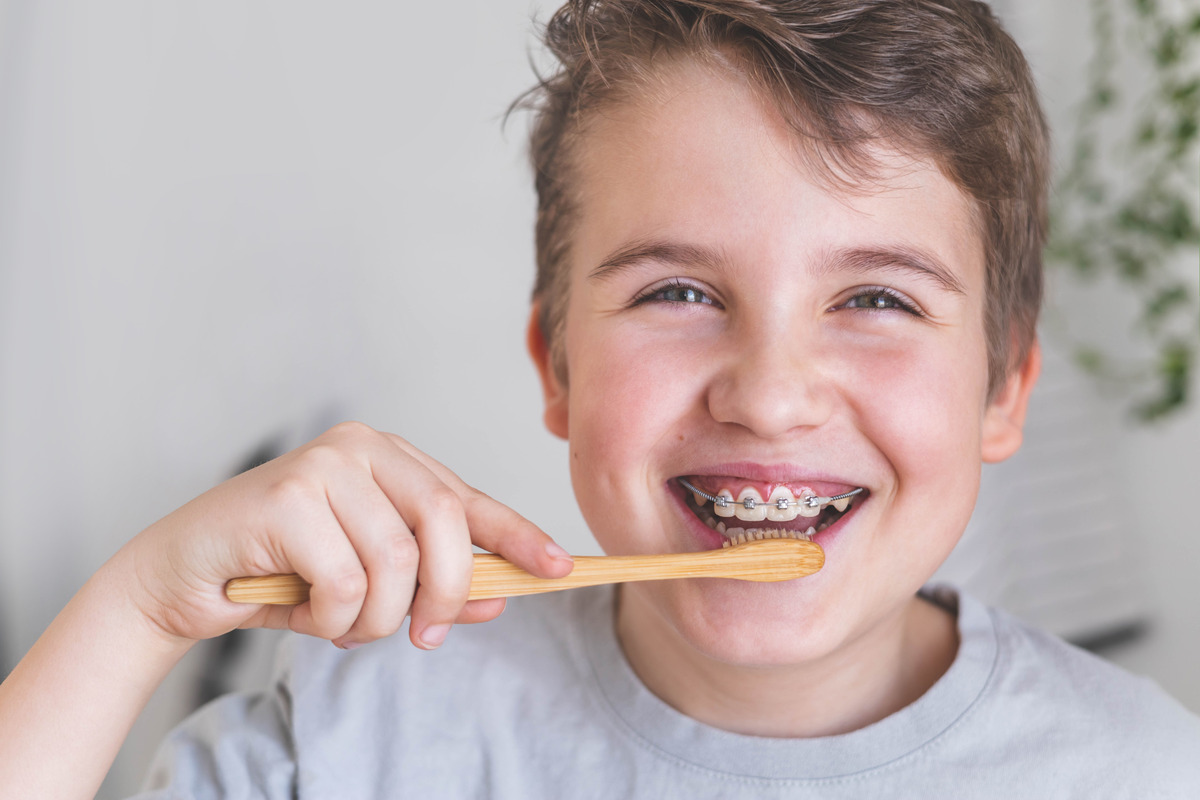
child brushing teeth with braces

How To Brush & Floss With Braces: Tips & Techniques (2026)

By Braces

When you begin orthodontic treatment, you’re not just straightening your teeth — you’re transforming your smile. Getting braces can feel exciting but also a little intimidating, especially when it comes to everyday brushing and flossing.

That’s completely normal. Braces introduce small brackets, wires, and elastic ties that make cleaning a bit more detailed. But once you understand the right rhythm and technique, brushing with braces becomes second nature — a simple daily habit that keeps your smile bright and your treatment on track.

This complete guide will show you how to brush teeth with braces effectively, the tools that help, and the common mistakes to avoid so your smile stays healthy every step of the way.

If you’re just starting with traditional braces, this guide will help you learn the best ways to keep your teeth healthy throughout treatment.

Read More

What’s the Best Age to Get Braces? (A Parent’s Guide)

By Braces

Is your child too young for braces? Or have you already missed the window? Almost every parent worries about one or the other. The honest answer: there's no single perfect age. The best age to get braces depends on your child's own dental development, not a number on the calendar. Two kids the same age can be at very different stages of losing baby teeth and gaining adult ones.

Below we walk through how the timing usually works, from a first check at age 7 to the teen years and beyond.

Quick Answer

There is no single perfect age for braces. The key milestone: the American Association of Orthodontists recommends a first orthodontic check by age 7, and that visit is an evaluation, not braces. Comprehensive braces often start in the preteen or teen years once enough permanent teeth are in, early (Phase 1) treatment is only for children with a specific problem, and adults are never too late.

There's No Single Perfect Age, and That's Good News

Here's the thing to let go of: comparing your child to a friend's kid tells you almost nothing. A neighbor's daughter in braces at 10 doesn't mean your 10-year-old is behind. Each mouth runs on its own clock.

The real goal is to catch the right moment for your child: early enough to guide what needs guiding, but not so early that we're treating a mouth that isn't ready. That's a call an orthodontist makes by looking, not by counting birthdays.

The One Rule That Matters: A First Check by Age 7

If you remember one thing from this guide, make it this: the American Association of Orthodontists recommends every child have a first orthodontic evaluation by about age 7, or sooner if you or your dentist notices something.

Read that word again. Evaluation, not braces. A visit at 7 doesn't mean treatment at 7. Some kids who are seen just go on a periodic check schedule as their permanent teeth come in, and some need no treatment at all.

Why age 7? By then a child has a mix of baby and adult teeth, and that stage gives an orthodontist enough to spot a developing bite or spacing problem early. The check either confirms things are on track or spots something worth watching.

Smiling school-age children

So When Do Most Kids Actually Get Braces?

You still want a real number, and that's fair. Comprehensive treatment often begins in the preteen or teen years, once enough permanent teeth have come in and depending on the problem being treated. Treat that as guidance, not a hard rule; your child's development always has the final say.

Why does that window work? By the early teens, most permanent teeth are in, so an orthodontist can read the full bite and treat it in one course.

Here's how the ages usually play out:

Age What usually happens
~7 First check / evaluation (monitor, usually no braces)
After the first check Periodic monitoring, watching permanent teeth come in
Preteen or teen years A common time to start comprehensive braces or aligners, once enough permanent teeth are in
14+ and adults Still works well, treatment at any time

When a Younger Child Needs Early (Phase 1) Treatment

Take a breath here, because this is the section that scares parents most. Many orthodontic problems are best treated after all the permanent teeth have come in, so early (Phase 1) treatment is for children with a specific problem, not a default first round of braces. It's a targeted fix for something easier to guide while the jaw is still growing, usually between ages 7 and 10.

The problems that justify it are specific. Per the AAO, they include underbites and crossbites, significant crowding or excessive spacing, extra or missing teeth, teeth that meet abnormally, and lingering thumb, finger, or pacifier habits. A crossbite is the clearest example: widening a narrow upper jaw while it develops is far simpler than fixing a lopsided bite later.

The tools are simpler than they sound:

  • Palatal expander: gently widens a narrow upper jaw.
  • Partial braces: brackets on the front teeth only.
  • Space maintainer: holds room for an adult tooth after an early baby-tooth loss.

One honest caveat: a child who has Phase 1 sometimes still needs a second course later, once all the permanent teeth are in. It's never a guarantee of skipping braces, and the age-7 check tells whether your child is one of them.

Teens and Adults: The Window Stays Open

The early-to-mid teens are the classic window most people picture. Once most or all permanent teeth are in, we can treat the whole bite in one course, using metal braces, clear or ceramic braces, or Invisalign Teen. If your teen is in this range, you're right on time.

Now the part adults quietly wonder about: it's never too late for you either. The AAO says there's no upper age limit, and that one in four orthodontic patients is an adult. Healthy teeth move at any age, because bone remodels under steady, gentle pressure. Treatment can take a bit longer, since existing dental issues can add complexity and denser, more mature bone can influence how teeth move, but the AAO says it can be just as successful.

For a discreet option, some adults choose clear aligners like Invisalign. Whether you're 14 or 44, the window is open.

How We Find the Right Time for Your Child in Carlsbad

For Carlsbad and North County families, the simplest way to answer "is it time yet?" is to let a specialist orthodontist actually look. That's what a complimentary consultation or virtual smile assessment is for: a quick, no-pressure read on where your child stands, with no obligation to start.

Dr. Cameron Hulse is a specialist orthodontist who has cared for Carlsbad families since 2007. At a consultation, Dr. Hulse can talk you through your child's timing and your treatment options.

Ready to find out where your child stands? Contact us to book a free consultation or virtual smile assessment.

Looking for a Carlsbad orthodontist for kids? Here is how a first visit works and what it costs.

Questions about your braces or Invisalign?

Whatever’s on your mind, our Carlsbad team is happy to help, no judgment, just straight answers and a plan for a healthy smile.

Prefer to call? (760) 448-1344

Frequently Asked Questions

Is age 7 too young to see an orthodontist, and will my child get braces then?

No. The AAO recommends a first orthodontic check by age 7, but it's an evaluation, not braces. The AAO describes three possible outcomes: no treatment expected, periodic monitoring as the permanent teeth come in, or early treatment for a specific developing problem, like a crossbite or a harmful habit.

What's the typical age most kids get braces?

There's no single fixed age. As a general pattern, comprehensive treatment often begins in the preteen or teen years, once enough permanent teeth have come in. It varies by child, so treat it as general guidance rather than a firm rule.

Do most young kids need early (Phase 1) treatment?

Early treatment is for children with a specific developing problem, not a default first round of braces. The AAO says many orthodontic problems are best treated after all the permanent teeth have come in, and the age-7 evaluation is how an orthodontist tells which children benefit from acting early.

If my child has Phase 1 treatment, will they still need braces later?

Sometimes. The AAO notes that in some cases a second, comprehensive course of treatment is recommended later, once all permanent teeth have come in. It's a real possibility, not a guarantee. Phase 1 is a targeted early fix, not a promise of avoiding braces entirely.

Am I too old to get braces as an adult?

No. The AAO states there's no upper age limit, and that one in four orthodontic patients is an adult. Healthy teeth move at any age with sustained, gentle pressure. Clear aligners like Invisalign are a common, discreet choice. A free consultation or virtual smile assessment at our contact page can show you your options.

This article is general information about orthodontic care, not medical or dental advice. For guidance on your child’s timing, see Dr. Cameron Hulse or another qualified orthodontist.

Scared of Getting Braces? How to Ease Anxiety and Start Your Smile

By Braces

Let’s be honest: no one’s thrilled to hear they need orthodontic treatment. Somewhere between imagining a mouth full of metal and hearing horror stories from that one cousin who had headgear in the ’90s, your nerves kick in.

Sound familiar?

If you’re feeling anxious, you’re not alone. The truth? Most of the fear around getting orthodontic care is based on outdated myths, not reality.

So let’s break it down, without the fluff.

Read More

tax for braces

Are Braces Tax Deductible? Understanding Medical Expense Deductions for Orthodontics

By Braces

The short answer: sometimes, and probably less often than you might hope. Braces can count as a medical expense on your taxes (IRS Publication 502 names braces; ask a tax professional about Invisalign), but whether you actually get a deduction depends on a couple of tax rules that trip up a lot of families. For many households, paying with an HSA or FSA is the smarter, easier win, because that route skips the two rules that block the deduction for most people. So are braces tax deductible? Here is the honest breakdown in plain English, whether you are paying for a teen’s braces or your own adult Invisalign.

One note before we start: we are orthodontists, not tax advisors. Everything here is general educational information, not tax advice. Tax rules change from year to year, and every situation is different, so confirm the specifics with a qualified tax professional and the IRS before you file.

Quick Answer

Sometimes. Braces can count as a qualifying dental expense under IRS rules (Publication 502 names braces, so ask a tax professional about Invisalign), but they only lower your federal tax if you itemize your deductions and your total out-of-pocket medical and dental costs top 7.5% of your income (AGI). Because most people take the standard deduction, many families will not qualify, so paying with an HSA or FSA is often the easier way to save. This is general information, not tax advice.

Are Braces Tax Deductible? The Honest Answer

Yes, braces can be tax-deductible. IRS Publication 502 names braces as a qualifying dental expense (it does not mention aligners, so ask a tax professional about Invisalign), but the deduction only helps if two things are true at the same time:

  1. You itemize your deductions instead of taking the standard deduction.
  2. Your total out-of-pocket medical expenses for the year are more than 7.5% of your adjusted gross income (AGI).

Both have to line up in the same tax year, not just one. Here is the honest catch most articles skip. Most taxpayers now take the standard deduction and never itemize at all, and plenty of people who do itemize still fall short of that 7.5% floor. So the deduction is possible, but many families will not actually get one.

That is not a knock on your treatment. It is simply how the math works for most households. The good news: if you are eligible for an HSA or offered a health FSA, that route can still help when the itemized deduction is out of reach, even if you take the standard deduction. We cover that route below. Again, this is general information, not tax advice.

When Braces Count as a Medical Expense

Most orthodontic treatment does qualify as a medical expense in the eyes of the IRS, and that surprises a lot of people. IRS Publication 502 counts dental care that diagnoses, treats, or prevents a health problem as qualified medical care, and it specifically allows costs for the prevention and alleviation of dental disease. Purely cosmetic work, like teeth whitening, does not qualify.

Braces and Invisalign correct bite problems, crowding, and jaw alignment, which affect how you chew, speak, and keep your teeth healthy. For tax purposes, though, the clinical reason matters less than the IRS list: Publication 502 names braces as dental treatment, alongside X-rays, fillings, and extractions. That same definition also decides what an HSA or FSA will cover, which matters later.

Publication 502 lists braces and X-rays as dental treatment; ask your tax professional whether related items such as clear aligners, retainers, or consultation fees qualify in your situation. One key limit: only the amount you actually pay out of pocket qualifies. Anything your insurance covers does not, since you did not pay it. So add up your unreimbursed total, meaning what you paid after any insurance payout, and remember this is general information, not tax advice.

The Two Catches: Itemizing and the 7.5% Rule

This is the section that decides whether a deduction actually helps you, so let us be straight about the numbers.

Catch one is itemizing. You claim medical expenses on Schedule A (Form 1040), and itemizing only helps if your total itemized deductions beat the standard deduction. The standard deduction changes every year, so always check the IRS for the current figure for your filing status.

Because the standard deduction is so high, the vast majority of people take it and never itemize. That is a real shift from before 2018, when the standard deduction was far smaller and roughly a third of filers itemized.

Catch two is the 7.5% floor. Even if you do itemize, you can only deduct the portion of your total medical expenses above 7.5% of your AGI, as the IRS explains.

Here is a simple illustrative example with round numbers. Say a household has an AGI of $80,000, which puts their 7.5% floor at $6,000. If they paid $6,500 in total medical and dental costs for the year, including braces, only $500 of that would be deductible, and only if they itemize. If braces were their only big medical cost that year, they very likely would not clear the floor at all.

That is why an HSA or FSA is often the better move for a lot of families. As always, this is general information, not tax advice, and a tax professional can run your actual numbers.

HSA and FSA: Often the Easier Way to Save

If the itemized deduction feels out of reach, here is the route that often works better for people who are eligible for an HSA or offered a health FSA. A Health Savings Account (HSA) or Flexible Spending Account (FSA) lets you pay for orthodontic treatment with pre-tax dollars, which lowers your taxable income for the year.

The big advantage is what these accounts do not require: no itemizing, and no 7.5% floor to clear. Braces are generally an eligible expense, as long as insurance has not already covered the cost; ask your plan administrator or a tax professional about clear aligners and retainers. Keep your payment records, since your plan may ask you to substantiate the expense.

A few practical notes. An FSA usually comes through your employer and is often use-it-or-lose-it within the plan year, and for 2026 the IRS limit on salary-reduction contributions is $3,400. Limits change every year, so check the current figure. An HSA pairs with a high-deductible health plan and rolls over year to year, which helps since orthodontic treatment often spans more than one plan year. Either way, keep your receipts and plan your contributions before treatment starts so the timing lines up.

For families who have access to one of these accounts, this is the more realistic win. Check your specific plan rules, and remember this is general information, not tax advice.

What to Keep, and How We Can Help

Whether you end up itemizing or paying through an HSA or FSA, the paperwork is the same simple habit: keep every receipt and payment record, plus proof of anything insurance or your HSA or FSA already covered. Only your own out-of-pocket cost counts, so those records matter. Hold onto everything for at least three years in case the IRS ever asks.

If you need documentation of what you paid for your tax preparer, ask our front desk what they can provide.

Separately from taxes, we want treatment to be manageable no matter how the deduction math shakes out. That is why we offer in-house financing and flexible payment plans. You can see how we approach treatment cost and financing on our cost page.

Frequently asked questions

Are braces tax deductible?
Sometimes. Braces are a qualified medical expense, so they can be deducted, but only if you itemize and your total unreimbursed medical expenses top 7.5% of your AGI. Because most people take the standard deduction, many families will not qualify. This is general information, not tax advice.
Is Invisalign tax deductible?
IRS Publication 502 names braces as dental treatment but does not mention aligners, so ask a tax professional whether your Invisalign treatment qualifies. If it does, the same two conditions apply: you must itemize and clear the 7.5%-of-AGI floor. Purely cosmetic straightening generally would not qualify.
Can I use my HSA or FSA for braces?
Yes, generally. Braces are a qualifying dental expense under IRS Publication 502, so they are usually HSA and FSA eligible, and you pay with pre-tax dollars. Ask your plan administrator or a tax professional about Invisalign. The big plus: no itemizing and no 7.5% floor, so this is often the easier route. You cannot also deduct amounts you already paid pre-tax.
How much of my braces can I actually deduct?
Only the unreimbursed portion of your total medical expenses above 7.5% of your AGI, and only if you itemize. So if your AGI is $80,000, the first $6,000 of medical costs is not deductible, and only qualifying costs above that line count. Run your real numbers with a tax professional, since this is general information only.
Do I need a letter of medical necessity?
Not always, but good records matter. For most orthodontic treatment, an itemized statement showing the service, date, and amount you paid is what you and your tax preparer need. If your HSA or FSA plan or your tax professional asks for more, ask our front desk what documentation they can provide.

Questions about your braces or Invisalign?

Whatever’s on your mind, our Carlsbad team is happy to help, no judgment, just straight answers and a plan for a healthy smile.

Prefer to call? (760) 448-1344

This article is for general educational purposes only and is not tax, legal, or financial advice. Tax rules change and every situation is different, so confirm the specifics with a qualified tax professional and the IRS.

Foods to Avoid With Braces: A Simple Carlsbad Guide

By Braces

The foods to avoid with braces fall into a few clear groups: hard and crunchy, sticky and chewy, anything you bite into with your front teeth, and sugary or starchy snacks. Steer around those and your treatment stays on schedule. Fewer broken brackets means fewer surprise visits and a smoother, on-time finish.

We are the Carlsbad practice of specialist orthodontist Dr. Cameron Hulse.

Quick Answer

The foods to avoid with braces fall into four groups: hard and crunchy, sticky and chewy, anything you bite into with your front teeth, and sugary or starchy snacks. Skip or adapt them (slice apples, cut corn off the cob) to avoid broken brackets and delays. Plenty of soft foods are still on the menu, and with clear aligners you take the trays out to eat, so there is no food list to follow.

Why the Wrong Foods Cost You Time

Braces work through steady, gentle pressure, and that only holds up if the hardware stays intact. Each broken bracket or loose wire can set your treatment back, according to the American Association of Orthodontists (AAO). Braces also create nooks and crannies that trap food, so gentle chewing matters more than it used to.

The mechanics are simple. Hard foods can crack a bracket or pop it off. Sticky and chewy foods can pull a bracket loose or bend a wire. Either way, you are looking at an unplanned repair.

A single breakage tends to cost you three things:

  • An extra, unplanned appointment
  • Lost progress while the tooth drifts back
  • A longer overall timeline before your metal braces come off

Foods to Avoid With Braces, by Category

Here is the full list, grouped so you can find your trouble food fast.

Hard and crunchy foods crack or dislodge brackets. Skip or save these for after treatment:

  • Nuts
  • Popcorn
  • Ice
  • Hard candy
  • Hard pretzels and snack chips
  • Crispy pizza crust
  • Hard rolls and bagels

Sticky and chewy foods pull brackets loose and bend wires. Avoid:

  • Caramel, taffy, and toffee
  • Chewing gum
  • Gummy candy
  • Dried fruit
  • Thick, chewy pizza crust

Foods you bite into with your front teeth are usually fine with a small adjustment. Do not ban them, just adapt them:

  • Whole apples: slice them thin
  • Corn on the cob: cut the kernels off first
  • Crusty or French bread: choose a soft loaf instead
  • Ribs and wings: take the meat off the bone
  • Tough or stringy meats: cut into small, tender pieces

The rule that makes this work: cut firm foods into small pieces, chew with your back teeth, and take smaller bites. Less pull on the front brackets, fewer breakages.

Sugary and starchy foods are a different risk. Candy, soda, and sweetened snacks do not usually damage the appliance, but they feed plaque that builds up around your brackets. The ADA warns that this buildup can permanently stain or damage the enamel underneath once the brackets come off. That is a stronger reason to cut back than plain cavity risk.

One quick habit closes the loop: brush and floss around your brackets after you eat, using floss threaders or a water flosser to reach under the wire.

Here is the quick version, swap for swap:

Instead of these Reach for these
Popcorn, nuts, ice, hard candy Yogurt, smoothies, soft cheese
Caramel, taffy, gum, dried fruit Bananas, berries, applesauce
Whole apples, corn on the cob, crusty bread Sliced apples, corn off the cob, soft bread
Chewy bagels, tough or stringy meat Soft pasta, scrambled eggs, fish

A Quick Word on Staining and Clear Braces

The part of clear braces most likely to pick up color is the small clear elastic ties that hold the wire to each bracket. They can pick up pigment from:

  • Curry
  • Coffee and tea
  • Tomato sauce
  • Hot chocolate
  • Soy sauce

Ask your orthodontist how ties are handled at your adjustment visits. If you are weighing clear against metal, we can walk you through your treatment options.

What You CAN Eat With Braces

Plenty is still on the menu. Anything soft, cooked tender, or easy to chew is fair game, and the AAO's braces-friendly list is generous:

  • Yogurt
  • Scrambled eggs
  • Oatmeal
  • Soups
  • Softer-cooked pasta
  • Mashed potatoes
  • Steamed or boiled soft vegetables
  • Soft cheeses
  • Fish and seafood
  • Bananas and berries
  • Ice cream

Smoothies work well too. Firmer favorites are not off the table either. Apples and carrots are fine as long as you cut them into small pieces and chew with your back molars rather than biting in up front.

A few do double duty: cold, soft foods like smoothies, yogurt, and applesauce feel especially good when your teeth are tender after an adjustment.

Getting Through the Sore First Few Days

Soreness is normal and short-lived. After new braces go on or a wire gets adjusted, tenderness is usually worst in the first few days and then eases from there.

Lean on soft, cool foods while it lasts:

  • Smoothies
  • Yogurt and applesauce
  • Mashed potatoes
  • Scrambled eggs
  • Broth-based soup

A few comfort tips make those days easier:

  • Cut food into small pieces
  • Chew with your back teeth
  • Take smaller bites
  • Hold a warm washcloth or heating pad to your jaw
  • Stick to soft foods until the soreness fades

Eating out around Carlsbad is still easy if you steer soft. Choose soft tacos over crunchy shells, pasta over crusty bread, and a smoothie or a bowl over anything you have to bite hard into.

If a bracket pops off or a wire starts poking after something hard or chewy, press a pea-sized ball of orthodontic wax over the spot for comfort. Do not use superglue or store-bought dental cement, since both make a proper repair harder later. For a loose bracket or band, call our office right away, and keep the piece to bring to your repair appointment. Please call rather than coming in, so we can schedule the time a repair needs. Our emergency care page has more tips.

Prefer No Food Rules? How Invisalign Compares

If food restrictions are a dealbreaker, clear aligners are worth a look. Because Invisalign trays come out before you eat or drink anything but water, there are no food restrictions during treatment. Popcorn, apples, and the rest all stay on the menu.

There is a real trade-off. The aligners have to go back in promptly and be worn about 20 to 22 hours a day to keep your treatment on schedule, and only plain water is safe while they are in.

Braces and Invisalign both straighten teeth well, so food is just one factor. We offer both, plus Invisalign Teen, so you are not locked into one path.

Questions about your braces or Invisalign?

Whatever’s on your mind, our Carlsbad team is happy to help, no judgment, just straight answers and a plan for a healthy smile.

Prefer to call? (760) 448-1344

Frequently Asked Questions

What foods should I avoid with braces?

Avoid hard or crunchy foods like popcorn, nuts, ice, and hard candy, plus sticky or chewy foods like caramel, taffy, and gum. Tough, stringy meats and whole apples or carrots also cause trouble unless you cut them small. Cut back on high-sugar and starchy snacks and sodas too, since they raise your decay and staining risk.

What can I eat with braces?

Almost anything soft. Good options include yogurt, scrambled eggs, oatmeal, soups, softer-cooked pasta, mashed potatoes, and soft cheeses. Bananas, berries, steamed vegetables, fish, and smoothies all work well. Firmer foods like apples and carrots are fine if you cut them into small pieces and chew with your back teeth.

What should I eat the first week of braces?

Lean on cool, soft foods while your teeth are tender, such as smoothies, yogurt, applesauce, mashed potatoes, scrambled eggs, and broth-based soup. Soreness is usually worst in the first few days and then eases from there. The same plan works after each tightening visit.

Do clear or ceramic braces stain from food?

The clear elastic ties around each bracket can pick up color from foods like curry, coffee, tea, and tomato sauce. Ask your orthodontist how ties are handled at your adjustment visits.

Does Invisalign have food restrictions like braces?

No. Because the aligners come out before you eat, there are no food restrictions during Invisalign treatment. The requirement instead is discipline: put the trays back in promptly, drink only plain water while they are in, and wear them about 20 to 22 hours a day to stay on schedule. Want to compare your options? Contact us for a free consultation at our Carlsbad office.

This article is general information about orthodontic care, not medical or dental advice. For guidance specific to your braces, see Dr. Cameron Hulse or another qualified orthodontist.

Dry Mouth With Braces: Why It Happens and What Actually Helps

By Braces

Your braces are on, your mouth feels dry and sticky, and the new hardware looks like the obvious suspect. It’s a fair guess. It’s also probably the wrong one.

The major health sources don’t list braces as a cause of dry mouth. The more useful move is to check the causes they do list, which takes a few minutes, and to start a relief routine that works around brackets and wires. This guide covers both, plus the signs that mean it’s time to get checked.

Quick answer

Braces aren’t listed as a cause of dry mouth by the National Institute of Dental and Craniofacial Research (NIDCR), the American Dental Association (ADA) or Mayo Clinic. The causes they do list include medicines, which Mayo Clinic calls one of the most common, along with mouth breathing, tobacco, alcohol and some health conditions. For relief with braces, sip water through the day, breathe through your nose, run a humidifier at night, and ask your orthodontist before reaching for gum, lozenges or hard candy. If your mouth stays dry, see a dentist or doctor to find out why.

Do Braces Cause Dry Mouth?

Not according to the health sources that list the causes of dry mouth. Dry mouth (the medical term is xerostomia) has well-documented causes, and three major health sources publish them: the NIDCR’s dry mouth page, the ADA’s MouthHealthy site and Mayo Clinic. Between them, they name medicines, certain diseases, cancer treatment, nerve damage, mouth breathing, tobacco and alcohol. Braces and other orthodontic appliances don’t appear on any of the three.

The research that looks directly at braces and saliva points, if anything, the other way. A 2023 systematic review in the Turkish Journal of Orthodontics looked at seven studies of people in treatment with fixed braces. Stimulated saliva flow, the saliva your mouth makes when something like chewing gets it going, tended to go up during treatment. Resting saliva flow gave mixed results.

The authors are clear that the evidence isn’t strong enough yet for firm conclusions. So the fair reading is that braces don’t appear to dry your mouth out, which is a smaller claim than saying they never could.

So why does it feel like the braces did it?

When dryness shows up around the same time as new braces, it’s natural to connect the two. Braces can also play an indirect part:

  • Mouth breathing. New braces can make closing your lips over your teeth feel awkward at first, and some people may breathe through their mouth more as a result. Mouth breathing is a recognized cause of dry mouth on its own.
  • Drinking less. Some people sip less water to avoid food getting stuck in their braces, which means less moisture going in.

In both cases, the fix is the habit, not the braces.

What’s Actually Drying Your Mouth Out?

Run through this quick self-check. Any “yes” is worth acting on.

  1. Are you taking any medicine? Medicines are one of the most common causes of dry mouth, according to Mayo Clinic, and hundreds of them can do it. They include drugs for high blood pressure, depression, anxiety and bladder control, plus everyday ones like antihistamines, decongestants, pain relievers, muscle relaxants and diuretics. Over-the-counter allergy and cold medicines count.
  2. Do you breathe through your mouth or snore? Both are recognized causes of dry mouth. Clues: you wake up with a parched mouth, or you catch yourself with your lips apart during the day.
  3. How much water are you actually drinking? Be honest about whether braces have you skipping the water bottle.
  4. Caffeine, alcohol or tobacco? NIDCR advises cutting back on caffeine and avoiding tobacco and alcohol when your mouth is dry, and tobacco and alcohol are recognized causes in their own right.
  5. Any other health conditions? NIDCR links diabetes, Sjögren’s disease and HIV/AIDS to dry mouth, along with radiation, chemotherapy and nerve damage from a head or neck injury. These are for a doctor to sort out, not something to self-diagnose.

One safety rule: if a medicine looks like the cause, don’t stop taking it or change how you take it on your own. Talk to the doctor who prescribed it. NIDCR notes that your doctor may be able to change your medicine, and that’s a decision to make together. The same goes for an allergy medicine you rely on: ask your doctor about alternatives rather than just stopping.

How to Relieve Dry Mouth With Braces

Most of these steps come from the self-care advice published by NIDCR and Mayo Clinic, adjusted for brackets and wires. Start with water and nose breathing today, since neither needs a trip to the store.

1. Keep water within reach and sip all day

NIDCR suggests drinking about 8 to 12 cups of water a day. With braces, the trick is making it easy: carry a bottle and sip from it through the day. Reach for water instead of caffeinated or sugary drinks, too (more on those in step 5).

Check: you should be refilling that bottle a few times a day. If it comes home as full as it left, you’re not there yet.

2. Breathe through your nose, and run a humidifier at night

Breathe through your nose rather than your mouth, and run a humidifier at night; both are standard self-care tips from the sources above. If you wake up with a dry mouth, the bedroom humidifier is the step to try first.

During the day, when you catch your lips apart, close them and switch back to nose breathing. Keep a rough note of how your mouth feels when you wake up, so you can tell whether any of this is helping.

3. Gum and hard candy: where braces change the advice

Sugar-free gum and sugar-free hard candy show up in the dry mouth advice from NIDCR, the ADA and Mayo Clinic, because they get saliva flowing. None of that advice is written with braces in mind.

With braces, the advice changes. Our office lists gum among the foods to avoid with braces, and the American Association of Orthodontists advises avoiding hard candy and hard mints, along with sticky candies such as taffy and caramel that can loosen brackets.

So the rule with braces is simple: get the saliva boost without gum or hard candy.

  • Keep sipping water through the day.
  • Suck on ice chips to moisten your mouth. Don’t crunch them.
  • Ask your orthodontist whether a sugar-free lozenge or a dry-mouth product such as a saliva substitute is OK with your appliance. They know your appliance and can tell you what is safe for you.

If you hear a crunch, you’re chewing.

4. Switch to a dry-mouth-friendly rinse and toothpaste

  • Mouthwash: Skip mouthwash that contains alcohol. Read the label before you buy, and choose an alcohol-free rinse or one made specifically for dry mouth.
  • Saliva substitute: over-the-counter saliva substitutes come as sprays, gels and rinses, and they’re a useful backup when water alone isn’t enough. Mayo Clinic mentions products containing xylitol, carboxymethylcellulose or hydroxyethyl cellulose.
  • Toothpaste: Use a fluoride toothpaste. Brackets and wires already make cleaning more work, so pair it with a solid routine; our guide on how to brush and floss teeth with braces walks through it.

5. Go easy on foods and drinks that dry you out

Avoid foods that are dry, salty, spicy, sugary, acidic or hard to chew when your mouth is dry, cut back on caffeine, and steer clear of tobacco and alcohol.

If you wear braces, the hard-to-chew part probably sounds familiar. Our guide to foods to avoid when wearing braces covers the braces side of the menu.

Dry mouth with braces: at a glance

Category What’s in it
Helps Sipping water all day; nose breathing; a humidifier at night; an alcohol-free or dry-mouth rinse; a saliva substitute spray, gel or rinse; fluoride toothpaste; ice chips, sucked slowly (not crunched)
Check with your orthodontist first Sugar-free lozenges; dry-mouth products such as saliva substitutes
Skip or cut back Mouthwash with alcohol; caffeine, alcohol and tobacco; chewing gum, hard candy or hard mints, and sticky candy; dry, salty, spicy, sugary, acidic or hard-to-chew foods; over-the-counter antihistamines and decongestants where you can (ask your doctor before changing any medicine)

Why Does Dry Mouth Matter While You’re Wearing Braces?

According to NIDCR, dry mouth increases the risk of tooth decay or fungal infections in the mouth, because saliva helps keep harmful germs in check. Saliva also contains minerals such as calcium and phosphate that help keep teeth strong and fight decay. Think of it as an all-day mineral rinse you never have to remember to use.

With braces on, that protection is worth holding onto. Keep up your regular dental checkups during treatment. And for the specific worry of marks forming around your brackets, see our guide to white spots on teeth from braces.

When Should You Get Dry Mouth Checked?

See a dentist or doctor if your mouth stays dry after you’ve worked through the steps above. Both NIDCR and Mayo Clinic say to see a dentist or doctor to find the cause if self-care doesn’t improve things. A doctor can check for the medicines and health conditions a self-check can’t rule out.

  • If the dryness started around when you began a new medicine: talk to the doctor who prescribed it. Don’t stop or change it on your own.
  • If you’ve tried the routine and your mouth is still dry: book a dentist or doctor visit to find the cause.
  • Either way: mention it at your next braces appointment so your orthodontist knows.

Pro tip: before the appointment, jot down every medicine you take, including over-the-counter ones, and when the dryness is worst. It gives your dentist or doctor a head start.

If you’re a current Hulse Orthodontics patient, call us at (760) 448-1344 with questions about your braces. If you’re in Carlsbad and considering braces, Dr. Cameron Hulse is a specialist orthodontist, and you can book a free consultation to talk through your options.

Frequently Asked Questions

Why is my mouth drier at night?

If you sleep with your mouth open or snore, air moves over your mouth for hours with no sips of water in between. Mayo Clinic lists snoring and mouth breathing as causes of dry mouth, and a humidifier at night is one of the standard self-care tips. Keeping a glass of water by the bed helps too.

Is dry mouth a sign something is wrong with my braces?

Not by itself. Braces aren’t on the major health sources’ lists of dry mouth causes, so dryness alone doesn’t point to a problem with the appliance. If something about the braces feels off, such as a loose bracket or a wire that pokes, call your orthodontist right away, and keep any piece that comes off to bring with you. If your mouth stays dry, see a dentist or doctor to find the cause.

Will my dry mouth go away when my braces come off?

Nobody can promise that. Braces aren’t a listed cause of dry mouth, so taking them off isn’t a treatment, and whatever is causing the dryness may still be there afterward. Rather than waiting out your treatment, work through the relief steps now and get it checked if it doesn’t improve.

The information provided in this blog is for educational and informational purposes only. It is not intended as a substitute for professional medical, dental, or healthcare advice. Always consult with a qualified healthcare provider for diagnosis, treatment, and answers to specific medical questions.

Dry mouth that won’t settle down?

Dr. Cameron Hulse and our Carlsbad team are happy to take a look and answer questions about your braces.

Prefer to call? (760) 448-1344